Cornel West speaks at Washington College
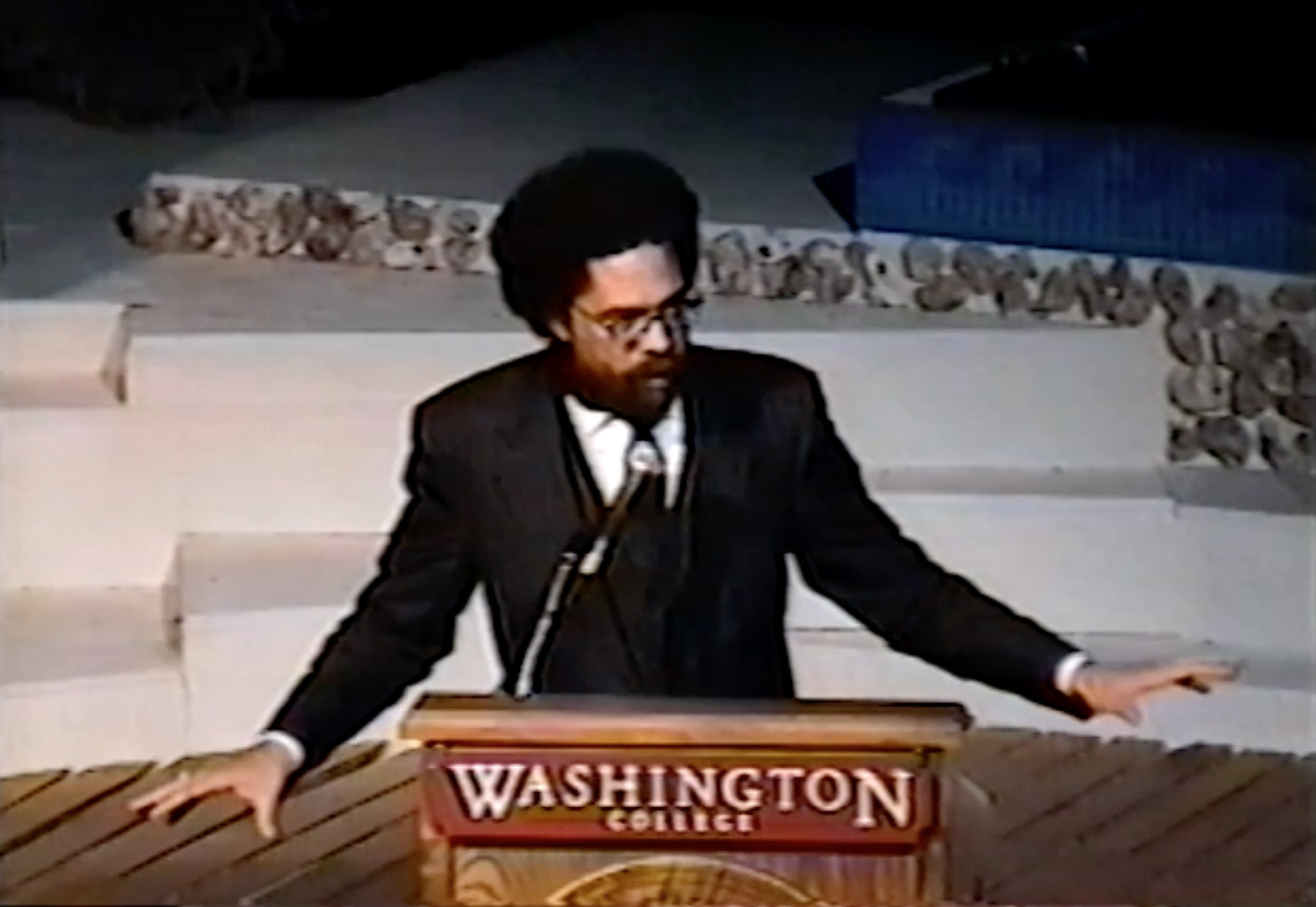
On March 1st, 2001, Dr. Cornel West spoke at Washington College as part of the Casey Academic Center Forum. The topic was “Race in the 21st Century.”
Dr. Cornel West is an influential figure in the fields of contemporary philosophy, American politics, and race relations. Educated at Harvard and Princeton Universities, his practical education began when, as a high school student, he marched in civil rights demonstrations. His grandfather, Clifton L. West, was a preacher in Tulsa, Oklahoma and Cornel inherited his ability to convey his thoughts and engage with audiences. Though the topic of the Casey Academic Center Forum lecture was difficult and divisive, West brought levity and thoughtfulness to the issue.
West opens the lecture, recognizing the difficulty but praising those present for engaging despite the discomfort of talking about race in America:
“The examined life is painful. To talk about race is to talk about something very painful; it's to talk about a dogma that's rarely questioned and interrogated, especially given America's past. And usually, we Americans want to wrestle with the issue of anything breakable, catastrophe, and crisis, the Civil War of 1860. But, Washington College and other institutions of higher learning say, ‘no. We're going to raise some very painful questions.' Even during moments of national self-congratulation and celebration.”
 West continues by looking at what freedom really means in American Democracy, its
struggles, and its small triumphs—recognizing its past realities, from slavery to
the advancements made since the Civil Rights movement, to contemporary issues such
as the systemic bias inherent in the criminal justice system and issues of prison
reform. West says that race is a litmus test for democracy; it reveals how seriously
we believe in the ideals of human dignity. It is this that can bring us through the
nihilistic crisis that can come from the weight of these issues. Through active compassion,
moral courage, and embracing creativity, we can bring about the commitment to betterment
and the fight for justice.
West continues by looking at what freedom really means in American Democracy, its
struggles, and its small triumphs—recognizing its past realities, from slavery to
the advancements made since the Civil Rights movement, to contemporary issues such
as the systemic bias inherent in the criminal justice system and issues of prison
reform. West says that race is a litmus test for democracy; it reveals how seriously
we believe in the ideals of human dignity. It is this that can bring us through the
nihilistic crisis that can come from the weight of these issues. Through active compassion,
moral courage, and embracing creativity, we can bring about the commitment to betterment
and the fight for justice.
His lecture manages to cover numerous thought-provoking historical topics, including the problem with mandatory minimums, racial profiling, and the government's priority towards funding social programs over full employment starting in the 1960s. Dr. West says that the main way we can talk about race is by talking about wealth inequality, showing us that the issues of race, democracy, and justice are intertwined with the basis of being human.
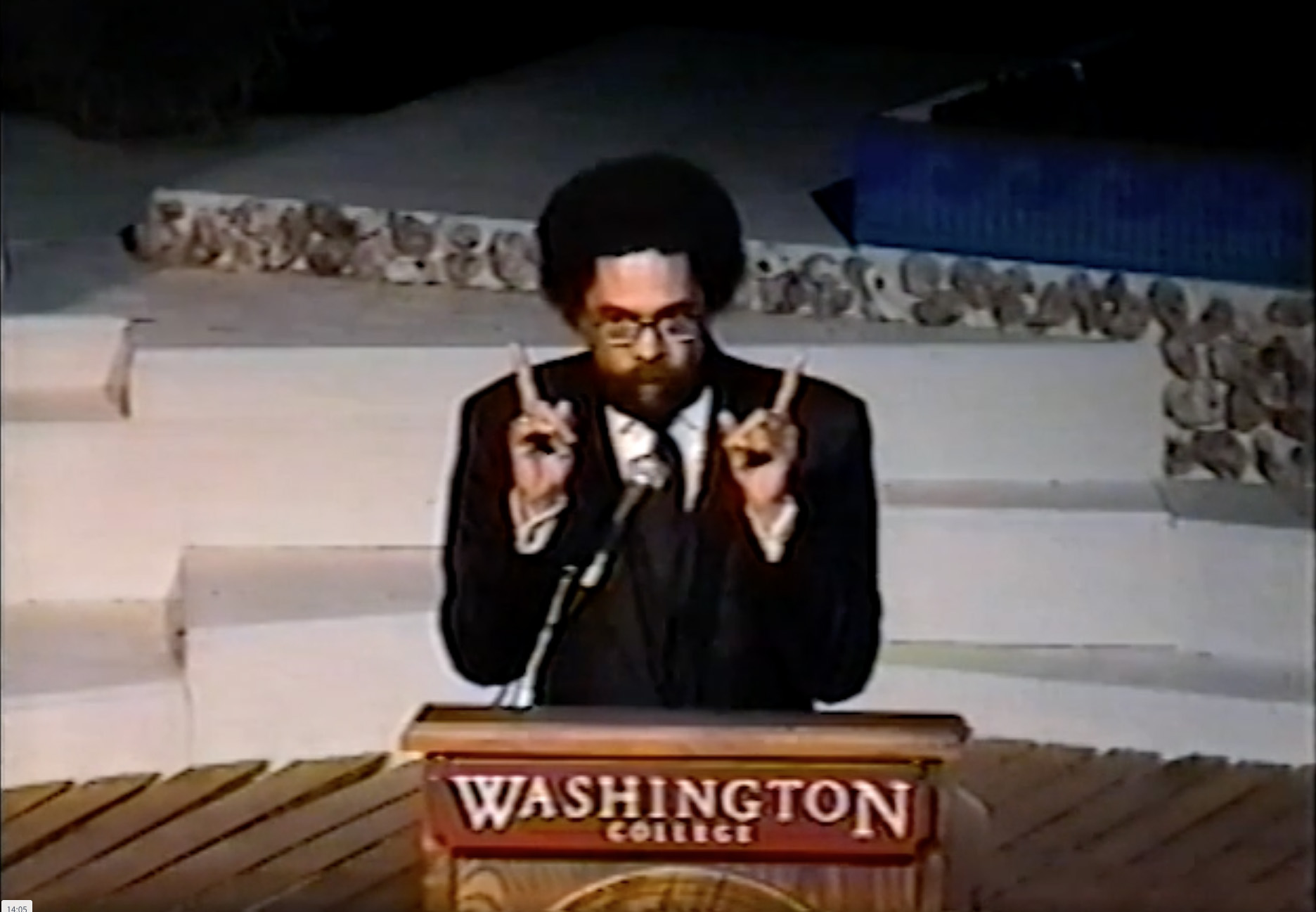 Towards the end of his talk, West ponders what the world will look like in 2025, asking
what the world will be for this generation of children coming up today. As we begin
2026, it is important to realize that many of the issues Dr. West raised are still
relevant and require continuing thought and discussion today. This gives us reason
to ponder the nature of history and justice. Is history cyclical, or is the pace of
justice too slow? Dr. West does remind us that there have been improvements, though
we are nowhere near where we should be, as humans. Entering this new year with the
weight of all that has recently been happening, and how issues like income and employment
equality are possibly worse than they were in 2001, it is understandable to feel despair.
But listening to Dr. West talk so openly reminds us that we each have a voice, and
we can bring about change with our words and actions. West reminds us that:
Towards the end of his talk, West ponders what the world will look like in 2025, asking
what the world will be for this generation of children coming up today. As we begin
2026, it is important to realize that many of the issues Dr. West raised are still
relevant and require continuing thought and discussion today. This gives us reason
to ponder the nature of history and justice. Is history cyclical, or is the pace of
justice too slow? Dr. West does remind us that there have been improvements, though
we are nowhere near where we should be, as humans. Entering this new year with the
weight of all that has recently been happening, and how issues like income and employment
equality are possibly worse than they were in 2001, it is understandable to feel despair.
But listening to Dr. West talk so openly reminds us that we each have a voice, and
we can bring about change with our words and actions. West reminds us that:
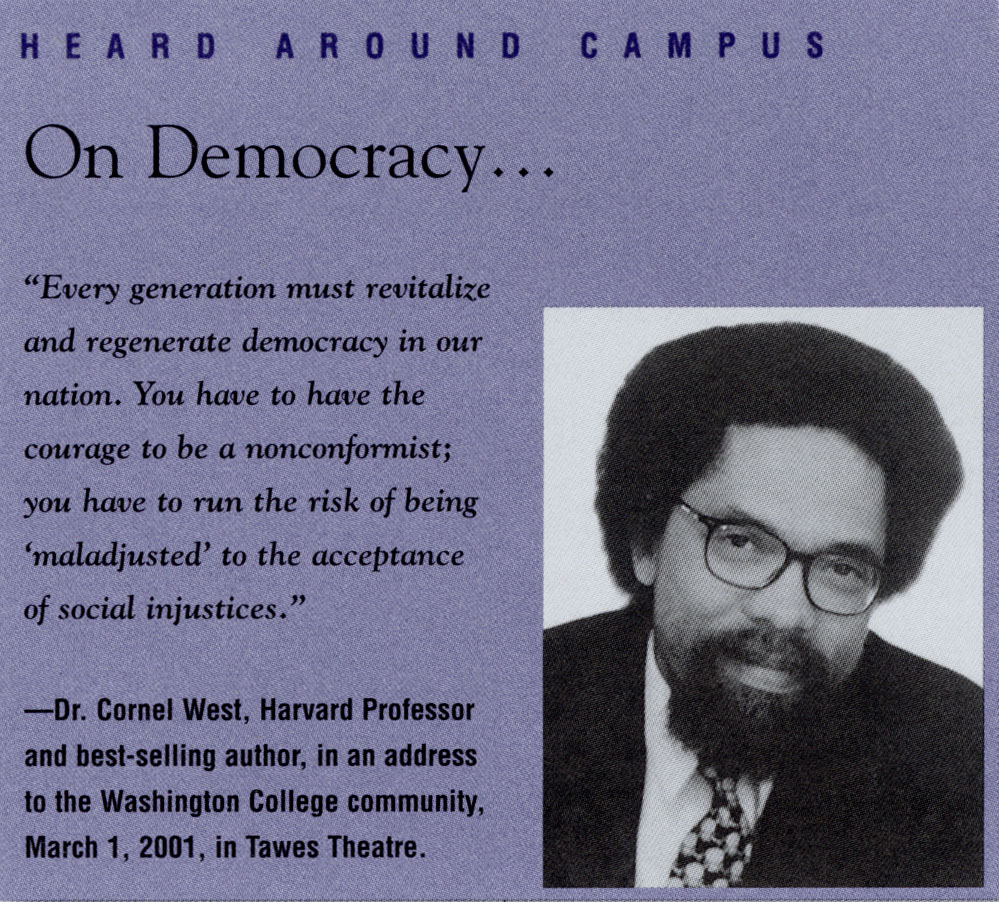
“Every generation must regenerate and revitalize democracy, and one does that by looking at precisely the problems that are usually ignored and overlooked.”
As we enter the 250th anniversary of the United States, it is easy to see our democracy as won, set, and safe as it has always been these last centuries, but it is not. We need to look beyond the flag-waving to the constant and inherent struggle that is both democracy and human decency.
“Democracy is profoundly subversive, given the dominant reign of history in which elites rule, and subjects defer. If ordinary people's voices were heard, very few would choose jobs that do not provide a living wage. If their voices were heard, very few would choose lack of health care, inadequate childcare, dilapidated housing, decrepit school systems. There must be some hemorrhaging taking place so that these voices aren't being heard. They're having little impact. And I'm not confusing voices with votes in Florida, in that we got to get beyond that. It, you know, voting is one medium of this, but it's the broader sense of having a voice in shaping your destiny. And that is what the democratic experiment is supposed to be about.”
You can watch the entire lecture on our Digital Archive.