
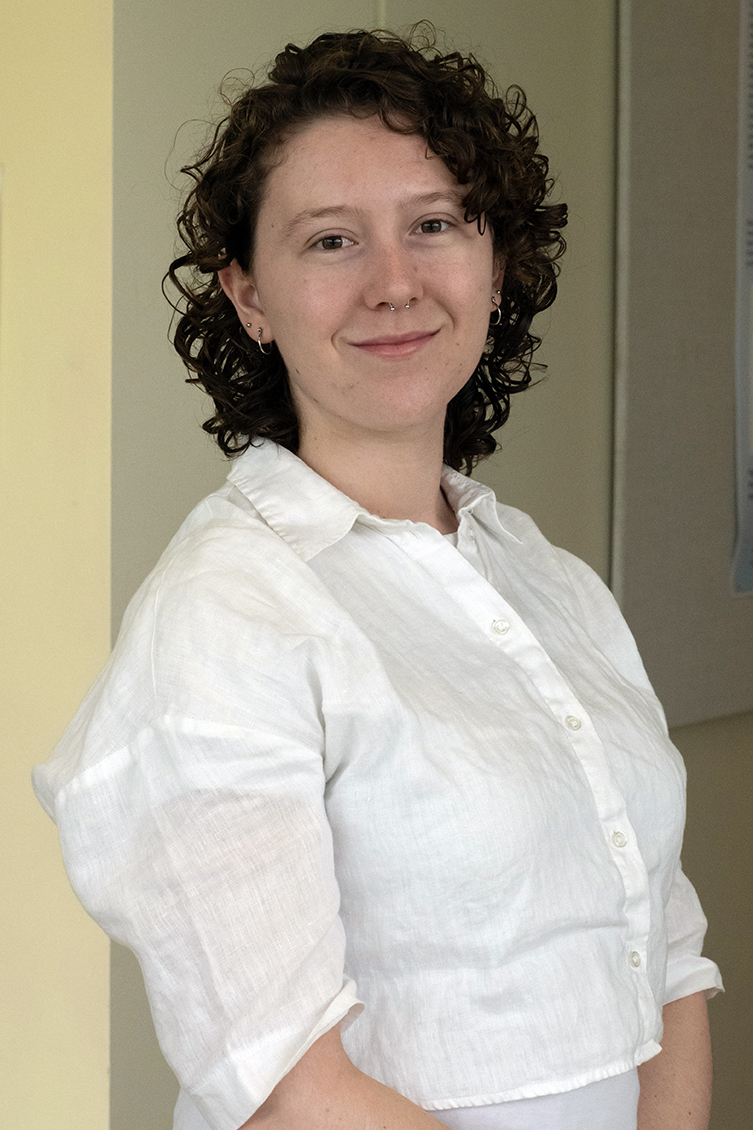

MAJORS
- Music & Chemistry (ACS) track)

EXPERIENTIAL LEARNING
- John S. Toll Fellowship
- Pi Lambda Theta educational honor society

CAMPUS ACTIVITIES
- Cater Society of Junior Fellows president, Gibson Crew, Writing Center Tutor
- Quantitative Skills Center course mentor, Arts and Crafts Club social media manager
- "I can't have one without the other—I could never just do science. I could never just do music. The ability to do music and chemistry at the exact same time has been incredible for me."
DREADD-filled Summer Research
Noah Gibson '27
Cape Town, South AfricaMAJORS
- Music & Chemistry (ACS) track)
EXPERIENTIAL LEARNING
- Pi Lambda Theta educational honor society
CAMPUS ACTIVITIES
- Cater Society of Junior Fellows president, Gibson Crew, Writing Center Tutor
- Quantitative Skills Center course mentor, Arts and Crafts Club social media manager
- "I can't have one without the other—I could never just do science. I could never just do music. The ability to do music and chemistry at the exact same time has been incredible for me."
“I can’t have one without the other—I could never just do science, I could never just do music,” she said. “The ability to do music and chemistry at the exact same time has been incredible for me.”
At the beginning of the summer, Gibson used funds from the Cater Society of Junior Fellows to travel to Vienna to research her vocal performance SCE, which focuses on female composers from classical Europe to modern day. Since returning, Gibson has been working as a Toll Fellow with chemistry professor Quinn Hu on a project that provides the foundation for her chemistry SCE.
Gibson approached Hu, a computational chemist, about being a research fellow for the summer following research she did with psychology professor Dan Kochli. That research looked at Designer Receptors Activated by Designer Drugs (DREADDs), which inhibit or activate specific neural pathways. The research team turned on and off specific pathways in the brain to see if they were related to fear and provided different drug treatments to see if they would mitigate the effects of PTSD symptoms.
Gibson became most interested in the activation of DREADDs and how they can be used most effectively, a topic she explored further in a final project for Hu’s computational chemistry course, which led to the research they pursued this summer.
Computational chemistry is the modeling of chemical reactions digitally. For this project, Hu and Gibson created specific systems in a digital environment and manipulated them to see how different receptors—namely clozapine-N-oxide (CNO) and deschloroclozapine (DCZ)—activate DREADDs.
“Computationally, you can look at the binding entities between things, which is very useful,” Gibson said.
The research duo also pulled DCZ outside of the protein to see how the energy increased and then plateaued, allowing them to better understand how long the DREADDs activate.
“A lot of this stuff is new to me,” Gibson said of the research project subject matter and methodology. Much of the work for the project was learning processes as much as implementing protocols and analyzing data.
“[This project] has solidified that this is what I want to do,” she said. Gibson hopes to attend graduate school next year to earn a master’s degree in computational chemistry.
Not only has the research itself been instrumental in affirming Gibson’s next steps, but Gibson said Hu’s willingness to work on a project with a research question she proposed was validating.
“It’s been really good for me as someone who wants to go into research,” Gibson said of working with Hu on the summer research project.
For now, though, Gibson is getting ready for her final year at Washington. Using this summer’s research as the foundation, Gibson’s chemistry SCE will continue to explore DREADDs and their effects. Her music SCE will be a recital of opera music composed by those female composers she researched earlier this summer and others.
—MacKenzie Brady ’21