William Paca, Revolutionary and Patron of Washington College
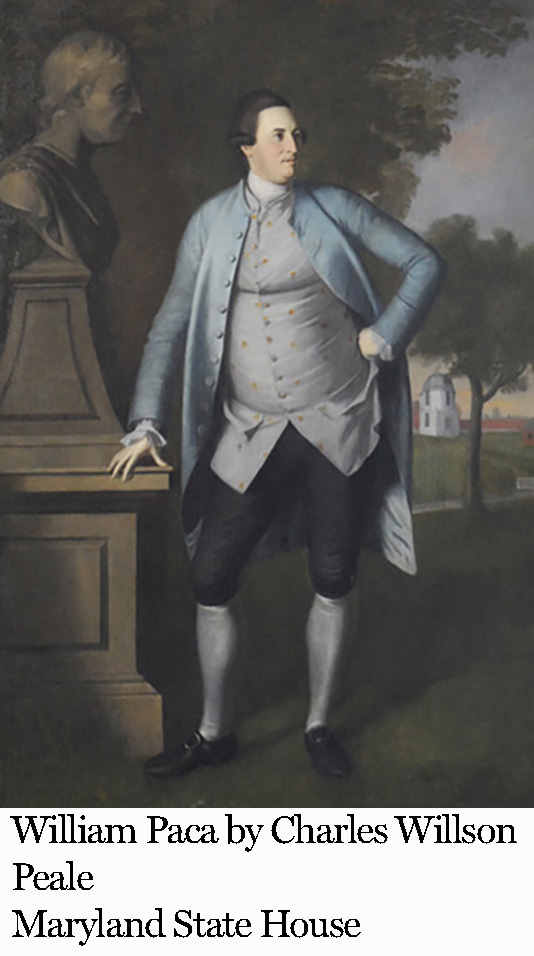
Maryland’s third Governor was influential in establishing Washington College. He was also a signer of the Declaration of Independence, a Revolutionary, and a bit of a rogue.
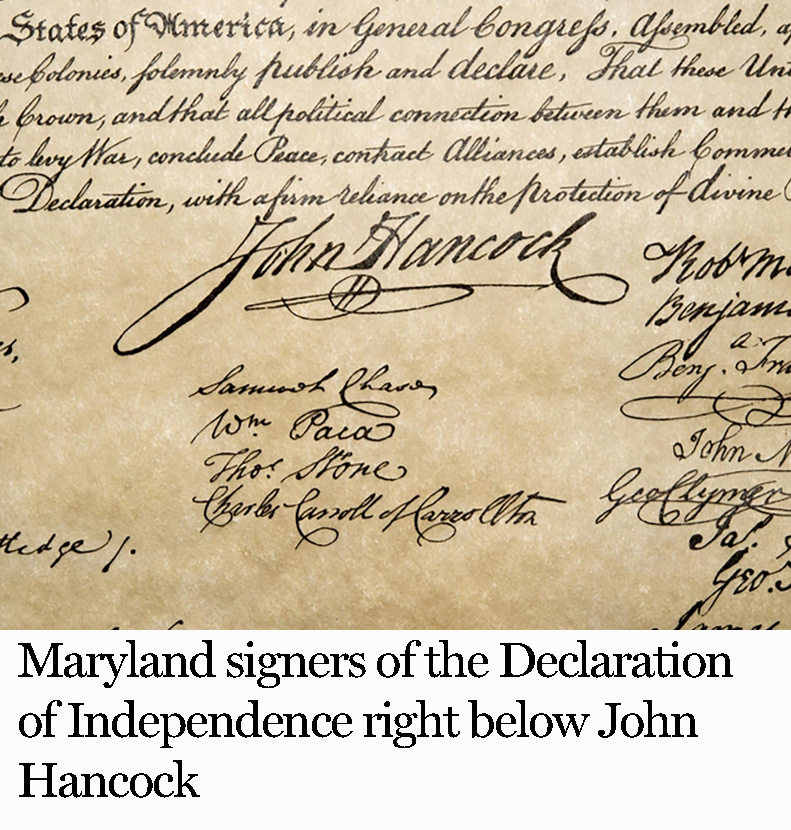 William received an excellent education, earning both a bachelor’s degree and a Master
of Fine Arts from the College of Philadelphia. He then went to Inner Temple in London
to read law. Along with owning tobacco plantations on the Eastern Shore, he opened
a law practice in Annapolis and, as often happens, entered politics. He served in
the Maryland Proprietary Assembly, the colonial law-making body under the authority
of Lord Baltimore. He served from 1767 until 1774, when he joined the First and Second
Continental Congresses as a representative from Maryland; he would go on to sign the
Declaration of Independence. He co-founded, along with Samuel Chase, the Annapolis
Sons of Liberty.
 While not a soldier, Paca’s service in government helped build the state constitution
and ensured defense for the Eastern Shore. The fact that his wealthy land holdings
were located there probably helped. He did use his own money to purchase supplies
for Maryland’s troops and advocated for support of the veterans. His strength was
in the written word. He wrote speeches for Samuel Chase, allowing Chase to take on
the public role. He was known as the “deliberator” and had a reputation for being
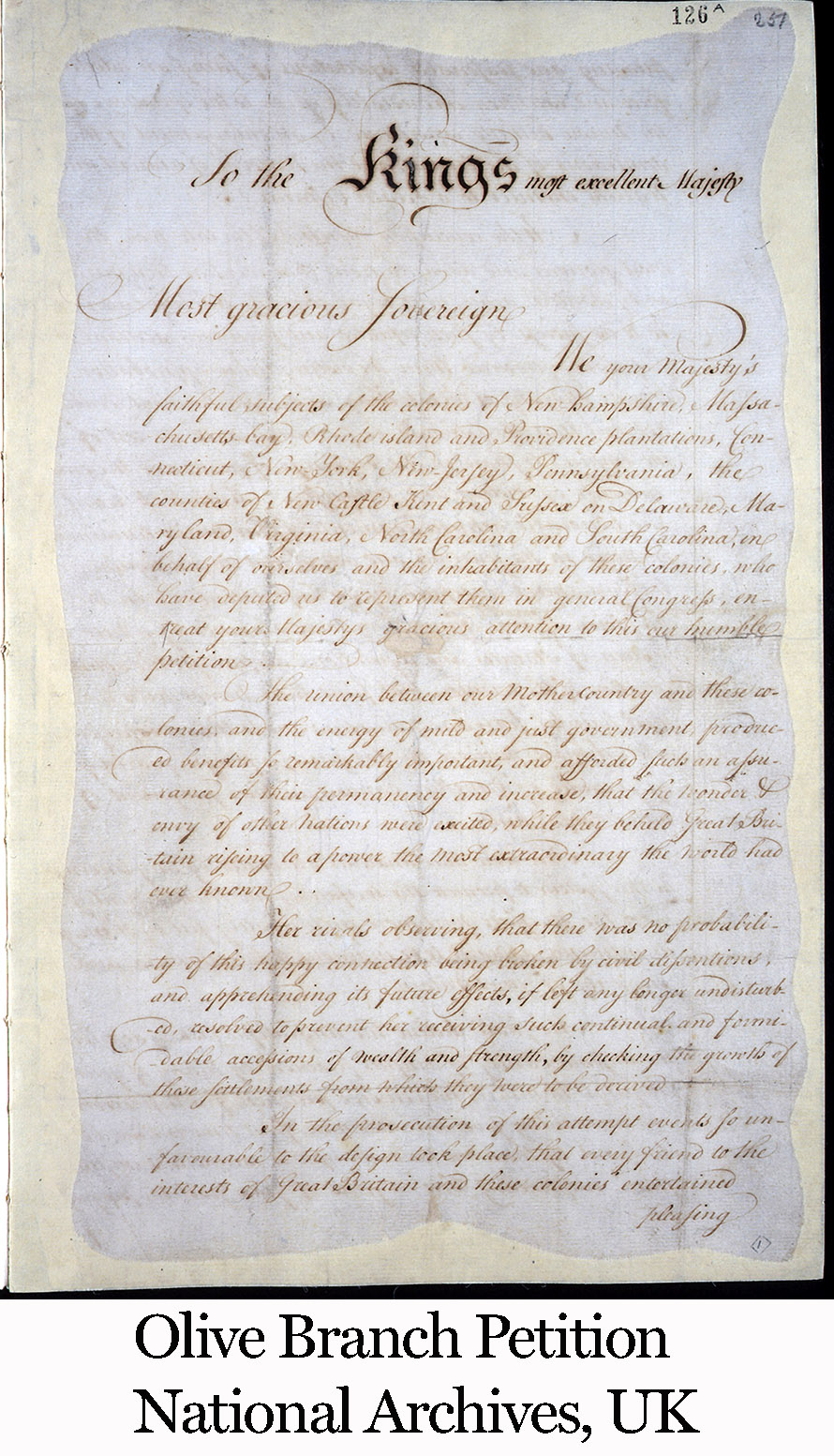
honest. In 1775, he was one of the signers of the Olive Branch Petition. This was
signed on July 8, 1775, by the Second Continental Congress as an effort to avoid the
coming war. King George III refused to even read it. While Paca preferred using words,
he was not opposed to taking action. In 1773, an act that imposed fees on tobacco
expired; as a tobacco planter with an interest, he urged the then-Governor not to
continue it.
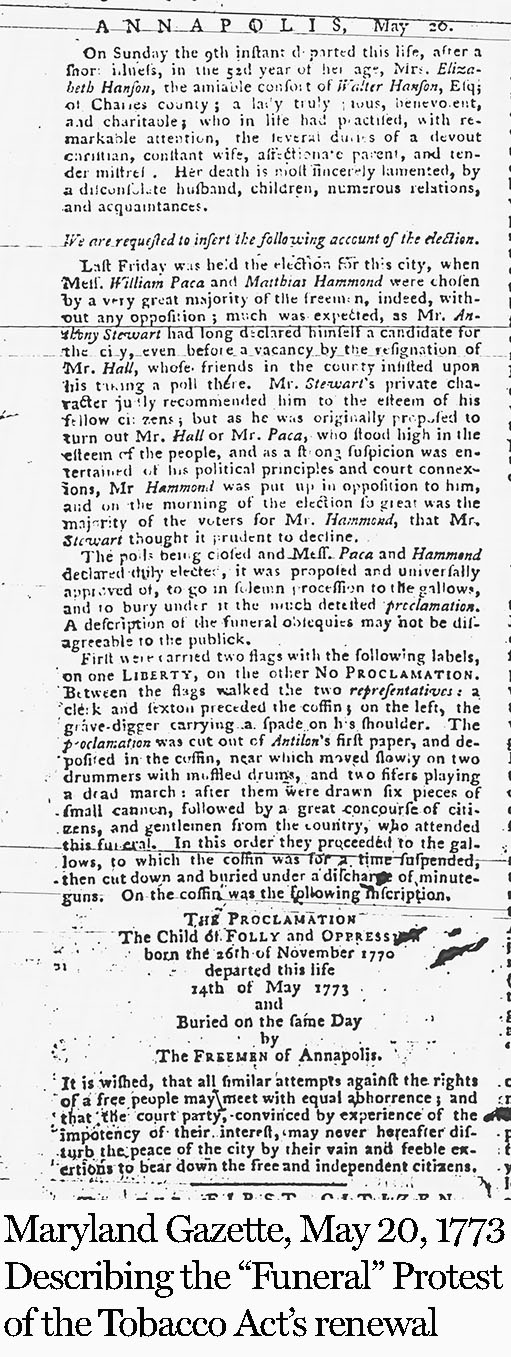 When the Governor continued the act, he and Chase staged a protest by parading a hanged
effigy of the proclamation in the streets of Annapolis, even placing it in a coffin,
conducting a burial, and firing guns from his ship in the harbor. While the tobacco
act protest may have had more to do with personal finance, he continued his outspokenness
against imposed British taxes with the revolt against the Tea Act. He had the support
of many patriotic Marylanders and was elected as Governor from 1782-1785. The Washington
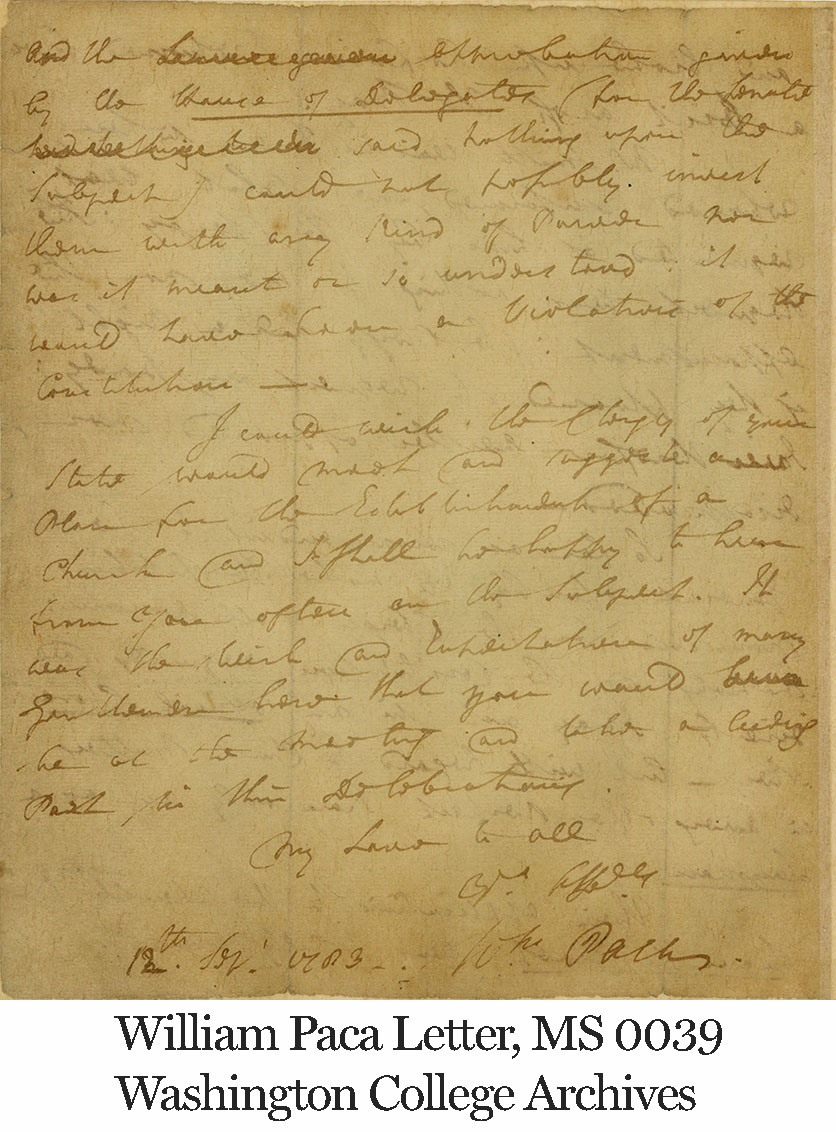
College Archive has a letter from Gov. Paca to Gen. Joseph Reed regarding the Episcopal Church in the newly created
United States. It gives us a glimpse into how new the country was and how it needed
to take control of issues that had been decided in England, aside from taxes and acts
from Parliament. After he left the Governorship, he was succeeded by General Smallwood
of the Maryland 400; he continued to serve the public in the Federal Judiciary.
 What happened to his firebrand partner and fellow Declaration signer Samuel Chase?
He moved to Baltimore and joined the State Judiciary and then served on the Supreme
Court as an associate justice. He was later impeached, though it was thought to be
politically motivated during the election between Adams and Jefferson.
Like most prominent men of his time, William Paca made much of his money off the back of enslaved labor. Paca was born in Abingdon, in present-day Harford County, to John Paca, a wealthy planter. William married Mary Chew, who also came from a well-to-do planter family. William and Mary held Wye Plantation, near Easton, along with a townhouse in Annapolis. Growing the cash crop of the time, tobacco, it is thought that over a hundred enslaved people labored for the Pacas. After Mary died in 1774, he married again in 1777 to Ann Harrison. She passed in 1780. From these two marriages, he had three children. After the death of his first wife and before his second marriage, he fathered two illegitimate children. A daughter, Henrietta Maria, with Sarah Joyce, and another daughter, Hester, with a Free woman of color, some say “Mulatto,” named Levinia. Surprisingly and scandalously, he acknowledged both daughters. He did see to the welfare and education of both, sending them to a boarding school in Philadelphia. William Paca is an example of a man whose actions and words shaped not only Maryland but a new nation, while at the same time benefiting from the oppression of others.