Washington Slept Here!
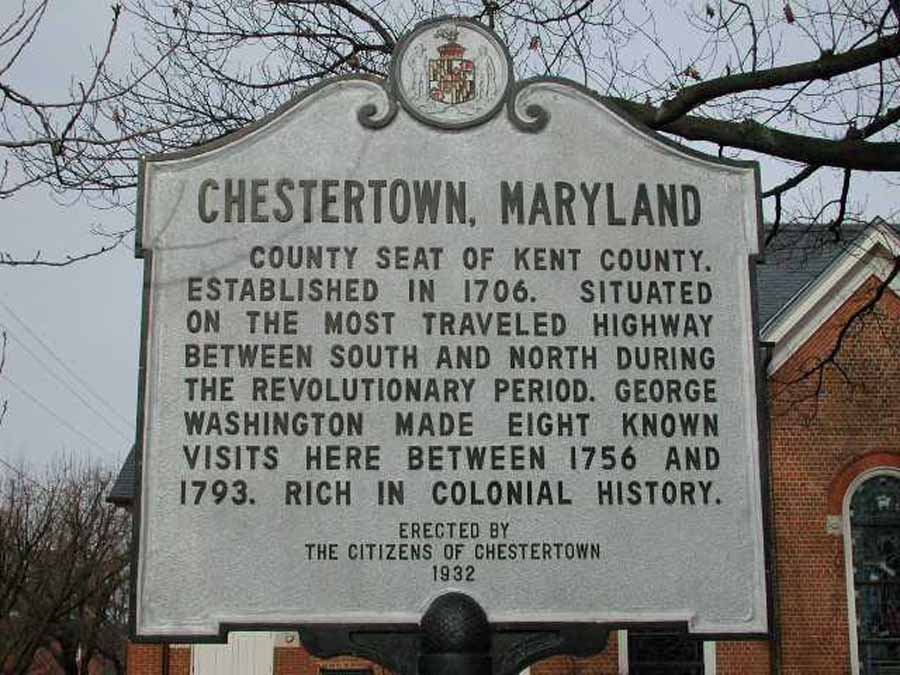
In 1791, George Washington made a tour of the Southern States of the new nation. His trip took him through Chestertown.
In fact, George Washington made several visits to the Eastern Shore. Today, we are a sleepy bucolic area accessible across the Chesapeake Bay by the bridge. Nearly five miles that Washington never had to deal with. That didn't stop him from passing through Chestertown eight times between 1753 and 1793. So why and when did Washington make so many trips through our area?
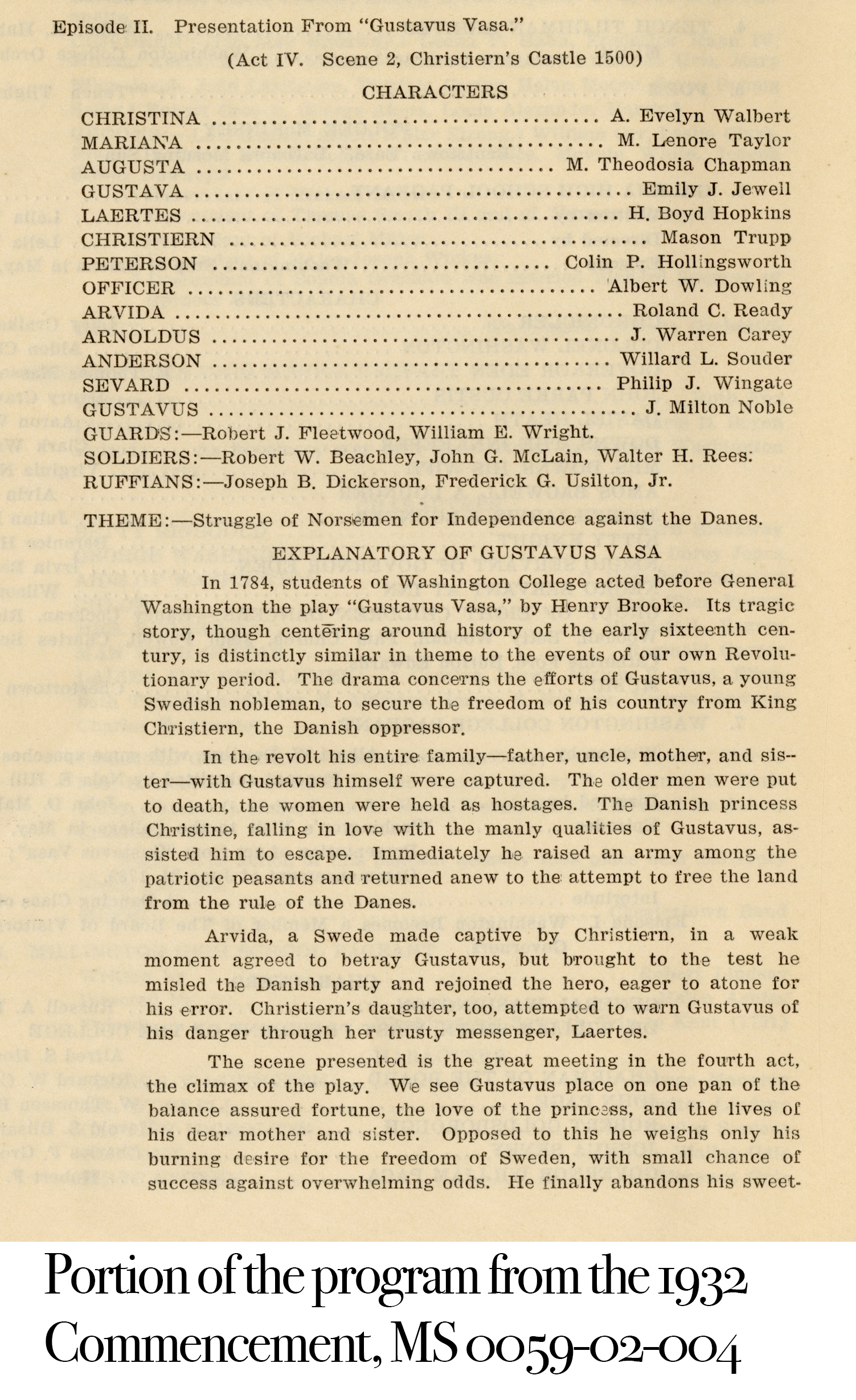 The most notable visits had to be between 1784 and 1789. George Washington gave his
name and money to start Washington College. In 1784, he attended the laying of the
cornerstone for the original college building. He came again in 1789 to receive his
honorary Doctor of Law degree.
The most notable visits had to be between 1784 and 1789. George Washington gave his
name and money to start Washington College. In 1784, he attended the laying of the
cornerstone for the original college building. He came again in 1789 to receive his
honorary Doctor of Law degree.
1789 was also the year that Washington became President of the United States. The nation's capital at that time was Philadelphia. Washington split his time between Philly and his home at Mount Vernon. This allowed him to continue his gentleman farming and skirt the Pennsylvania's 1780 Act for the Gradual Abolition of Slavery. Non-residents could only hold enslaved individuals for six months. This created a loophole that Washington took advantage of by ensuring that he and his “property” never stayed in the state for six continuous months. This would become less of an issue when, in 1791, the nation's capital moved to the newly created District of Columbia.
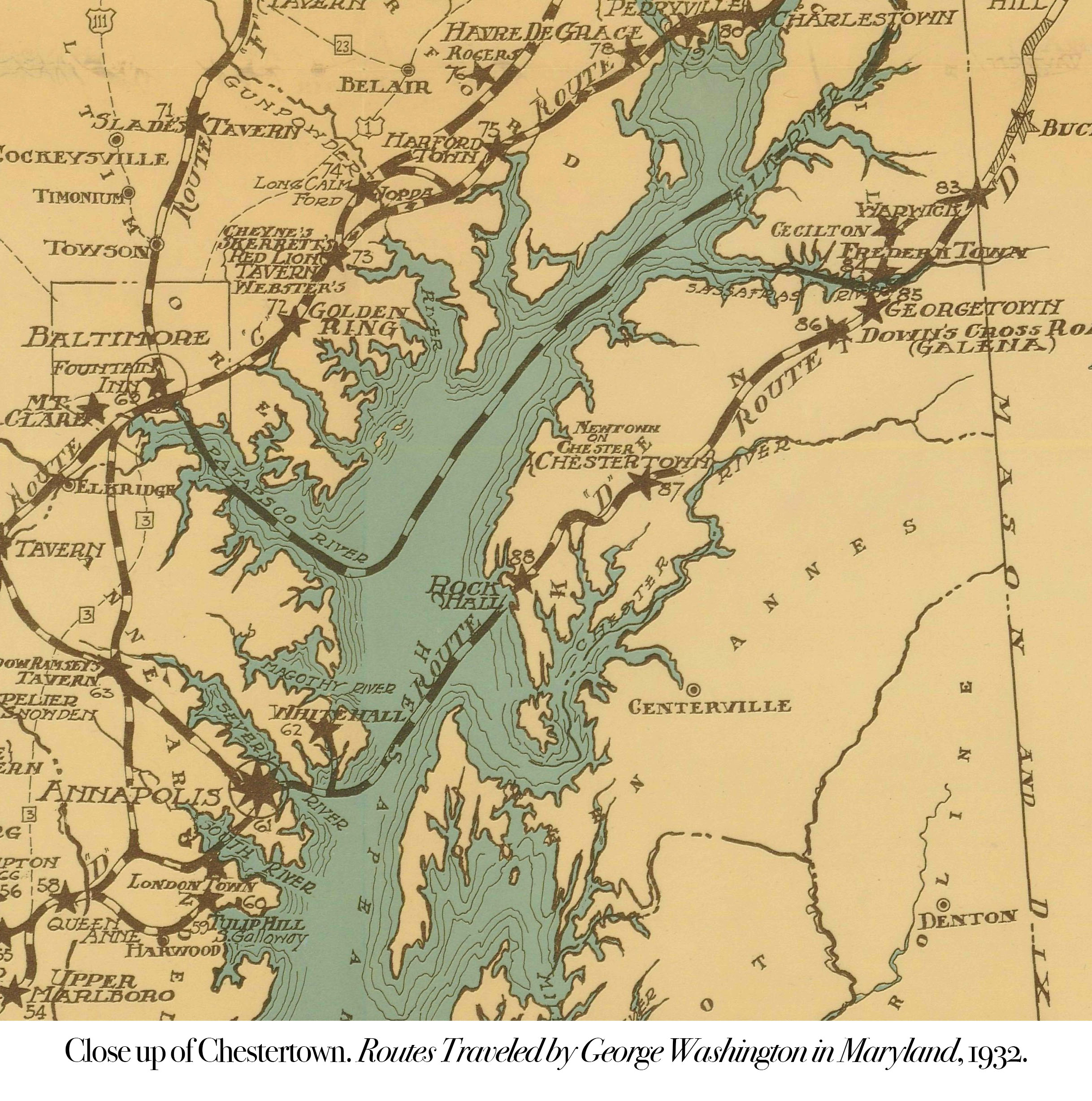 Also in 1791, Washington was able to embark on his “Southern Tour.” After coming to
the presidency, he had intended to visit all the states in the new union, and he was
finally able to do so. The journey began in late March, and Washington left Philadelphia
but wanted to stop at Mount Vernon first. During this leg of the journey, it took
him through the Eastern Shore. It may seem like a roundabout way to go from Philly
to Mount Vernon, but this was the way to traverse the Bay. His first stop was to dine
at “Chester” (Chestertown) with Mr. Wythes. After a brief trip to Wilmington, they
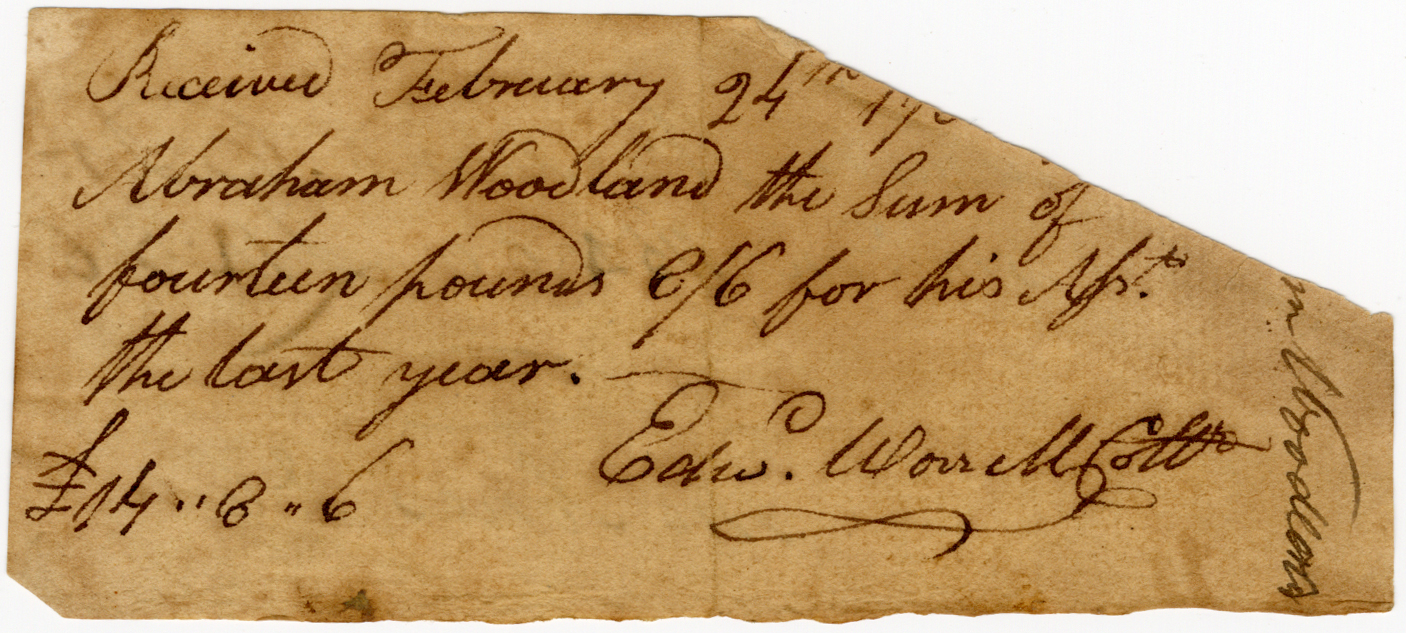
returned to Chestertown, lodging with the Worrells before taking a boat from Rock
Hall across the bay.
Also in 1791, Washington was able to embark on his “Southern Tour.” After coming to
the presidency, he had intended to visit all the states in the new union, and he was
finally able to do so. The journey began in late March, and Washington left Philadelphia
but wanted to stop at Mount Vernon first. During this leg of the journey, it took
him through the Eastern Shore. It may seem like a roundabout way to go from Philly
to Mount Vernon, but this was the way to traverse the Bay. His first stop was to dine
at “Chester” (Chestertown) with Mr. Wythes. After a brief trip to Wilmington, they
returned to Chestertown, lodging with the Worrells before taking a boat from Rock
Hall across the bay.
The Bridge we drive across the Chesapeake Bay today was built in 1952, with the companion bridge completed in 1973. Prior to that, the ferry was the main form of transportation. Routes from Baltimore to sites like Rock Hall and Betterton were frequented daily, creating holiday spots along the Kent County coastline. Those of us who have had to deal with long traffic delays and white-knuckling it across the span with only a jersey barrier between a large drop and a 50 mph car ride might welcome the return of a ferry system. The co-education of Washington College traces its roots to a ferry ride. President Charles Reid would often take the Ferry to Baltimore, and on one fateful journey, he was confronted by two women who questioned him on why there were no classes for women at the college. Reid agreed with the points made, and women were allowed to attend, as day students only, in 1892.
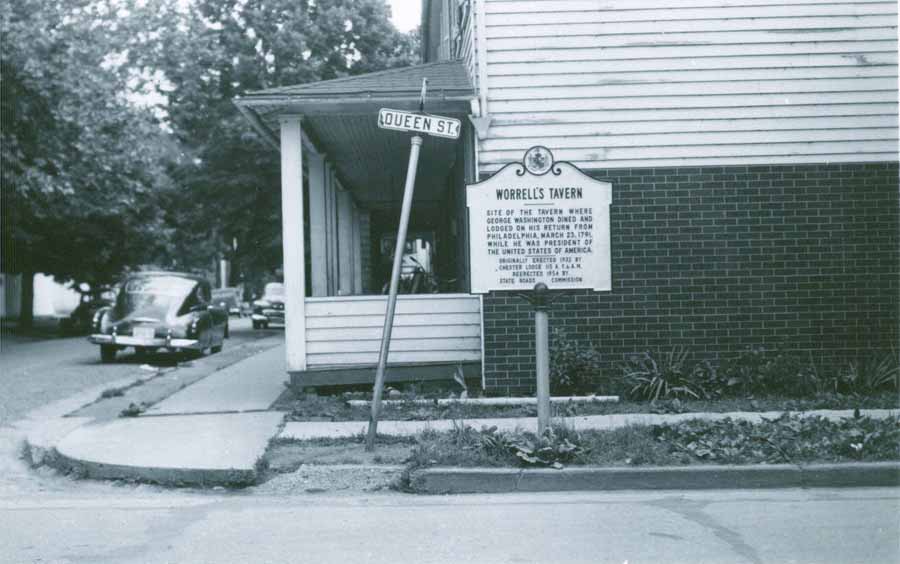 If one slows down when walking around Chestertown or driving through any of the counties
on the Eastern Shore, they will see the Maryland Roadside Historical Markers that note the various locations and routes George Washington took on his numerous
journeys. He also wrote about his trips in diaries and letters. These can be searched
and read through Founders Online. When in Chestertown, Washington often stayed at Worrell's Tavern. The tavern was
located at the Southwest corner of Queen and Cannon Street. Sadly, the structure has
been lost to time, but you can still experience its contemporary White Swan Tavern
on High Street. The Worrells were a long-standing family in Kent County with various
businesses and farms.
If one slows down when walking around Chestertown or driving through any of the counties
on the Eastern Shore, they will see the Maryland Roadside Historical Markers that note the various locations and routes George Washington took on his numerous
journeys. He also wrote about his trips in diaries and letters. These can be searched
and read through Founders Online. When in Chestertown, Washington often stayed at Worrell's Tavern. The tavern was
located at the Southwest corner of Queen and Cannon Street. Sadly, the structure has
been lost to time, but you can still experience its contemporary White Swan Tavern
on High Street. The Worrells were a long-standing family in Kent County with various
businesses and farms.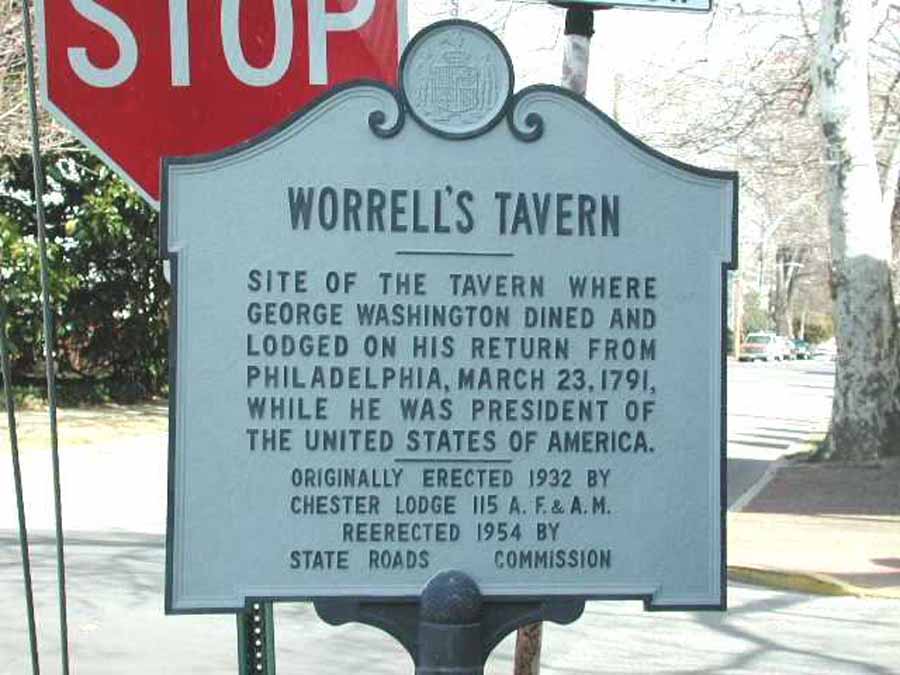
It is also believed that he visited the Hynson-Ringgold house, as Washington was acquainted
with Thomas Ringgold. In 1796, Washington wrote to William Pearce that he had visited Thomas Ringgold. The Pearce family would also
later go on to live in the Hynson-Ringgold house. Chestertown has kept its historical
charm, but it is a simple, sleepy feeling. As we walk through downtown or visit the
President's house at holidays, one can try and picture Washington in his carriage
driving down High Street alongside or sitting in the front room of the Hynson-Ringgold
house looking out at a busy, bustling waterfront full of merchant ships.