The Battle of Brooklyn and the Maryland 400
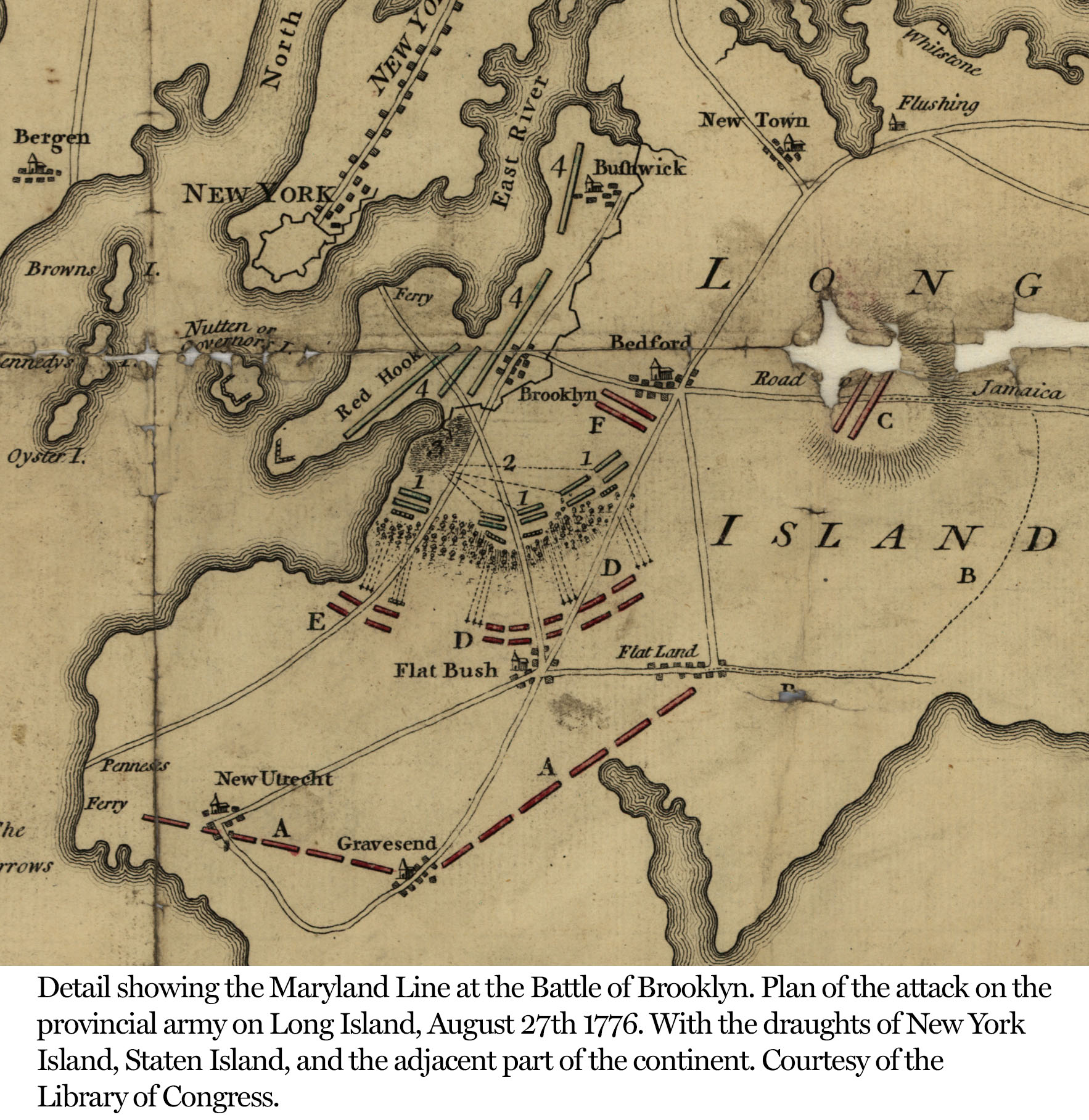
On August 27th, 1776, the first battle of the American Revolution after the adoption of the Declaration of Independence took place.
The shots heard round the world had rung out in Massachusetts on April 19, 1775; the Declaration of Independence was signed July 4, 1776, and just over a month later, a battle took place that could have ended it all were it not for 400 Marylanders, about whom little to no information exists.
New York, centrally located and an important port, was, as it is today, a vital hub. It required fortification against a British attack. After having lost Boston, New York was the logical next stop for the British. General Washington and his troops had fallen back to New York and prepared for attack. America now had the Continental Army, but they were untrained and, often, far from home, worrying about family and farms. This hampered the attempts to fortify the city. The Continental Army was unprepared for the battle-tested and disciplined British forces, especially as the British Fleet arrived in the harbor. Washington was not going to give up New York without a fight.
 It is hard to imagine what the terrain of New York, its boroughs, and Long Island
looked like in 1776. Today it is a sprawling metropolis teeming with people and architecture.
The land itself has been filled in along the river and altered for Central Park. But
it is often the landscape that decides battles. Who has the fortified position? Can
they defend it, and, if need be, can they retreat? Washington began his career as
a surveyor. In Colonial America, this was a highly respected occupation. So much of
the land was not mapped and constantly being divided into property lots. A surveyor
was always needed to identify boundaries and map new territory. The Battle that took
place hinged on an unguarded pass in the Gowans Heights that allowed British General
Howe’s troops to come up through present-day Flatbush and begin to outflank the American
forces. Howe had learned about the pass from local loyalists. Throughout the war,
Long Island remained a firm Loyalist stronghold, often raiding across the Long Island
Sound and thieving and attacking the Patriot farms in Connecticut. They knew the terrain,
and they aided the enemy. It was not the first nor the last time that an unguarded
hill or outdated map turned the tide of the Revolution.
It is hard to imagine what the terrain of New York, its boroughs, and Long Island
looked like in 1776. Today it is a sprawling metropolis teeming with people and architecture.
The land itself has been filled in along the river and altered for Central Park. But
it is often the landscape that decides battles. Who has the fortified position? Can
they defend it, and, if need be, can they retreat? Washington began his career as
a surveyor. In Colonial America, this was a highly respected occupation. So much of
the land was not mapped and constantly being divided into property lots. A surveyor
was always needed to identify boundaries and map new territory. The Battle that took
place hinged on an unguarded pass in the Gowans Heights that allowed British General
Howe’s troops to come up through present-day Flatbush and begin to outflank the American
forces. Howe had learned about the pass from local loyalists. Throughout the war,
Long Island remained a firm Loyalist stronghold, often raiding across the Long Island
Sound and thieving and attacking the Patriot farms in Connecticut. They knew the terrain,
and they aided the enemy. It was not the first nor the last time that an unguarded
hill or outdated map turned the tide of the Revolution.
 So how did four hundred Marylanders take on two thousand British troops in Brooklyn?
Well, one of the hints is in Maryland’s nickname, “The Old Line State.” Formed on
January 18, 1776, the Maryland Line was created as a formation under the Continental
Army. “Maryland Line” referred to the quota of numbered infantry regiments, which
was eight. Most from Kent County were in the second and seventh regiments. Despite
only being formed in January of 1776, these regiments were well equipped and had drilled,
marking them as a disciplined and cohesive unit. This training is what made the efforts
of the Maryland Line so critical in the Battle of Brooklyn. Howe’s British troops
flowed through the pass and took the ridge, easily fending off Col. Miles’ patriots.
Hessian mercenaries came up through Flatbush and struck the rear of the colonial army,
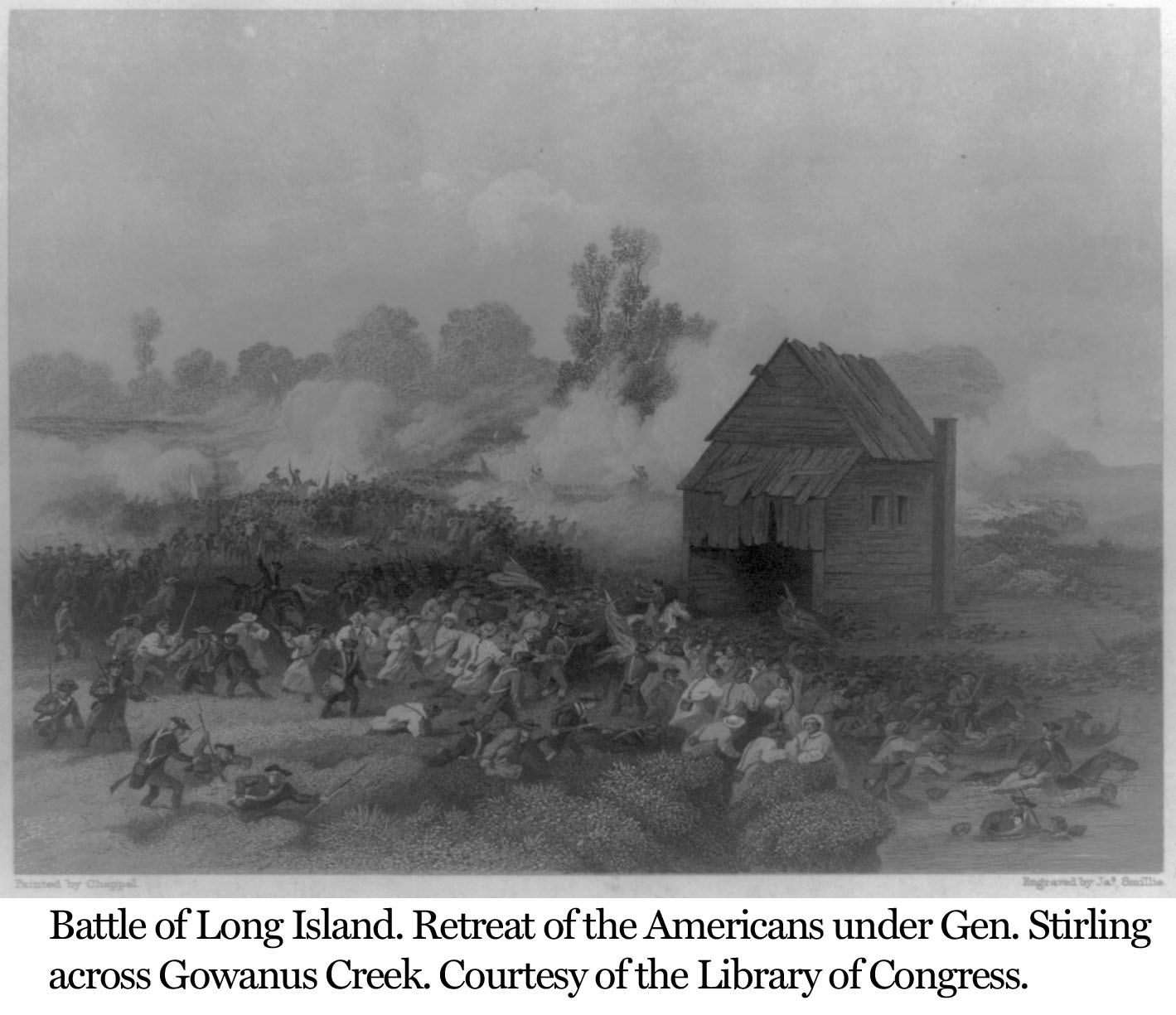
fighting brutally, often in hand-to-hand combat. A retreat was the only way for the
colonists to salvage the day; if the fledgling Continental Army was taken here, the
war would be over. What was left of the Army had to cross the East River into Manhattan.
Making sure the retreat could happen were 400 Marylanders; 256 died in the battle,
100 more were captured and spent most of the war in appalling prison ships where disease
was rife.
So how did four hundred Marylanders take on two thousand British troops in Brooklyn?
Well, one of the hints is in Maryland’s nickname, “The Old Line State.” Formed on
January 18, 1776, the Maryland Line was created as a formation under the Continental
Army. “Maryland Line” referred to the quota of numbered infantry regiments, which
was eight. Most from Kent County were in the second and seventh regiments. Despite
only being formed in January of 1776, these regiments were well equipped and had drilled,
marking them as a disciplined and cohesive unit. This training is what made the efforts
of the Maryland Line so critical in the Battle of Brooklyn. Howe’s British troops
flowed through the pass and took the ridge, easily fending off Col. Miles’ patriots.
Hessian mercenaries came up through Flatbush and struck the rear of the colonial army,
fighting brutally, often in hand-to-hand combat. A retreat was the only way for the
colonists to salvage the day; if the fledgling Continental Army was taken here, the
war would be over. What was left of the Army had to cross the East River into Manhattan.
Making sure the retreat could happen were 400 Marylanders; 256 died in the battle,
100 more were captured and spent most of the war in appalling prison ships where disease
was rife.
 The Maryland State Archives created “Finding the Maryland 400,” an effort to identify and tell the story of these brave men. Many Washington College
Students have participated in this project as Explore America Interns, researching
these soldiers through primary source materials.
The Maryland State Archives created “Finding the Maryland 400,” an effort to identify and tell the story of these brave men. Many Washington College
Students have participated in this project as Explore America Interns, researching
these soldiers through primary source materials.
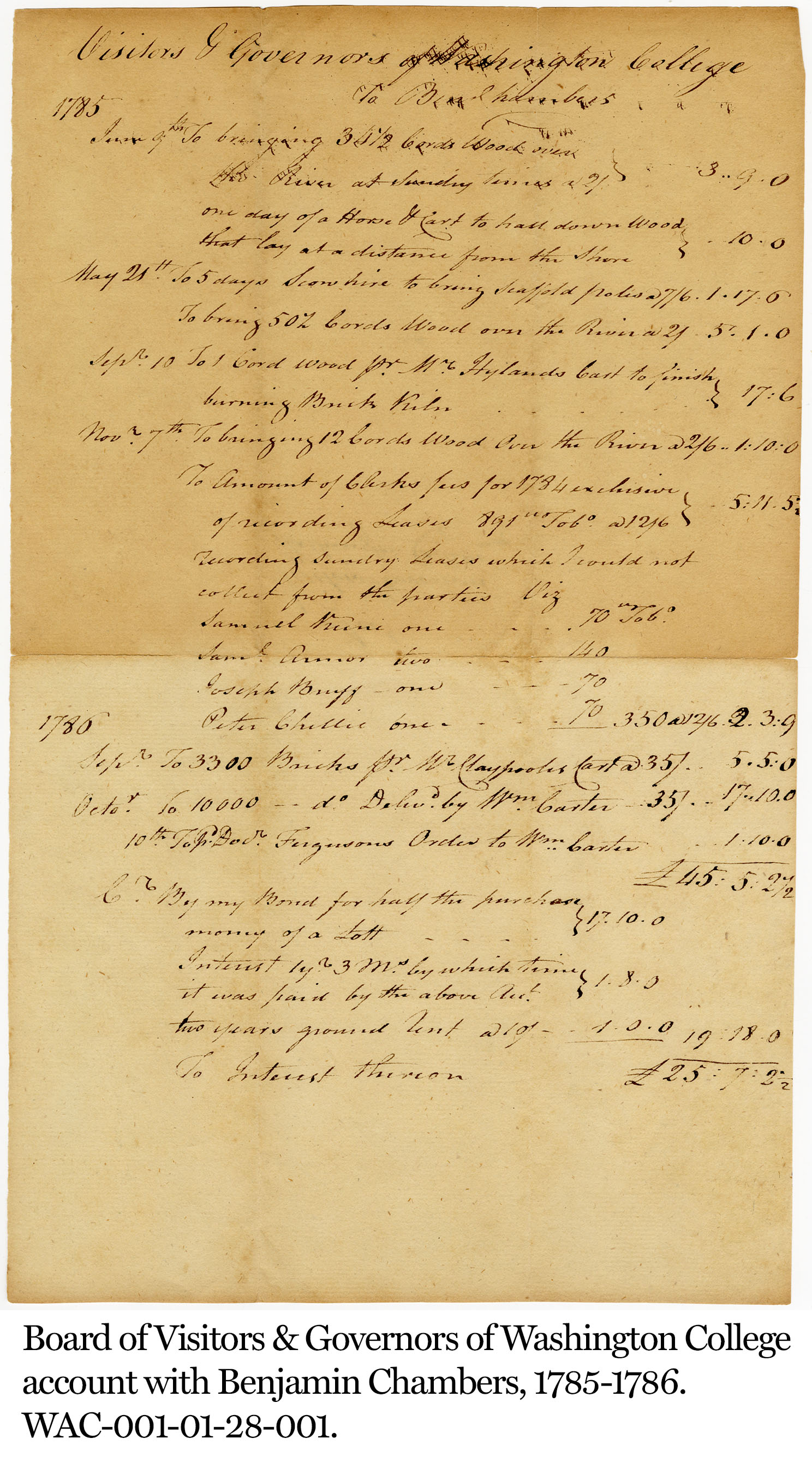
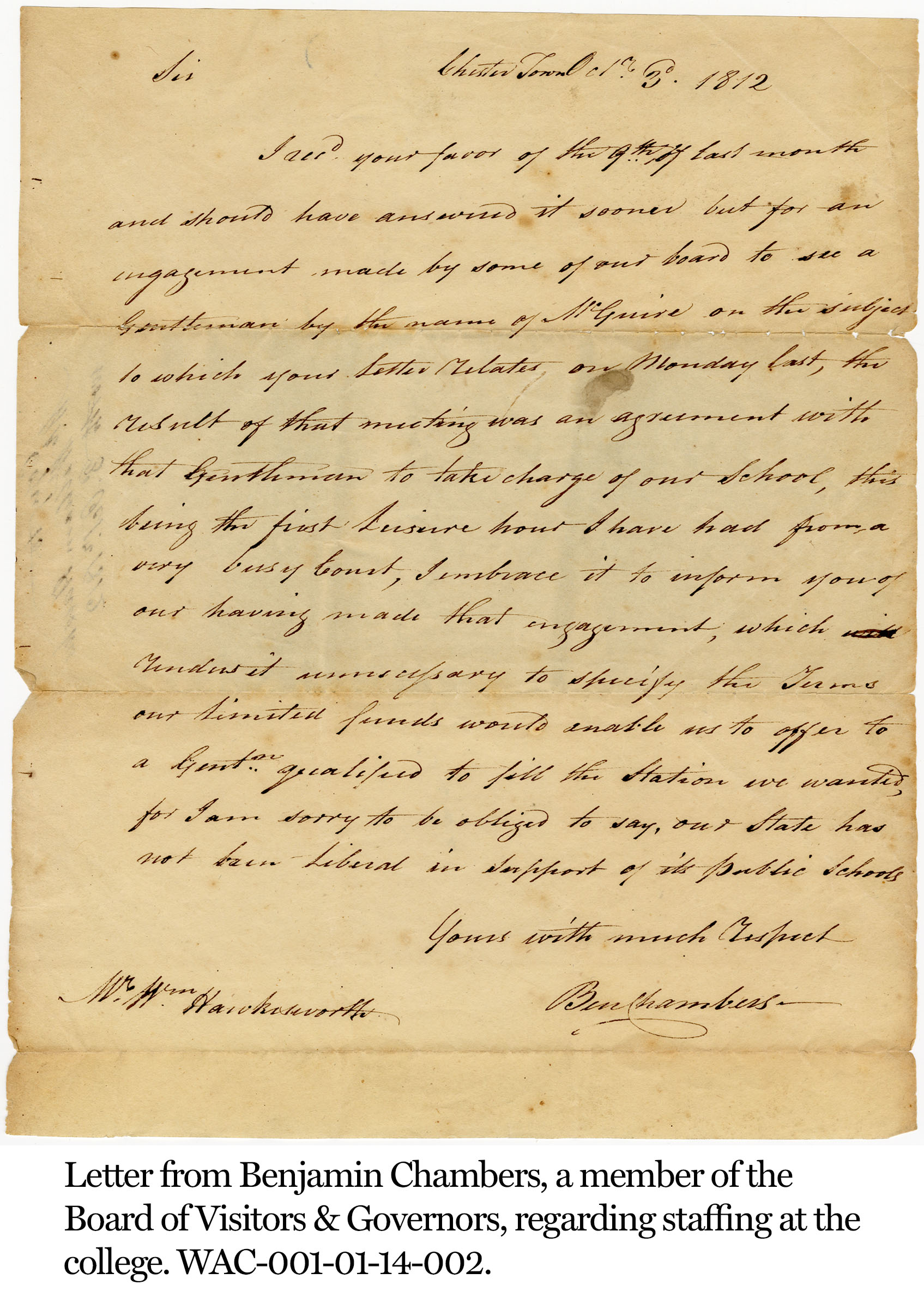
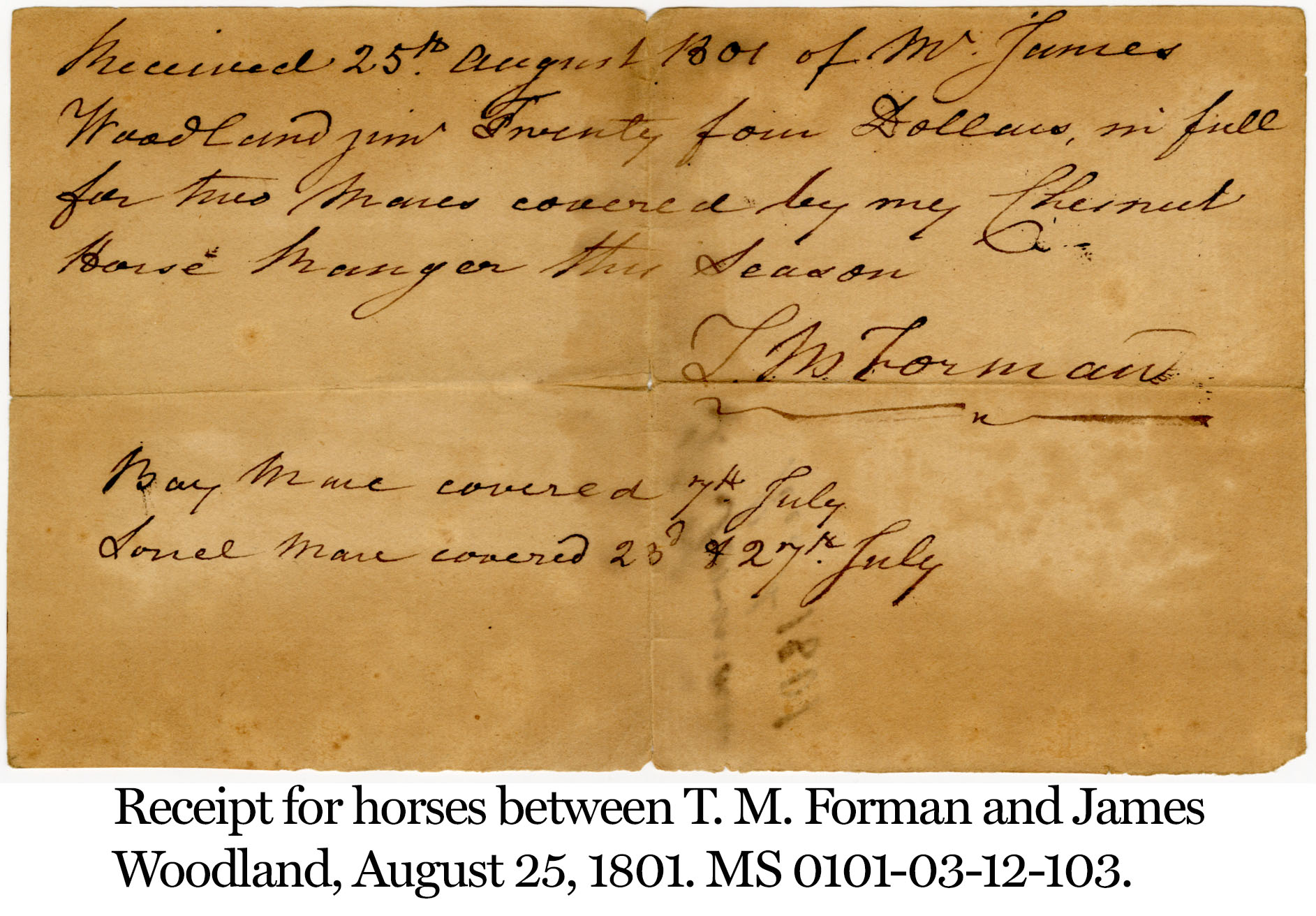
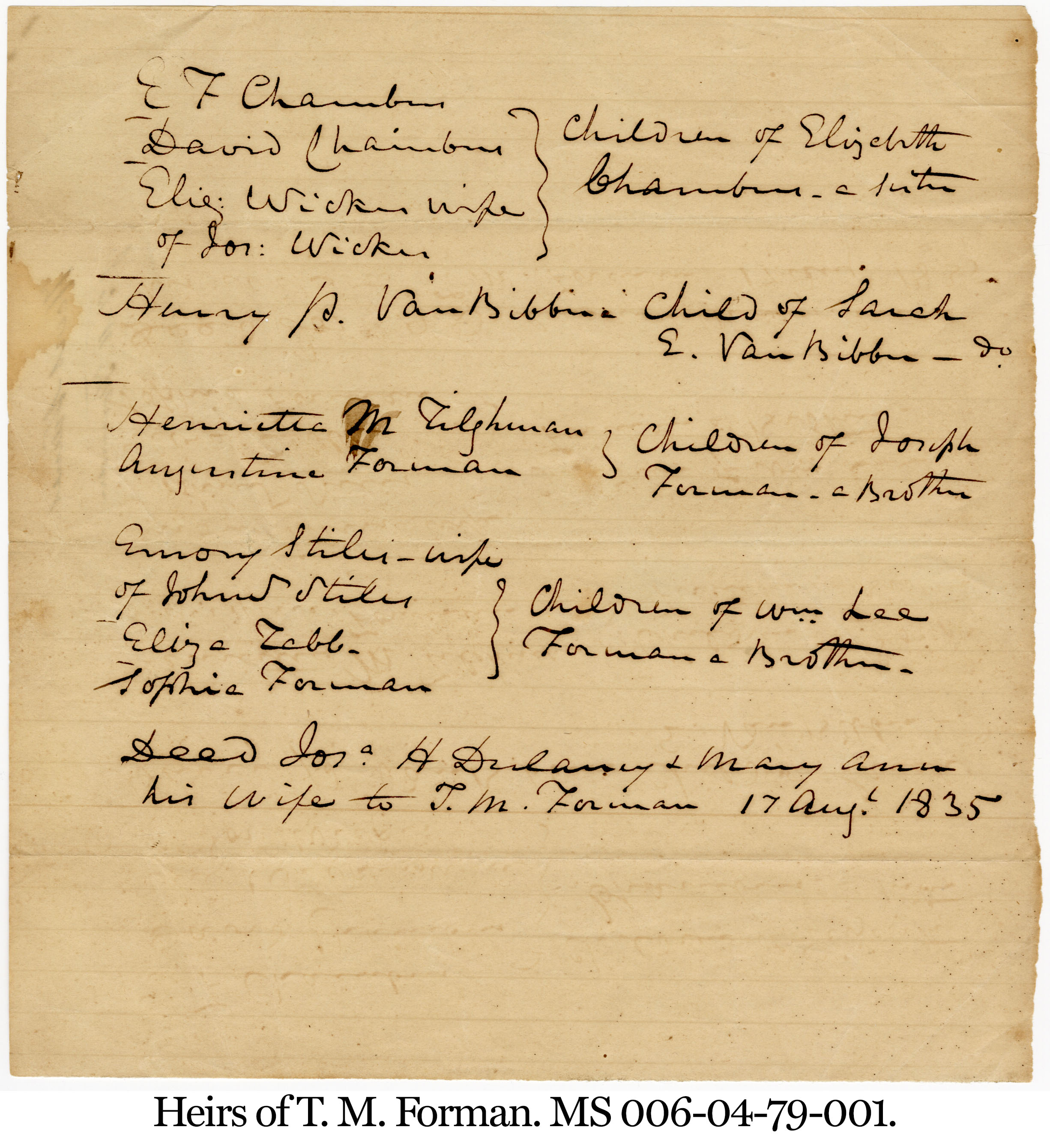
Men from Kent County were in many of the regiments, with most being in the 2nd, 5th, and 7th, like James Carmicheal and John Lynch. However, some prominent names were in the 1st regiment, including Benjamin Chambers and Thomas M. Forman. Gen. Chambers was also present at Washington’s Crossing of the Delaware and the battles at Princeton and Trenton. After the war, Chambers was one of the original petitioners of Washington College, served as our first Treasurer, and served on its first Board of Visitors and Governors. Thomas M. Foreman, Chambers’ future brother-in-law, joined as a cadet and acted as an aide to the officers. He would later take his experience and fight the British again in the War of 1812, finally retiring to his plantation in Cecil County.
 Private James Carmichael, whose relationship to William Carmichael, an early American
diplomat from Kent County, is unknown, survived the war but not without injury. He
received a disability pension starting in 1781. He sadly passed in 1785. Private John
Lynch also suffered an injury and received compensation. By 1807, his pension ran
out, and he was unable to support himself or his family; he petitioned the House of
Delegates and was awarded half the pay of a corporal.
Private James Carmichael, whose relationship to William Carmichael, an early American
diplomat from Kent County, is unknown, survived the war but not without injury. He
received a disability pension starting in 1781. He sadly passed in 1785. Private John
Lynch also suffered an injury and received compensation. By 1807, his pension ran
out, and he was unable to support himself or his family; he petitioned the House of
Delegates and was awarded half the pay of a corporal.
“they have had the same under consideration, and find, from ample testimony that the petitioner was wounded when fighting the battles of his country, which secured liberty and independence to America, the effects of which have rendered him unable, in his advanced age, to procure a support for himself and children, who are dependent on him for their subsistence; with this view of his case, your committee, under the impression that it becomes the duty of this state to provide for the unfortunate and meritorious soldier, who has spent the prime of his life, and nobly shed his blood, in her cause.” (Journal of the House of Delegates, 1807)
 The sacrifices made on August 27, 1776, and the lifelong consequences for those who
survived are what make the “Maryland 400” the heroes they are, and projects to bring
their stories back from obscurity are what make history so important. As we celebrate
this 250th, we have to remember those who gave everything to make it possible.
The sacrifices made on August 27, 1776, and the lifelong consequences for those who
survived are what make the “Maryland 400” the heroes they are, and projects to bring
their stories back from obscurity are what make history so important. As we celebrate
this 250th, we have to remember those who gave everything to make it possible.