Jesse Moore, teacher and Valley Forge resident
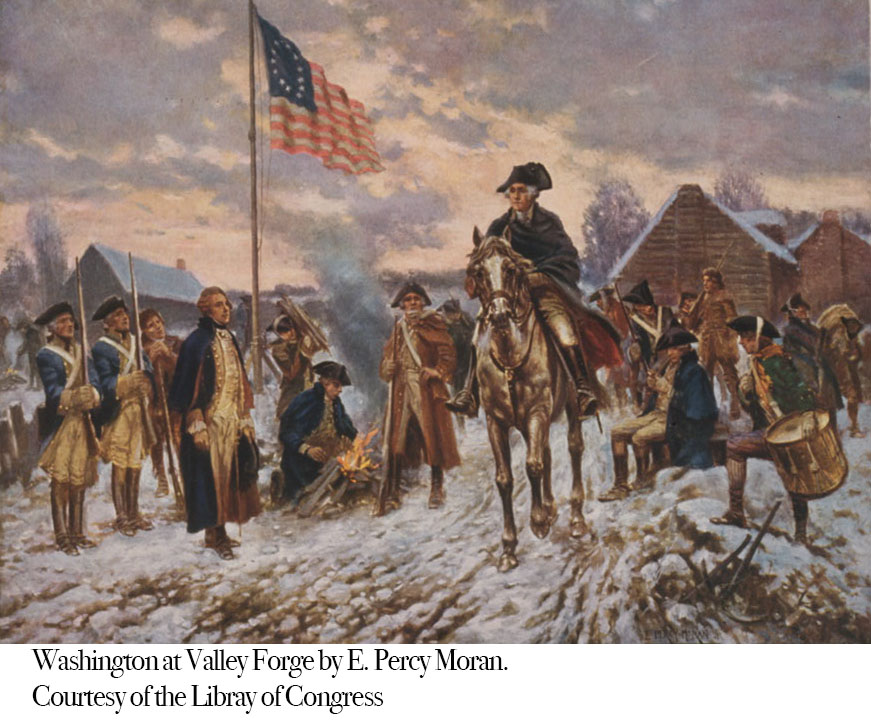
One of our early professors has significant links to George Washington and Valley Forge.
On December 19th of 1777, George Washington and the Continental Army marched into a camp twenty-five miles Northwest of Philadelphia. The soldiers were exhausted; they had survived numerous campaigns but were heading into a harsh winter with few supplies. Images of these weary but patriotic soldiers have become a staple of our remembrance of the American Revolution. Often missing from these depictions are the realities of the situation, mainly the women. When the army marched in, it came with 12,000 soldiers… and 400 women and children. Among those enlisted were both free and enslaved African Americans as well as Indigenous people. For the six months it served as a camp, Valley Forge became the fourth-largest city in the colonies.
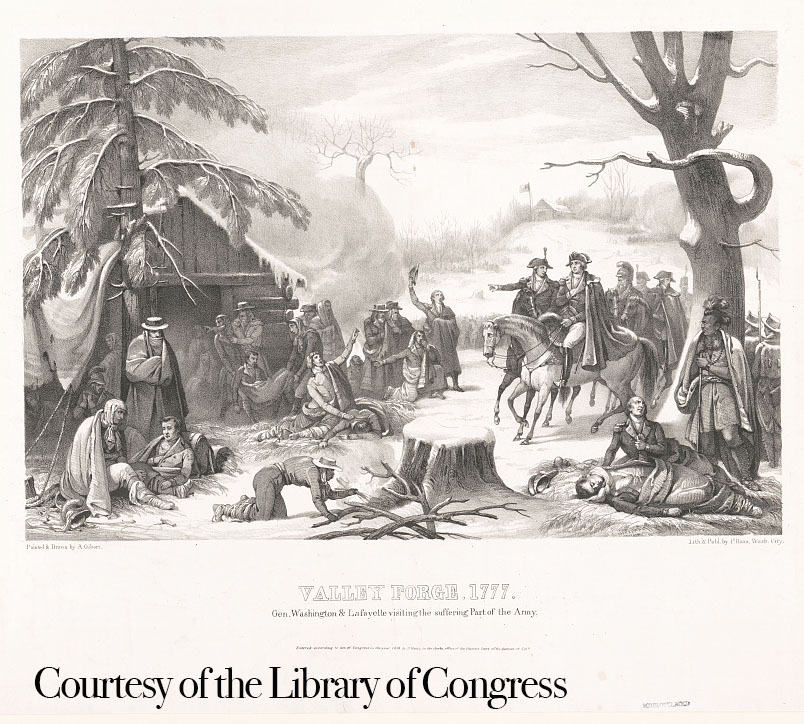 The conditions at camp were difficult. The winter was bitter, supplies were low, enlistment
terms were coming up, and there was little incentive for those to re-up their service.
While history has romanticized this period, it is an important point in the War. That
winter had numerous long-term ramifications for the nation. It is often considered
the birthplace of the Army. The success of Valley Forge is the success of a professional
force that could continue the effort.
The conditions at camp were difficult. The winter was bitter, supplies were low, enlistment
terms were coming up, and there was little incentive for those to re-up their service.
While history has romanticized this period, it is an important point in the War. That
winter had numerous long-term ramifications for the nation. It is often considered
the birthplace of the Army. The success of Valley Forge is the success of a professional
force that could continue the effort.
So where did Valley Forge come from? 1,500 huts and two miles of fortifications were not ready and waiting for Washington. For thousands of years, the Lenape peoples occupied the area now known as Valley Forge. The river valley had abundant food and offered shelter. Europeans arrived in the late 17th century and cleared much of the land for agriculture. By the late 1770s, the land was owned by 18 different people. There was an iron works, hence the name Valley Forge, saw and grist mills, charcoal houses, and other outbuildings of what was a small industrial village.
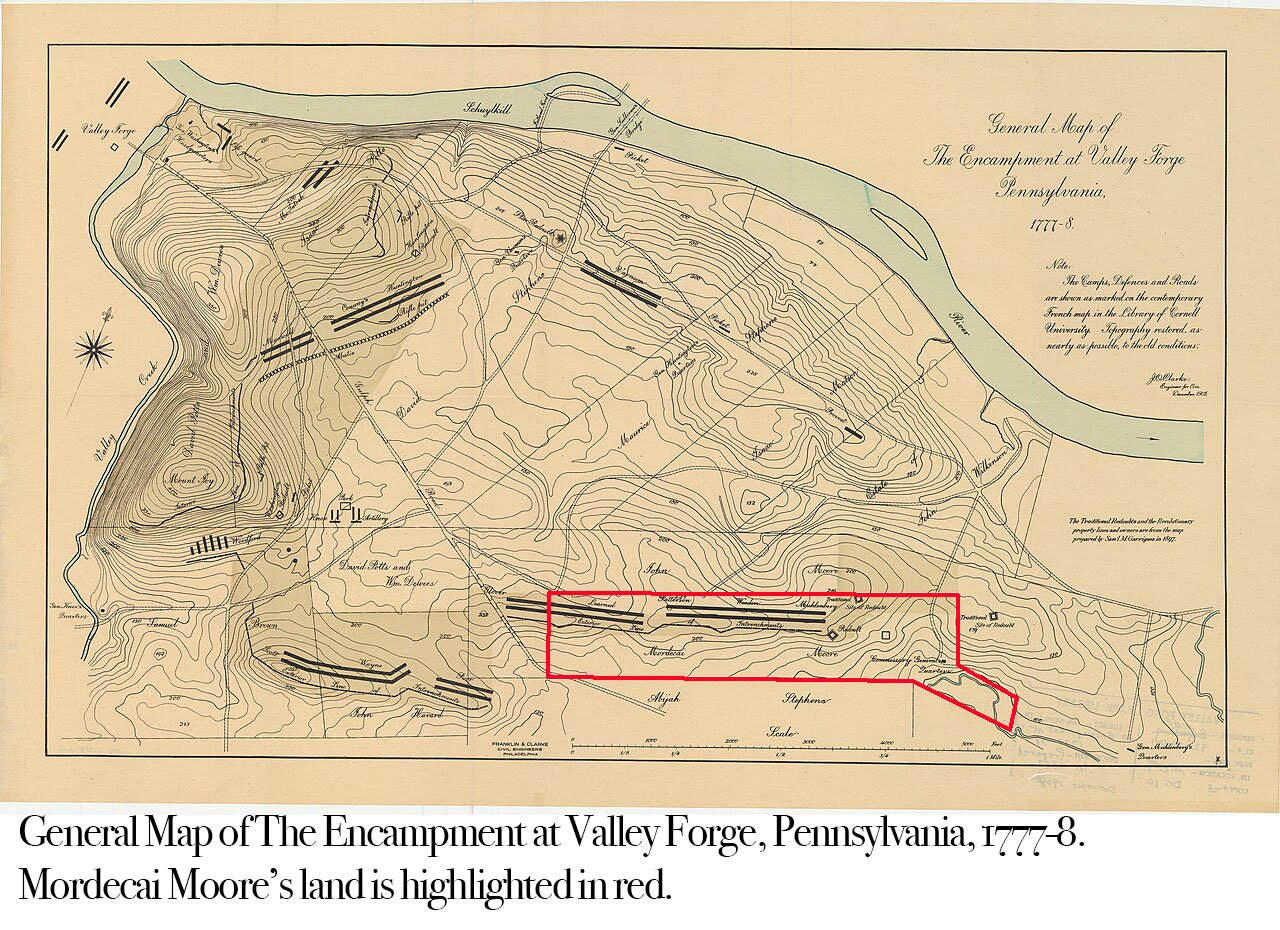
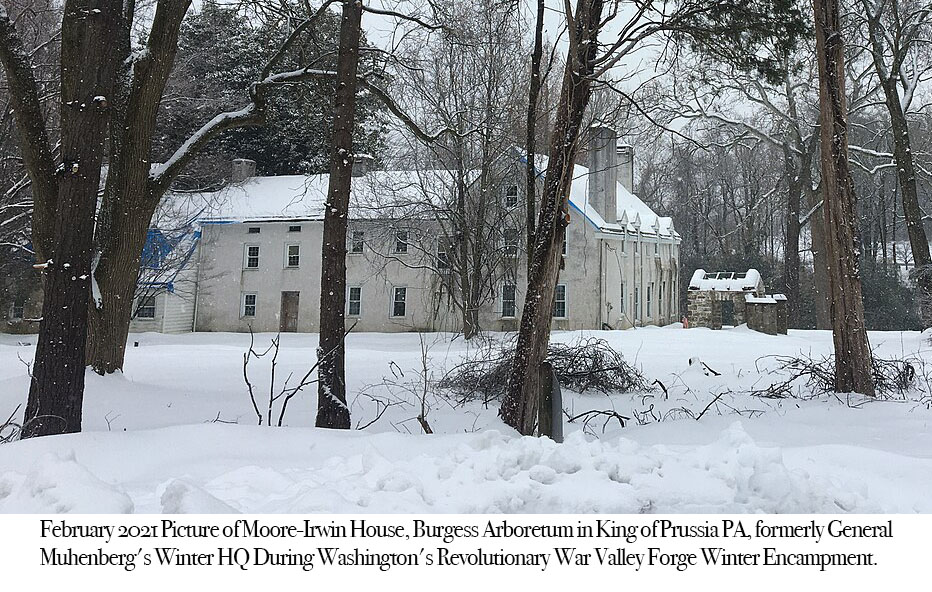 Two of those landowners were Mordecai and John Moore. John Moore, Sr., purchased
the 400 acres of land from David Powell in 1709. After his death, the land was split
between his two sons, John, Jr., and Mordecai. The family was Welsh Quakers. Quakers,
or Friends as they are often called, faced many difficulties in Colonial and Revolutionary
America. The Quakers faced decades of religious persecution, and when the War began,
their pacifist beliefs earned anger from both sides of the conflict. These Quakers
gave up both their homes and fields to the Continental Army. Their sacrifice was compounded
by having the British Army seize their hay, crops, and livestock previously. John’s
home, the Moore-Irwin House, became the headquarters for General Peter Mulkenberg
during the encampment. Mordecai’s house was also put to use; it was the quarters for
Col. Charles Stewart, Commissary General of issues, and Col. Daniel Morgan, officer
in charge of riflemen. Though it doesn’t bear much resemblance to its 1777 iteration,
in the present day, it has served as the ranger station. George Washington stayed
in the home of Isaac Potts.
Two of those landowners were Mordecai and John Moore. John Moore, Sr., purchased
the 400 acres of land from David Powell in 1709. After his death, the land was split
between his two sons, John, Jr., and Mordecai. The family was Welsh Quakers. Quakers,
or Friends as they are often called, faced many difficulties in Colonial and Revolutionary
America. The Quakers faced decades of religious persecution, and when the War began,
their pacifist beliefs earned anger from both sides of the conflict. These Quakers
gave up both their homes and fields to the Continental Army. Their sacrifice was compounded
by having the British Army seize their hay, crops, and livestock previously. John’s
home, the Moore-Irwin House, became the headquarters for General Peter Mulkenberg
during the encampment. Mordecai’s house was also put to use; it was the quarters for
Col. Charles Stewart, Commissary General of issues, and Col. Daniel Morgan, officer
in charge of riflemen. Though it doesn’t bear much resemblance to its 1777 iteration,
in the present day, it has served as the ranger station. George Washington stayed
in the home of Isaac Potts.
 When the army left, the land was devastated; every bit of timber was gone, used for
firewood, and the land was ravaged by having so many people on it. The farms did eventually
return, thanks to the superior soil, and the industry returned and evolved as well.
In 1878, efforts began to save the area, and it became Pennsylvania’s first state
park in 1893. It achieved National Historic Park status in 1976 during the Bicentennial
and is a nice way to spend a sunny day, or a snowy winter one for the brave.
When the army left, the land was devastated; every bit of timber was gone, used for
firewood, and the land was ravaged by having so many people on it. The farms did eventually
return, thanks to the superior soil, and the industry returned and evolved as well.
In 1878, efforts began to save the area, and it became Pennsylvania’s first state
park in 1893. It achieved National Historic Park status in 1976 during the Bicentennial
and is a nice way to spend a sunny day, or a snowy winter one for the brave.
Mordecai had a son, Jesse, who taught English and oratory at Washington College from 1792 to 1795. According to the College’s first ledger, which was sadly lost in the fire of 1916, his salary was one hundred and fifty pounds annually. In a letter from April 21, 1794, Jesse wrote to his father, talking about his teaching career.
“With respect to my continuance in this college, during the ensuing summer, for several reasons, I am not able to speak with certainty. I have made no positive determination. If my health continues, and nothing better offers, I shall probably not resign before the 10th September or October next. As I do not consider my present occupation as a permanent one, and as, whenever a suitable opportunity shall be found, I mean to adopt another mode of living, I am not qualified to speak positively.”
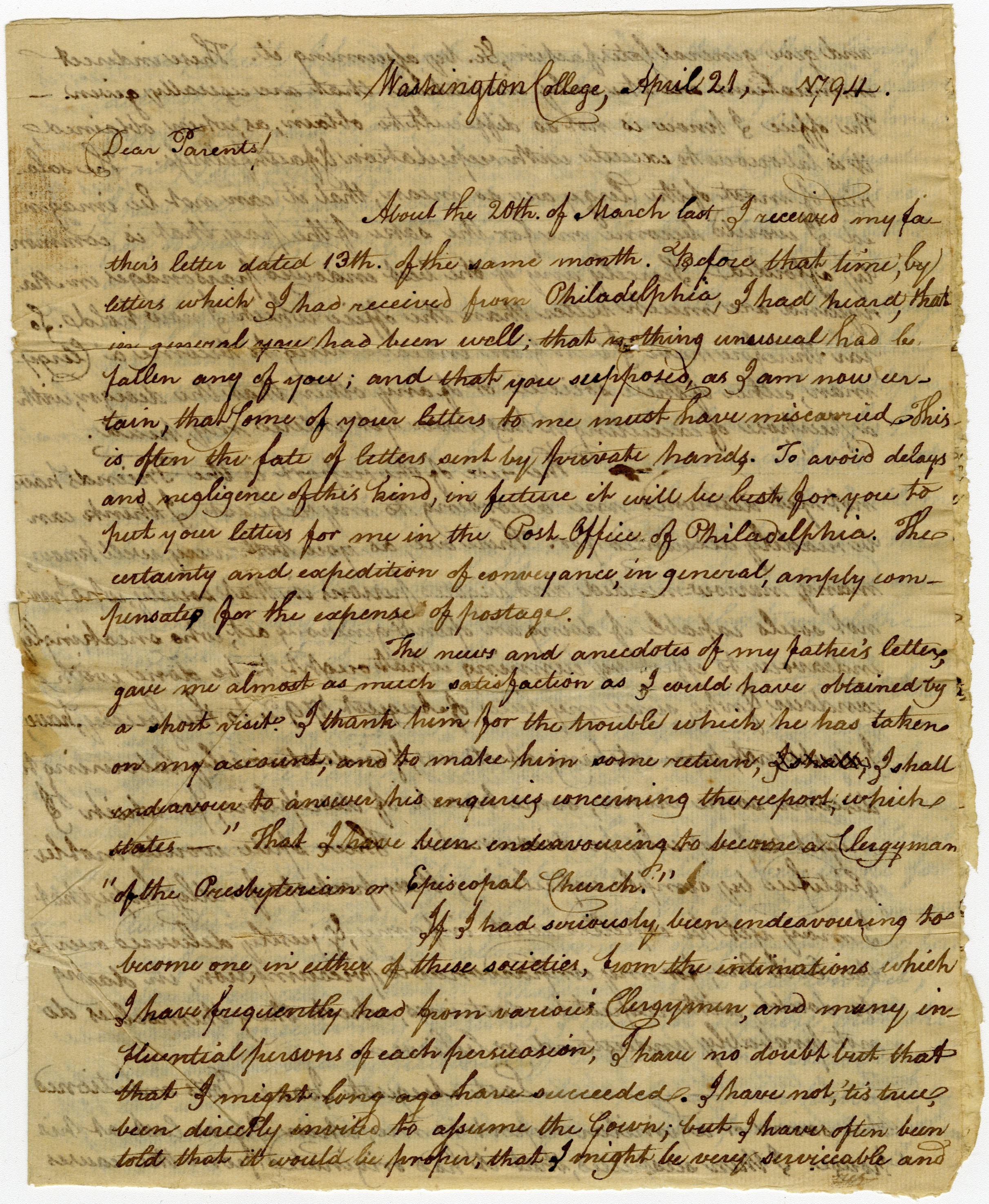 True to his words, he gave up teaching and took up law. This was most likely due to
his later comments about his small savings and looking for something “more lucrative
and agreeable.”
True to his words, he gave up teaching and took up law. This was most likely due to
his later comments about his small savings and looking for something “more lucrative
and agreeable.”
Isaac Potts, the man who gave his home to General Washington, is also mentioned in the letter. This portion of the letter is mainly about the gossip and discord between Jesse and the Valley Forge Quaker community.
So many Americans sacrificed to help establish our country, and for many, the aftermaths lasted longer than just the Revolutionary War. As we celebrate the nation's 250th, it is stories of everyday Americans that make this semiquincentennial so fascinating.