Jane Stuart Raffles a Painting
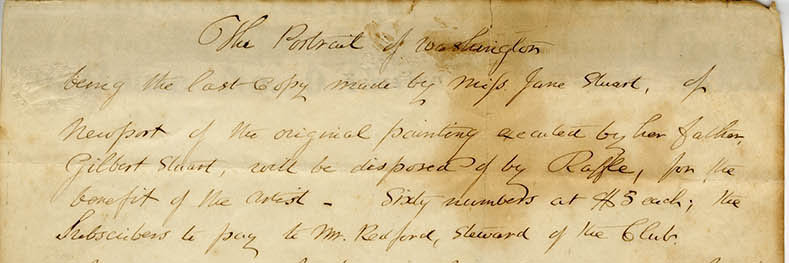
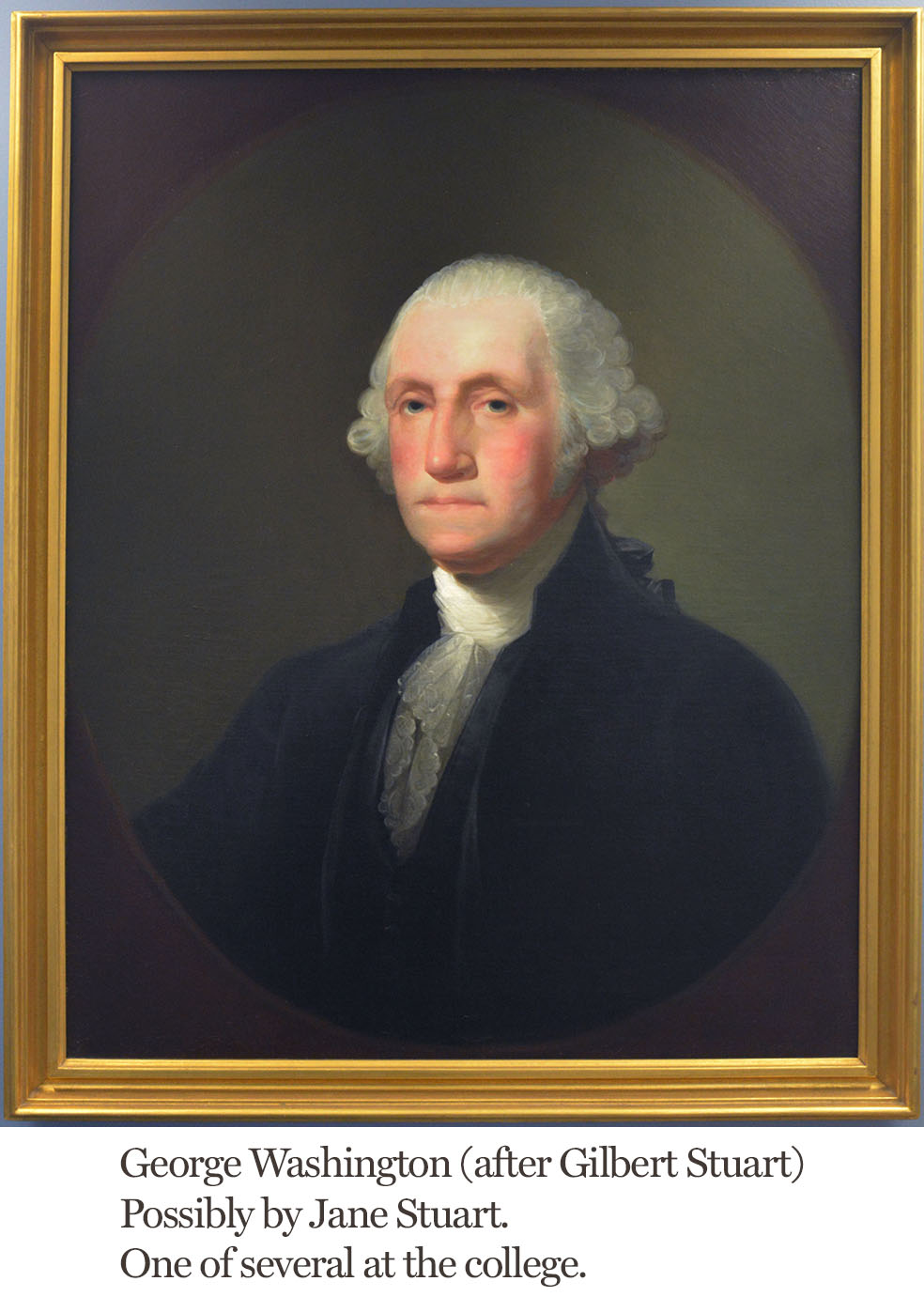
At the end of August 1868, the Newport Reading Room auctioned her last painting of George Washington. Did it end up here at Washington College?
 Jane Stuart was the youngest child of renowned painter Gilbert Stuart. Gilbert Stuart’s
works are very familiar to most Americans, even if you didn’t know his name. This
is mainly because he painted so many of our Founding Fathers, including Thomas Jefferson,
John and Abigail Adams, as well as John Quincy Adams. But the numerous portraits of
George Washington are his most recognizable, especially as one of them was used for
the one-dollar bill. Born in Rhode Island in 1755, Gilbert began his career in his
early teens under the tutelage of the Scottish painter Cosmo Alexander, eventually
following him to Scotland to continue his profession. Shortly after his move, Alexander
passed, and Stuart was unable to make enough of a living and returned to America.
He continued to paint, but when the American Revolution began, work was hard to come
by. Despite his patriotic leanings, he moved to England in 1775 and by 1777 he worked
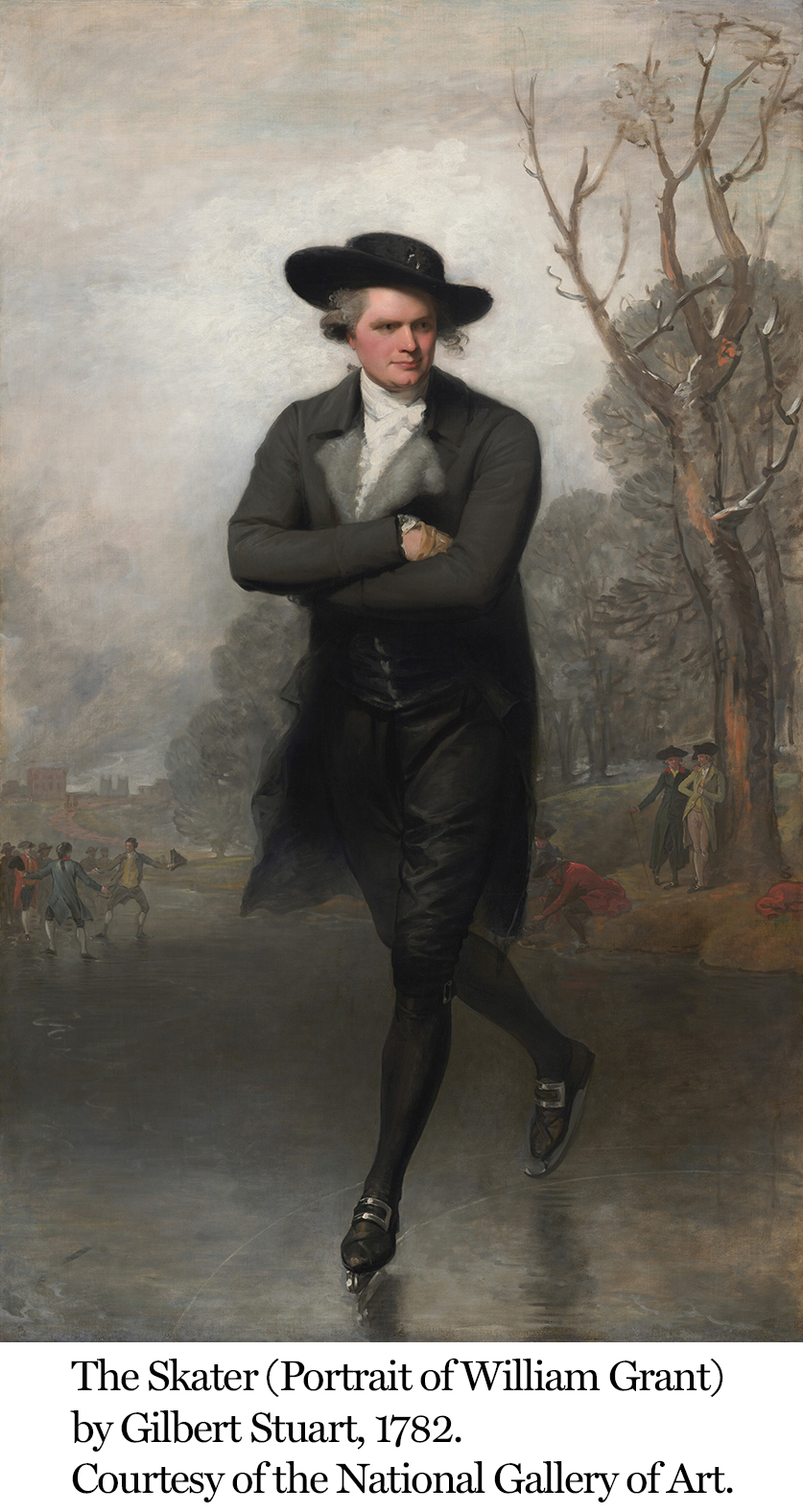
under the artist Benjamin West and showed his work at the Royal Academy. His 1782
painting The Skater became his breakthrough piece (you can see it at the National
Gallery of Art in D.C.). His paintings began to sell at some of the highest prices
for an artist of the time, but Stuart was terrible with money and barely escaped being
put in debtors’ prison. His poor financial planning is something his daughter Jane
Stuart would have to deal with well past his death.
Jane Stuart was the youngest child of renowned painter Gilbert Stuart. Gilbert Stuart’s
works are very familiar to most Americans, even if you didn’t know his name. This
is mainly because he painted so many of our Founding Fathers, including Thomas Jefferson,
John and Abigail Adams, as well as John Quincy Adams. But the numerous portraits of
George Washington are his most recognizable, especially as one of them was used for
the one-dollar bill. Born in Rhode Island in 1755, Gilbert began his career in his
early teens under the tutelage of the Scottish painter Cosmo Alexander, eventually
following him to Scotland to continue his profession. Shortly after his move, Alexander
passed, and Stuart was unable to make enough of a living and returned to America.
He continued to paint, but when the American Revolution began, work was hard to come
by. Despite his patriotic leanings, he moved to England in 1775 and by 1777 he worked
under the artist Benjamin West and showed his work at the Royal Academy. His 1782
painting The Skater became his breakthrough piece (you can see it at the National
Gallery of Art in D.C.). His paintings began to sell at some of the highest prices
for an artist of the time, but Stuart was terrible with money and barely escaped being
put in debtors’ prison. His poor financial planning is something his daughter Jane
Stuart would have to deal with well past his death.
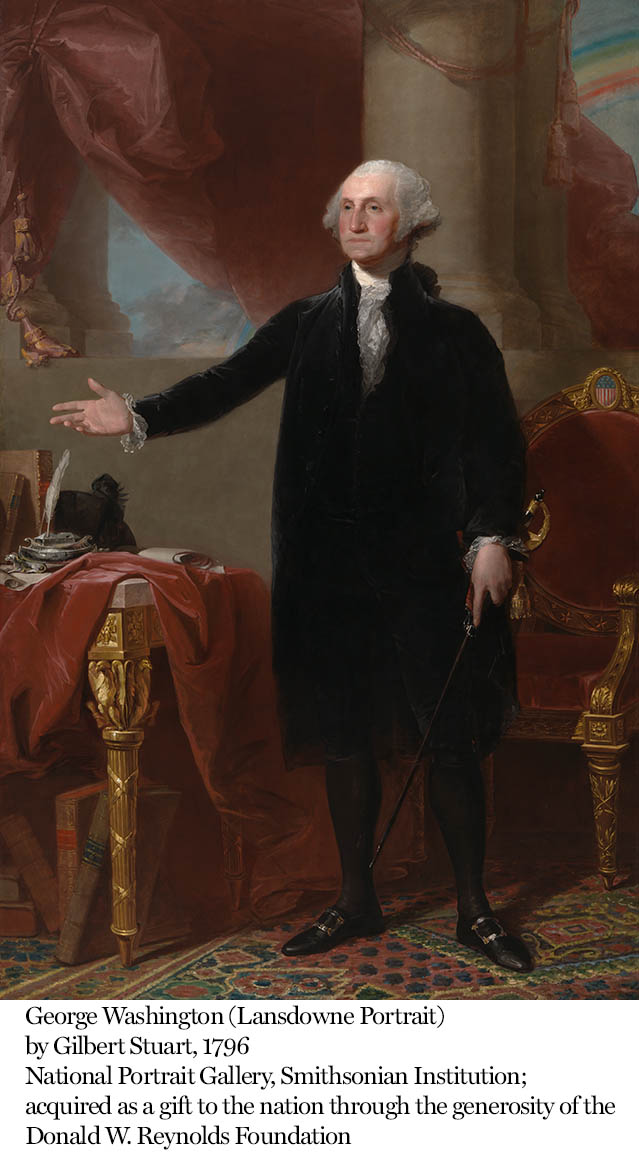 In 1793, he returned to America, specifically to paint George Washington. He succeeded
and became a sought-after portrait artist. Eleven of his portraits are in the National
Portrait Gallery in D.C., along with some of his tools and a letter to him from Washington.
He created the Lansdowne Portrait, a life-size painting, on display at the National
Portrait Gallery American President’s gallery. The painting had been on display at
the White House, and when the British burned D.C., First Lady Dolly Madison ensured
the painting was rescued. Despite his artistic success, he was still bad with finances,
and he left his family deep in debt.
In 1793, he returned to America, specifically to paint George Washington. He succeeded
and became a sought-after portrait artist. Eleven of his portraits are in the National
Portrait Gallery in D.C., along with some of his tools and a letter to him from Washington.
He created the Lansdowne Portrait, a life-size painting, on display at the National
Portrait Gallery American President’s gallery. The painting had been on display at
the White House, and when the British burned D.C., First Lady Dolly Madison ensured
the painting was rescued. Despite his artistic success, he was still bad with finances,
and he left his family deep in debt.
 Jane was his twelfth child with Charlotte Coates; she was born in 1812 and was one
of five who survived until adulthood. Her father did not instruct her, believing that
natural talent “did not need instruction”; she instead worked in his studio. Nicknamed
“the Boy,” she grounded up his paints, helped fill in backgrounds and secondary areas
of paintings, and, most importantly, observed and listened to his instruction of other
students. Her artistic talents began to be noticed, and there were plans to send her
to England for further study, but her father’s illness after a stroke in 1824 derailed
the plan. She was also meant to study in Georgia, but her mother refused to have her
go so far away. She ended up studying with Henry Fay in New York. When her father
passed in 1831, she became his heir apparent; she also became the family’s chief source
of income. Jane became the defender of her father’s reputation, writing several articles
for Scribner’s Monthly Illustrated. She not only had to deal with her father’s debts
but also three of her siblings entering psychiatric hospitals. She moved her mother
and sisters to Newport, Rhode Island.She also had a studio in Boston; sadly, a fire
destroyed her studio and many of her pieces. While a talented artist in her own right,
she has mainly become known as a copyist, primarily of her father’s works but also
of other artists. It is possible that this was more profitable, especially with her
family to support. Still, her works exist in numerous museums, and her talent shines
through.
Jane was his twelfth child with Charlotte Coates; she was born in 1812 and was one
of five who survived until adulthood. Her father did not instruct her, believing that
natural talent “did not need instruction”; she instead worked in his studio. Nicknamed
“the Boy,” she grounded up his paints, helped fill in backgrounds and secondary areas
of paintings, and, most importantly, observed and listened to his instruction of other
students. Her artistic talents began to be noticed, and there were plans to send her
to England for further study, but her father’s illness after a stroke in 1824 derailed
the plan. She was also meant to study in Georgia, but her mother refused to have her
go so far away. She ended up studying with Henry Fay in New York. When her father
passed in 1831, she became his heir apparent; she also became the family’s chief source
of income. Jane became the defender of her father’s reputation, writing several articles
for Scribner’s Monthly Illustrated. She not only had to deal with her father’s debts
but also three of her siblings entering psychiatric hospitals. She moved her mother
and sisters to Newport, Rhode Island.She also had a studio in Boston; sadly, a fire
destroyed her studio and many of her pieces. While a talented artist in her own right,
she has mainly become known as a copyist, primarily of her father’s works but also
of other artists. It is possible that this was more profitable, especially with her
family to support. Still, her works exist in numerous museums, and her talent shines
through.
 In her personal life, she was known as a socialite with a personality. She was said
to have had a sharp wit and could entertain with numerous stories and anecdotes. She
did not marry herself but played the matchmaker for others. As part of her socialite
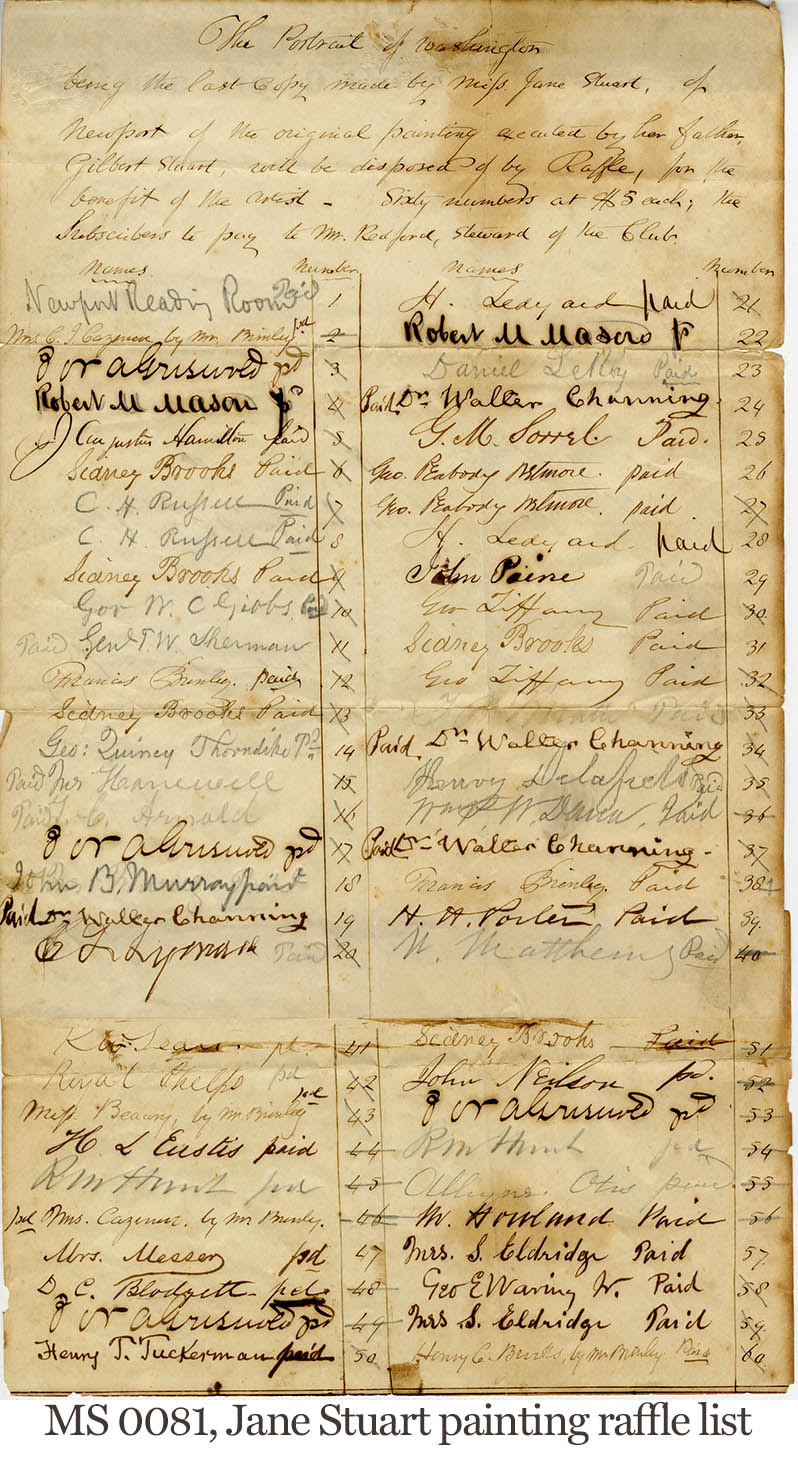
life in Newport in the summer of 1868, she raffled a portrait of George Washington, her last copy of her father’s painting, for the benefit of “The Club.” This was
the Newport Reading Room, a gentleman’s club founded in 1854, still in existence today.
Sixty chances to win the painting were sold, though it looks as if originally there
were forty, showing how sought-after the painting was. We can also see that people
bought several tickets. Washington College has several copies of George Washington
based on Gilbert Stuart’s painting. Is it possible that one was done by Jane and that
it was the very one auctioned off in Newport? We have not researched every person
who bought a ticket, and we have little to no provenance (history or background of
an item) on the donation of our Washingtons, but there is a chance that this list
of raffle tickets and one of our paintings are connected.
In her personal life, she was known as a socialite with a personality. She was said
to have had a sharp wit and could entertain with numerous stories and anecdotes. She
did not marry herself but played the matchmaker for others. As part of her socialite
life in Newport in the summer of 1868, she raffled a portrait of George Washington, her last copy of her father’s painting, for the benefit of “The Club.” This was
the Newport Reading Room, a gentleman’s club founded in 1854, still in existence today.
Sixty chances to win the painting were sold, though it looks as if originally there
were forty, showing how sought-after the painting was. We can also see that people
bought several tickets. Washington College has several copies of George Washington
based on Gilbert Stuart’s painting. Is it possible that one was done by Jane and that
it was the very one auctioned off in Newport? We have not researched every person
who bought a ticket, and we have little to no provenance (history or background of
an item) on the donation of our Washingtons, but there is a chance that this list
of raffle tickets and one of our paintings are connected.