Alexander Hamilton in the Archives
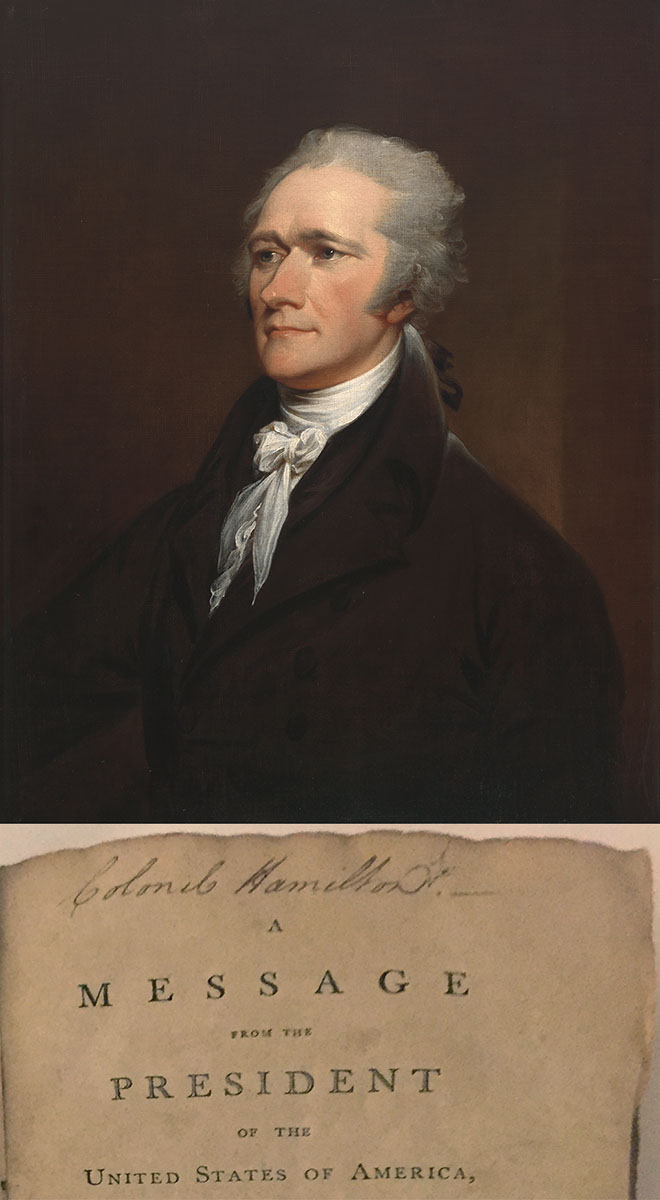
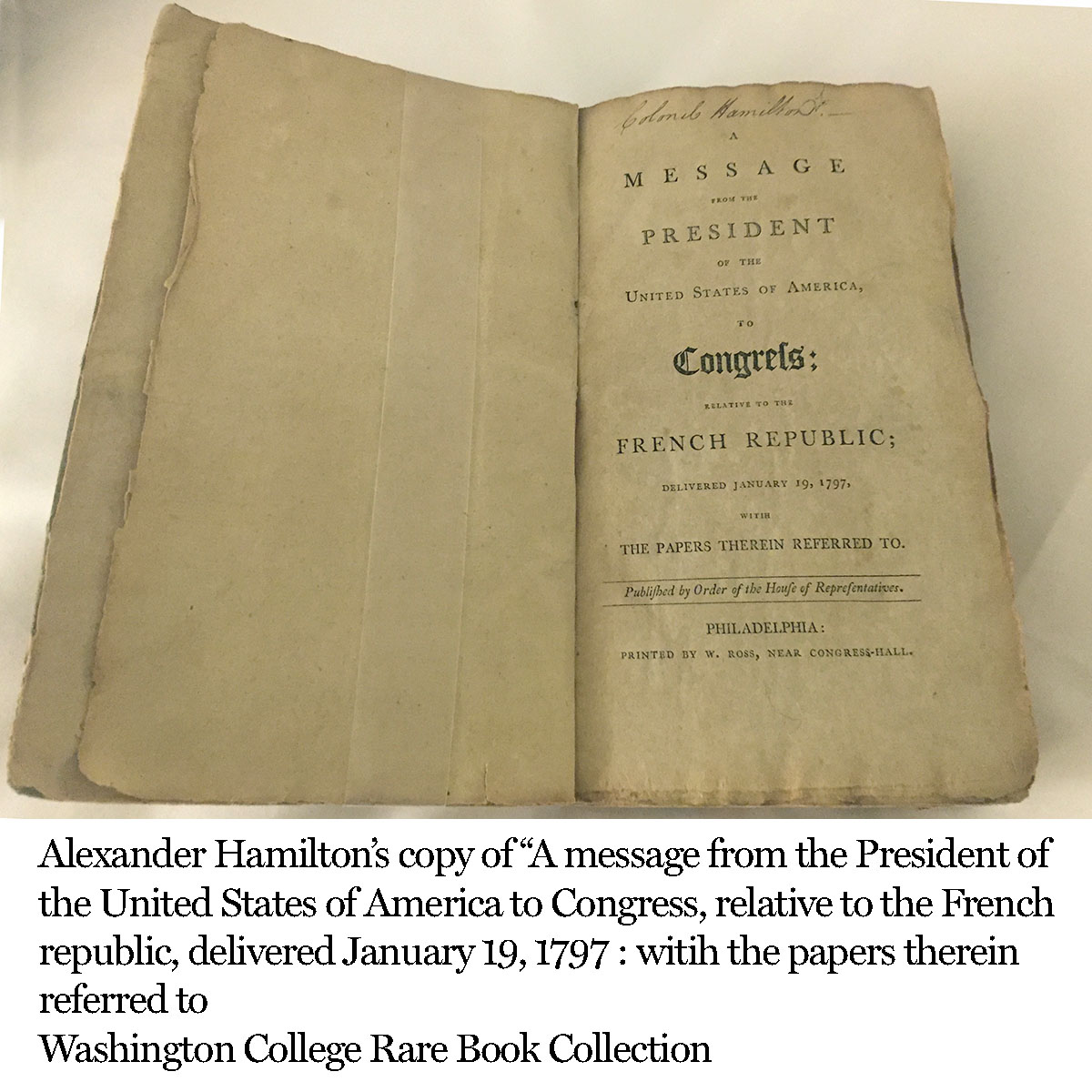
In 1985, former Missouri Congressman James Wadsworth Symington gave Washington College a truly special gift: Alexander Hamilton’s personal copy of George Washington’s Message from the President of the United States of America.
 When this address was given, Washington, having decided not to run for a third Presidential
term, was done with political office. John Adams, our 2nd President, would be sworn in just a few weeks later, in March 1797. The fact that
we elect a president is an amazing part of United States History. Most have heard
how, after the Revolution, there were calls to make Washington a king, and his refusal
started one of the biggest political and longest-running experiments in Democracy.
There had never been a political system like ours; aside from being completely unique,
it was also constructed with longevity in mind, with the idea that it might need to
change and be flexible.
When this address was given, Washington, having decided not to run for a third Presidential
term, was done with political office. John Adams, our 2nd President, would be sworn in just a few weeks later, in March 1797. The fact that
we elect a president is an amazing part of United States History. Most have heard
how, after the Revolution, there were calls to make Washington a king, and his refusal
started one of the biggest political and longest-running experiments in Democracy.
There had never been a political system like ours; aside from being completely unique,
it was also constructed with longevity in mind, with the idea that it might need to
change and be flexible.
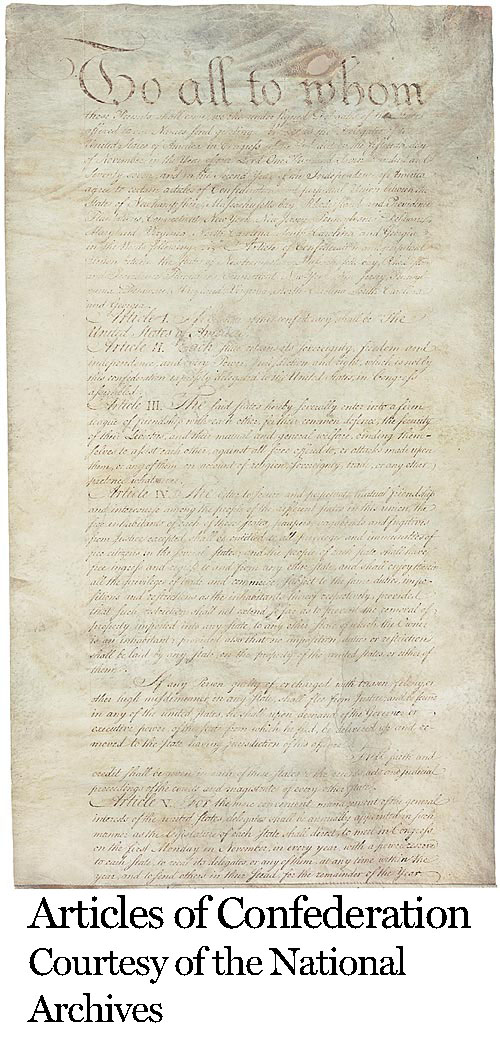 A year after the Declaration of Independence and with the war still raging, the Continental
Congress was able to create and ratify the Articles of Confederation. This was the
precursor to the Constitution we have now. In it, we can see the first fledgling attempts
at the United States we have today. The Articles, written mainly by John Dickinson
of Delaware, granted most of the power to each existing Colony, with only a weak central
government, consisting of one branch with no taxation powers or ability to conduct
foreign policy. This reflects the individualistic nature of the Colonies. You were
a Marylander first, an American second. These tribalistic ideas would continue for
another hundred years. The colonies, later states, worked under this form of government
for nearly ten years, until it was decided that a better system was needed. The Constitutional
Convention was convened in Philadelphia, in the same place they had declared their
independence from King George III, and began the process of writing a new Constitution.
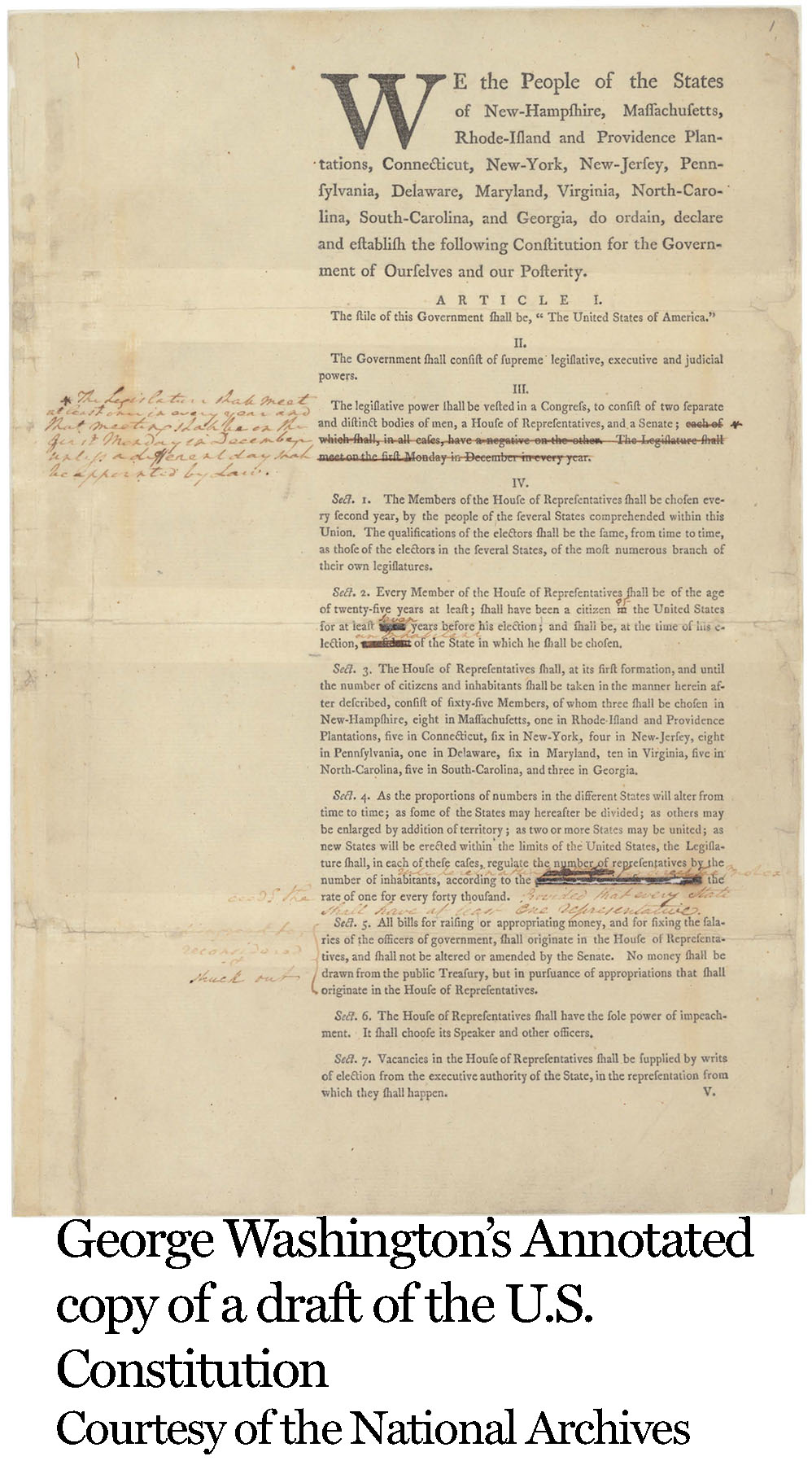
This was not easy; there were debates and differences based on economy, ideals, and
slavery. There are only about four known drafts of the Constitution in existence,
most with their delegates’ notes. The Convention made a point of destroying drafts
to keep confusion and division at bay. While these drafts give us glimpses into what
our Founding Fathers thought, at the time, they could have sparked issues and halted
the progress of the final document. They also show the care that went into the document;
the people writing this knew the weight it held for a fledgling nation.
A year after the Declaration of Independence and with the war still raging, the Continental
Congress was able to create and ratify the Articles of Confederation. This was the
precursor to the Constitution we have now. In it, we can see the first fledgling attempts
at the United States we have today. The Articles, written mainly by John Dickinson
of Delaware, granted most of the power to each existing Colony, with only a weak central
government, consisting of one branch with no taxation powers or ability to conduct
foreign policy. This reflects the individualistic nature of the Colonies. You were
a Marylander first, an American second. These tribalistic ideas would continue for
another hundred years. The colonies, later states, worked under this form of government
for nearly ten years, until it was decided that a better system was needed. The Constitutional
Convention was convened in Philadelphia, in the same place they had declared their
independence from King George III, and began the process of writing a new Constitution.
This was not easy; there were debates and differences based on economy, ideals, and
slavery. There are only about four known drafts of the Constitution in existence,
most with their delegates’ notes. The Convention made a point of destroying drafts
to keep confusion and division at bay. While these drafts give us glimpses into what
our Founding Fathers thought, at the time, they could have sparked issues and halted
the progress of the final document. They also show the care that went into the document;
the people writing this knew the weight it held for a fledgling nation.
 With a newly ratified Constitution and, by 1797, three presidential elections held,
we were a nation, a player on the world stage. And with that comes its own issues.
There was the debt from the war and numerous domestic issues a new government had
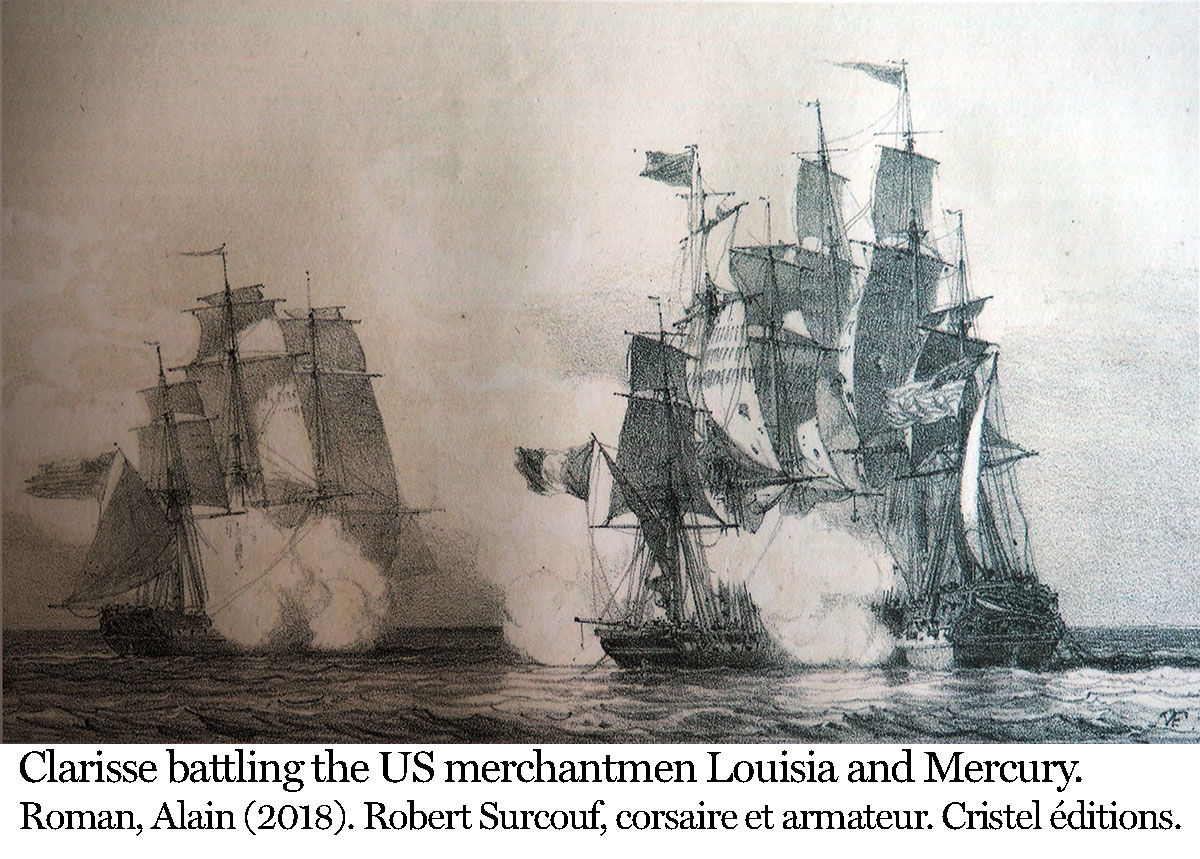
to work out. And looming behind it all was our ally-turned-antagonist France. While
today our political parties are drawn on numerous lines, one main one being how large
a central government we should have, in the 1780s our first political parties were
drawn on lines of foreign policy. The two men behind it were Thomas Jefferson and
Alexander Hamilton. Hamilton had served under Washington during the Revolution as
a trusted advisor. He continued to serve and advise Washington as Secretary of the
Treasury during his Presidency. By Washington’s second term, France was once again
at war with Britain. With our Revolutionary allies on one side and our renewed trade
with Britain on the other, America opted for neutrality. Washington had Alexander
Hamilton and John Jay work on what is now known as the Jay Treaty, which favored economic
trade with Great Britain. Thomas Jefferson, who supported our relationship with France,
was not happy with this; neither was the American public when early copies were leaked.
This led to factions: Hamilton’s Federalists and the Jeffersonians. One of the reasons
Washington went with neutrality was the state of America’s defenses after the war.
Debt meant the Army was smaller than during the war, and the country’s Navy had been
sold off. When French ships began privateering in the Caribbean, we had no Navy to
intervene.
With a newly ratified Constitution and, by 1797, three presidential elections held,
we were a nation, a player on the world stage. And with that comes its own issues.
There was the debt from the war and numerous domestic issues a new government had
to work out. And looming behind it all was our ally-turned-antagonist France. While
today our political parties are drawn on numerous lines, one main one being how large
a central government we should have, in the 1780s our first political parties were
drawn on lines of foreign policy. The two men behind it were Thomas Jefferson and
Alexander Hamilton. Hamilton had served under Washington during the Revolution as
a trusted advisor. He continued to serve and advise Washington as Secretary of the
Treasury during his Presidency. By Washington’s second term, France was once again
at war with Britain. With our Revolutionary allies on one side and our renewed trade
with Britain on the other, America opted for neutrality. Washington had Alexander
Hamilton and John Jay work on what is now known as the Jay Treaty, which favored economic
trade with Great Britain. Thomas Jefferson, who supported our relationship with France,
was not happy with this; neither was the American public when early copies were leaked.
This led to factions: Hamilton’s Federalists and the Jeffersonians. One of the reasons
Washington went with neutrality was the state of America’s defenses after the war.
Debt meant the Army was smaller than during the war, and the country’s Navy had been
sold off. When French ships began privateering in the Caribbean, we had no Navy to
intervene.
 As he finished out his term and with tension with France rising, at home and abroad,
Washington created a report for Congress, with all the supplemental documents, so
they could move forward with all the knowledge he had. After John Adams took office,
he kept Washington’s cabinet, including Hamilton; Jefferson was serving as Vice President.
Adams relied less on Hamilton than Washington had and spent much of his Presidency
in his home state of Massachusetts. Our relationship with France continued to deteriorate,
with our ambassadors being sent home and the X, Y, and Z affair (French negotiators
requiring bribes to see our peace commissioners); the Federalists were crying for
war. Our first engagement after the American Revolution was the Quasi-War with our
former ally France. John Adams was able to manage both the factions in his own country,
the Federalists and Jeffersonians, and relations with France, keeping the War from
growing. While it cost him the 1800 election, it helped set the groundwork for Jefferson’s
Louisiana Purchase.
As he finished out his term and with tension with France rising, at home and abroad,
Washington created a report for Congress, with all the supplemental documents, so
they could move forward with all the knowledge he had. After John Adams took office,
he kept Washington’s cabinet, including Hamilton; Jefferson was serving as Vice President.
Adams relied less on Hamilton than Washington had and spent much of his Presidency
in his home state of Massachusetts. Our relationship with France continued to deteriorate,
with our ambassadors being sent home and the X, Y, and Z affair (French negotiators
requiring bribes to see our peace commissioners); the Federalists were crying for
war. Our first engagement after the American Revolution was the Quasi-War with our
former ally France. John Adams was able to manage both the factions in his own country,
the Federalists and Jeffersonians, and relations with France, keeping the War from
growing. While it cost him the 1800 election, it helped set the groundwork for Jefferson’s
Louisiana Purchase.
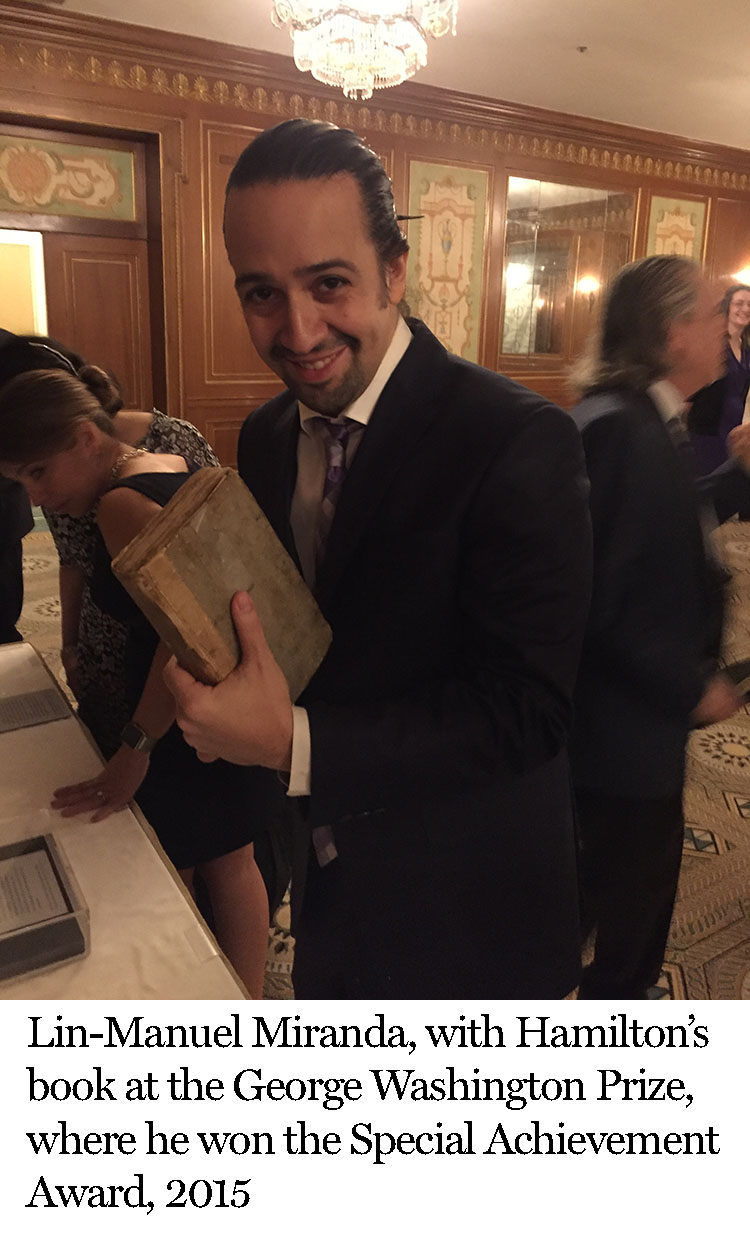 This volume, Hamilton’s own copy of events that would lead to such a challenge for
a new nation, makes it all the more important. We often go from the American Revolution
right to the War of 1812, forgetting this time when our ally turned foe and what it
meant for our new government and political parties.
This volume, Hamilton’s own copy of events that would lead to such a challenge for
a new nation, makes it all the more important. We often go from the American Revolution
right to the War of 1812, forgetting this time when our ally turned foe and what it
meant for our new government and political parties.