George Washington’s Inauguration
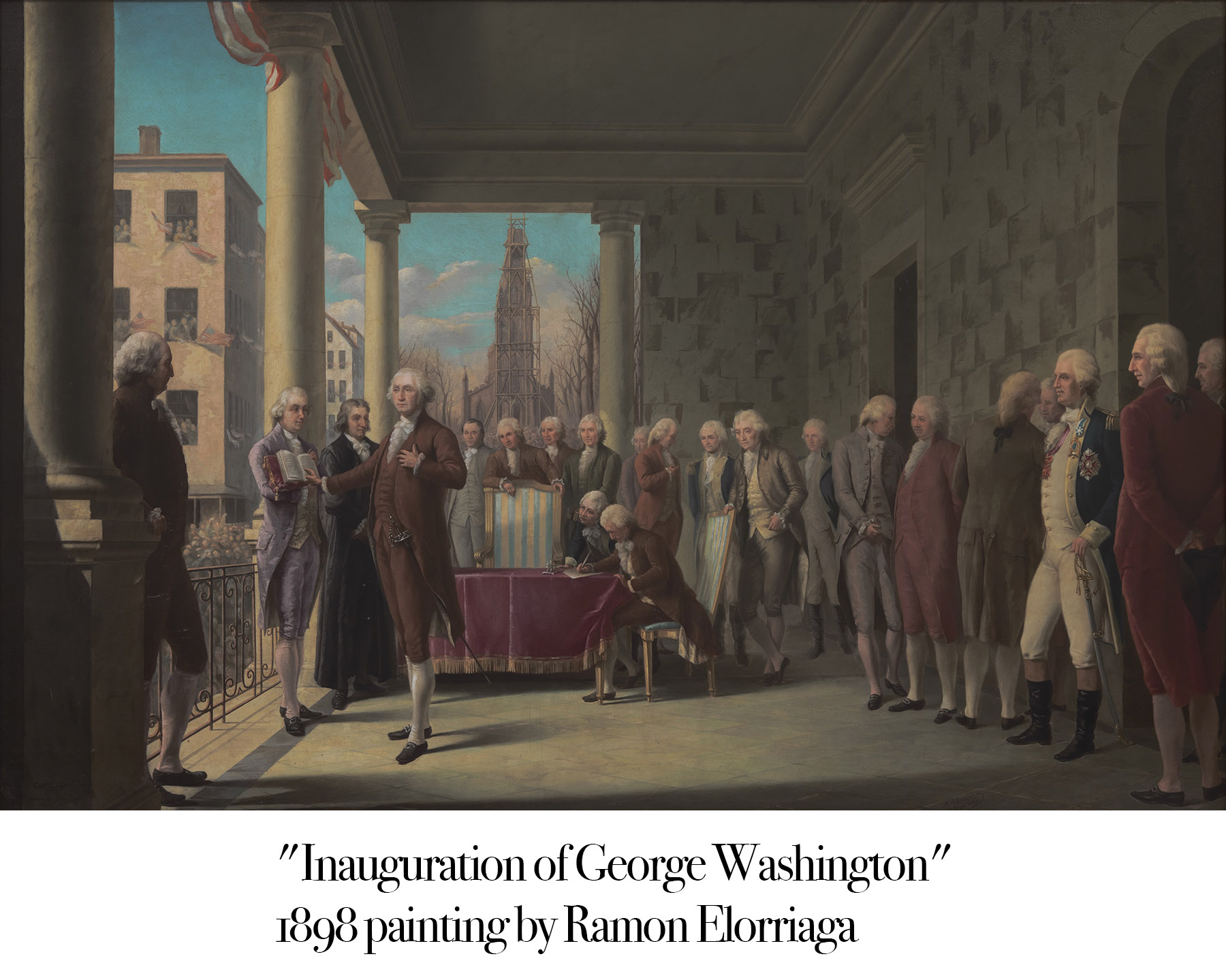
On Thursday, April 30th, 1789, George Washington took the oath and became our first President.
As dawn hit New York City, crowds had already begun to form on Cherry St. Samuel Osgood, a politician and lawyer from Massachusetts who settled in New York, had rented his home to Congress for use by George Washington, making it the first home of the Executive Branch. At noon, wearing a dark brown suit, purportedly American-made, white silk stockings, silver shoe buckles, and carrying a steel-hilted sword, Washington made his way to Federal Hall.
 Today, Washington, D.C., is the Nation’s capital. Its iconic skyline and monuments
appear in dozens of movies and television shows. It sees over 20 million tourists
annually, with the bulk of them being domestic travelers, and quite a few eighth-grade
field trips. Many come in the Spring for the Cherry Blossoms. Others for the numerous
(free) museums, galleries, and monuments. It’s a short hour and a half drive, less
if you utilize the Metro system, from Chestertown. It is a bonus for many on the Eastern
Shore, living on the calm bucolic shore, but able to easily visit a vibrant hub of
culture and history. D.C. became the capital on July 9, 1790, when Congress passed
the Residence Act. This created a national capital on the Potomac River, though Philadelphia
remained the capital until 1800. Even though George Washington signed the Act, he
never lived in Washington, D.C.
Today, Washington, D.C., is the Nation’s capital. Its iconic skyline and monuments
appear in dozens of movies and television shows. It sees over 20 million tourists
annually, with the bulk of them being domestic travelers, and quite a few eighth-grade
field trips. Many come in the Spring for the Cherry Blossoms. Others for the numerous
(free) museums, galleries, and monuments. It’s a short hour and a half drive, less
if you utilize the Metro system, from Chestertown. It is a bonus for many on the Eastern
Shore, living on the calm bucolic shore, but able to easily visit a vibrant hub of
culture and history. D.C. became the capital on July 9, 1790, when Congress passed
the Residence Act. This created a national capital on the Potomac River, though Philadelphia
remained the capital until 1800. Even though George Washington signed the Act, he
never lived in Washington, D.C.
During the Revolutionary War and until the government finally moved in in 1800, nine cities held the title of capital for the Continental Congress. Philadelphia served as the first, seeing the signing of the Declaration of Independence. But when the British Army closed in, Congress moved to Baltimore. The war kept them moving, back to Philadelphia, then to Lancaster and York, back to Philly, and then to Princeton, New Jersey. There was a stint in Annapolis, where Washington voluntarily resigned his commission as commander-in-chief, then Trenton, and up to New York. New York held the title through Washington’s first inauguration until it moved, once again, back to Philadelphia in 1790.
So why New York? Despite it being the official capital for only a year and nine months, the government had been functioning in the city for nearly five years. The Congress of Confederation had convened in the old City Hall on Wall Street in January of 1785. The United States Constitution was ratified in New York, and then the delegates went over to Fraunces Tavern. The city was a major port, a hub of commerce, a central location (to the more populated northern colonies), and had ready infrastructure despite its rebuilding after the fire of 1776 and subsequent British occupation. New York City, for the reasons above and more, has always been a desirable destination for business and travel.
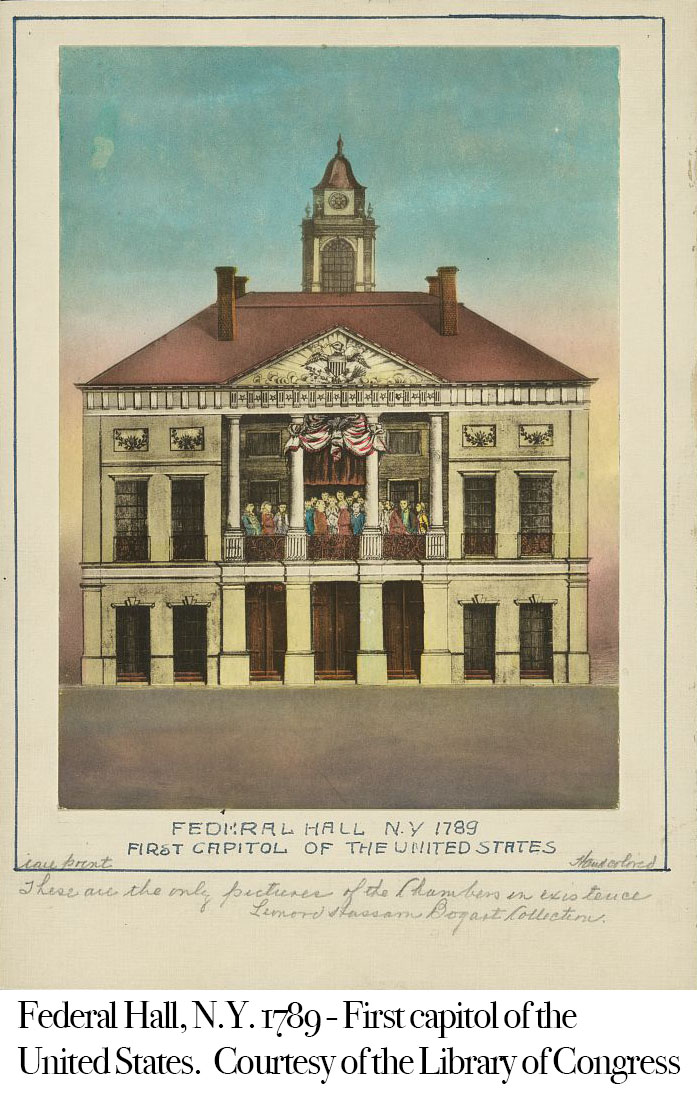 The city has changed, as most metropolises do; Wall Street today is very different
from the Wall Street of Washington’s days. The Samual Osgood house, which housed Washington,
his family, and his household staff, both free and enslaved, was demolished in 1856.
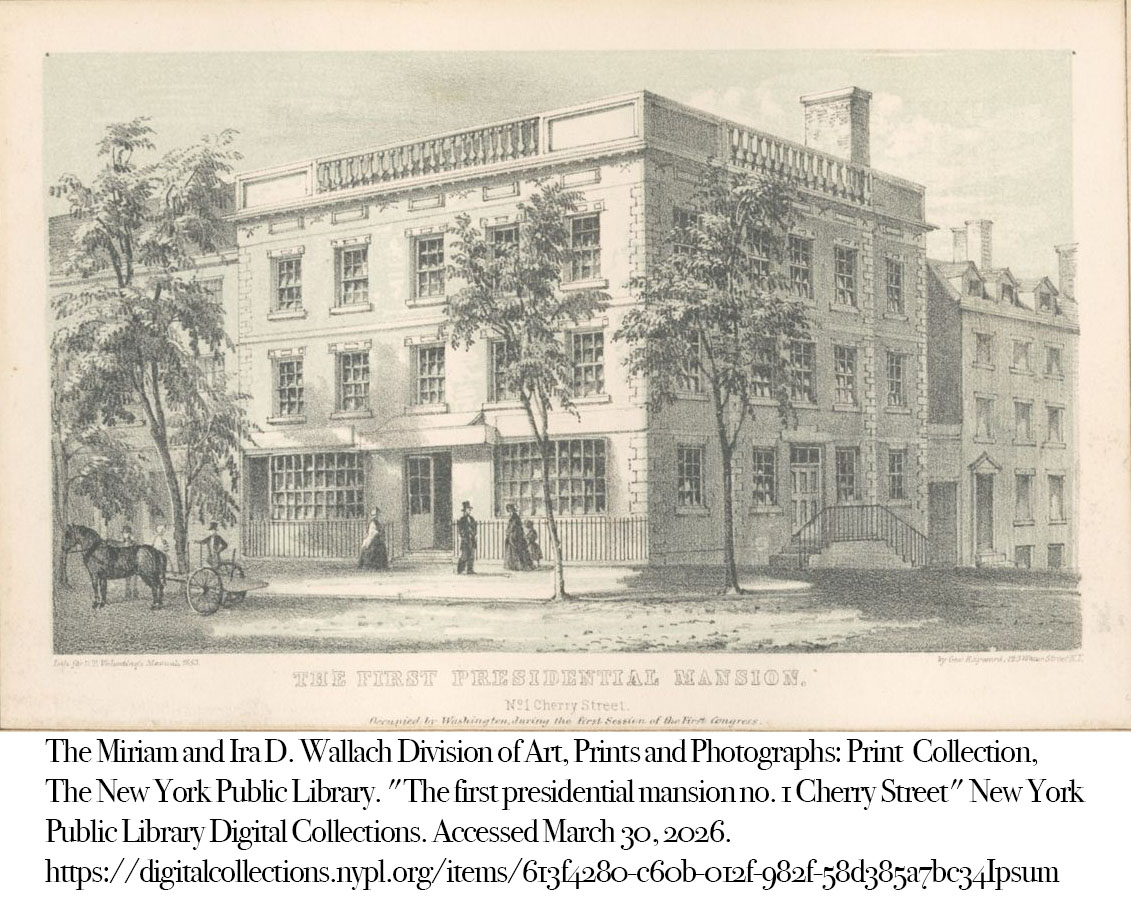
When it was decided that New York should be the capital, Federal Hall was built as
an appropriate home for the Government, which had been operating out of City Hall.
Pierre Charles L’Enfant, was chosen to remodel the structure. L’Enfant would later
become synonymous with Washington, D.C. and its layout. The two-story Georgian-style
building featured an arched walkway through the street level, and the second floor
had a grand balcony with four Ionic columns supporting a pediment featuring an American
Eagle holding thirteen arrows, one for each colony. It was on this balcony, with Vice-President
John Adams, that Washington swore the Oath upon the Bible from St. John’s Masonic
Lodge, No. 1. The oath was administered by Robert Livingston, Chancellor of the State
of New York.
The city has changed, as most metropolises do; Wall Street today is very different
from the Wall Street of Washington’s days. The Samual Osgood house, which housed Washington,
his family, and his household staff, both free and enslaved, was demolished in 1856.
When it was decided that New York should be the capital, Federal Hall was built as
an appropriate home for the Government, which had been operating out of City Hall.
Pierre Charles L’Enfant, was chosen to remodel the structure. L’Enfant would later
become synonymous with Washington, D.C. and its layout. The two-story Georgian-style
building featured an arched walkway through the street level, and the second floor
had a grand balcony with four Ionic columns supporting a pediment featuring an American
Eagle holding thirteen arrows, one for each colony. It was on this balcony, with Vice-President
John Adams, that Washington swore the Oath upon the Bible from St. John’s Masonic
Lodge, No. 1. The oath was administered by Robert Livingston, Chancellor of the State
of New York.
 Once the capital moved back to Philadelphia in 1790, the building found a purpose
as a city hall. When the current City Hall was built, Federal Hall was sold in 1812
and later demolished. A Greek-Revival Custom House was built in its place in the 1830s.
Now the Federal Hall National Memorial, it features a statue of Washington, extending his hand as if to place it on the
Bible in preparation to swear the oath.
Once the capital moved back to Philadelphia in 1790, the building found a purpose
as a city hall. When the current City Hall was built, Federal Hall was sold in 1812
and later demolished. A Greek-Revival Custom House was built in its place in the 1830s.
Now the Federal Hall National Memorial, it features a statue of Washington, extending his hand as if to place it on the
Bible in preparation to swear the oath.
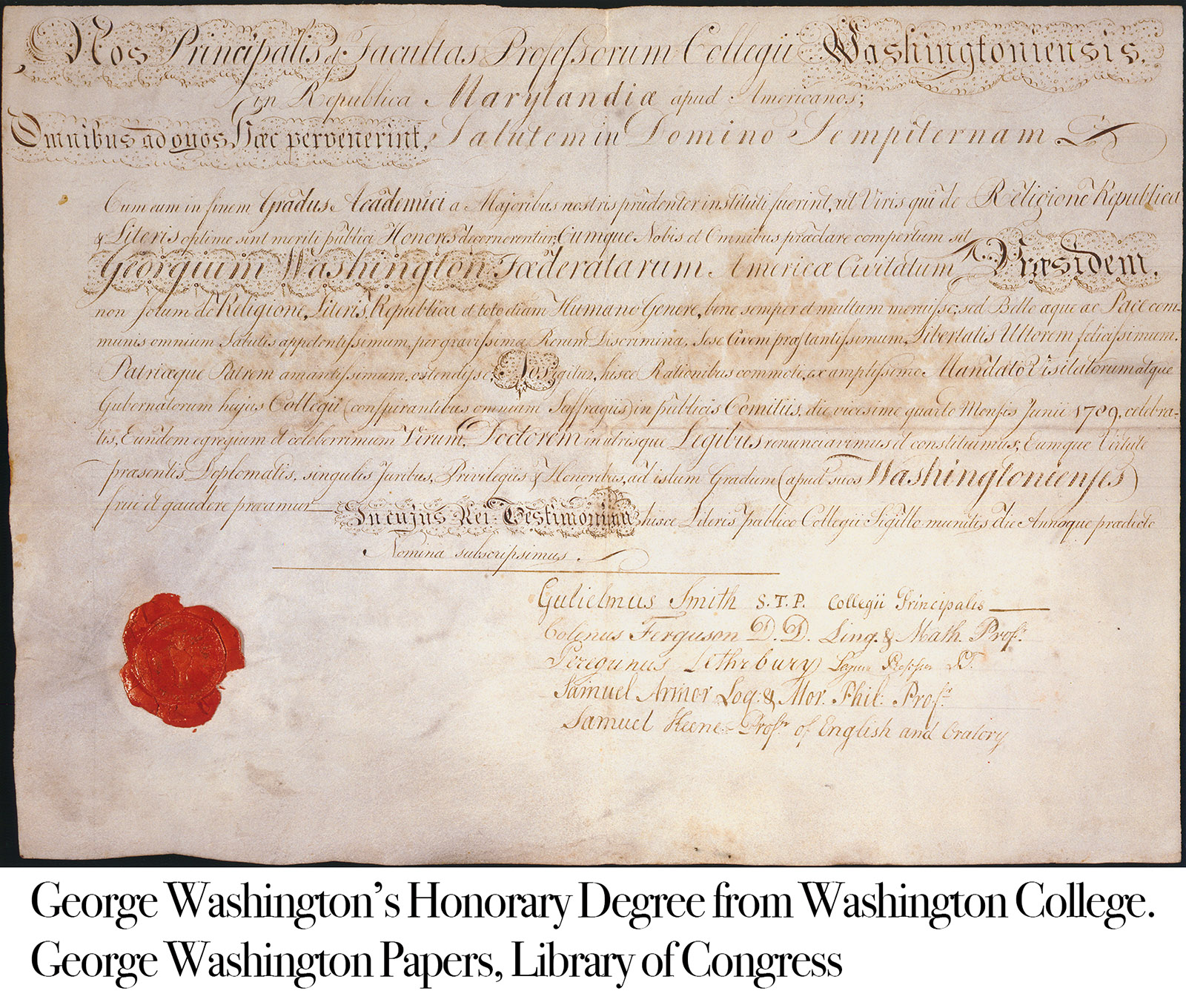
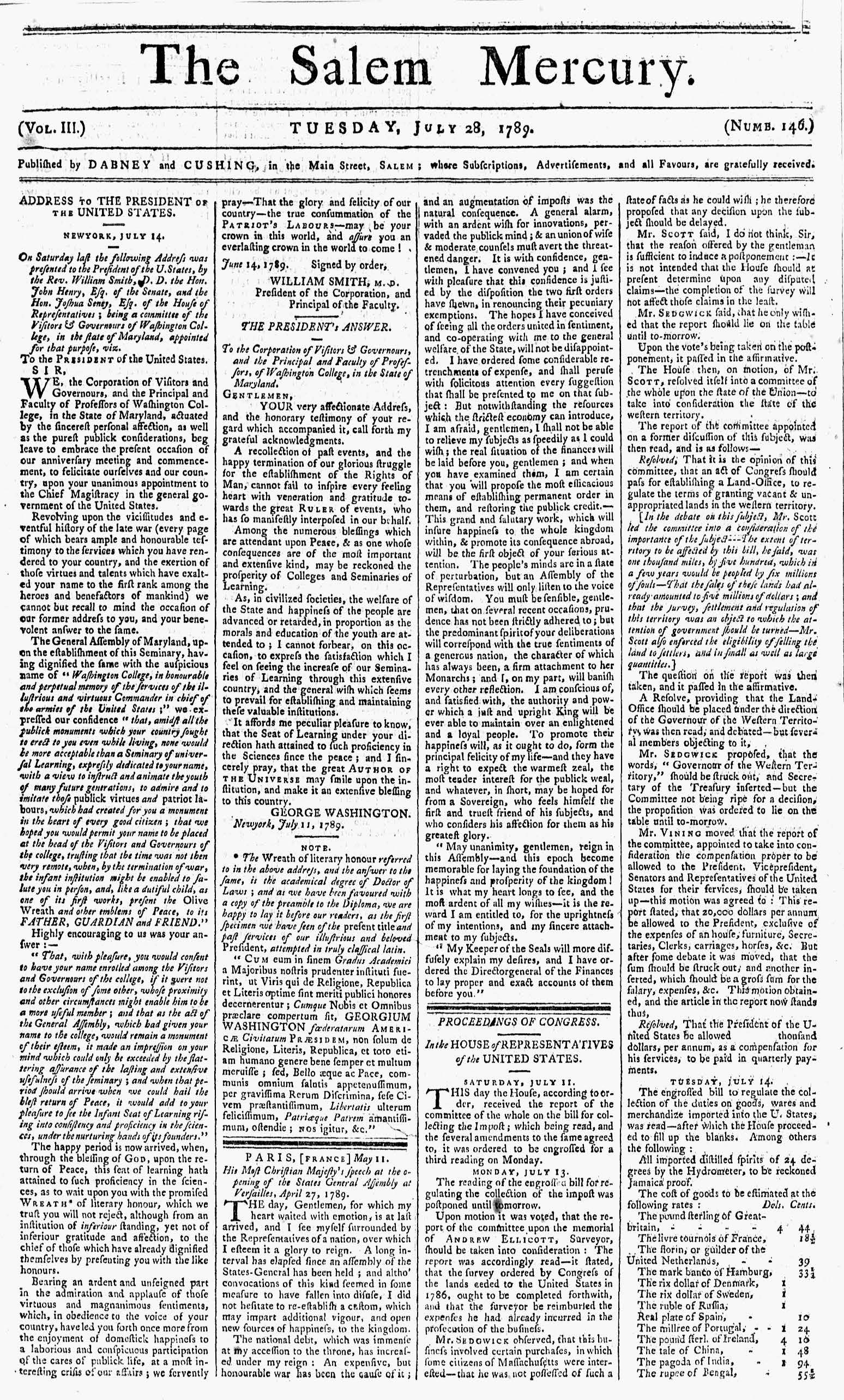 Just a few months after becoming the first President of the United States of America,
on June 24, 1789, George Washington was appointed to the Board of Visitors & Governors
of Washington College and received an honorary Doctor of Laws degree. Despite being
a frequent visitor to Chestertown, Washington received the honor in New York City.
Running a newly formed nation, in a newly designated role, is a good reason to skip
an in-person visit.
Just a few months after becoming the first President of the United States of America,
on June 24, 1789, George Washington was appointed to the Board of Visitors & Governors
of Washington College and received an honorary Doctor of Laws degree. Despite being
a frequent visitor to Chestertown, Washington received the honor in New York City.
Running a newly formed nation, in a newly designated role, is a good reason to skip
an in-person visit.