“GATH”: A Washington College grammar school student becomes a celebrated journalist and author of works celebrating the history and lore of the Eastern Shore.
In 1827, Washington College’s original (and only) college building was destroyed by fire. Shortly after the new college building, today’s Middle Hall, was built, the college admitted a limited number of grammar school students, who were educated in that same building. Among these young students was a boy who would go on to become a prolific, celebrated, and internationally-known journalist who also authored poems, short stories, and novels about Maryland and especially his native Eastern Shore.
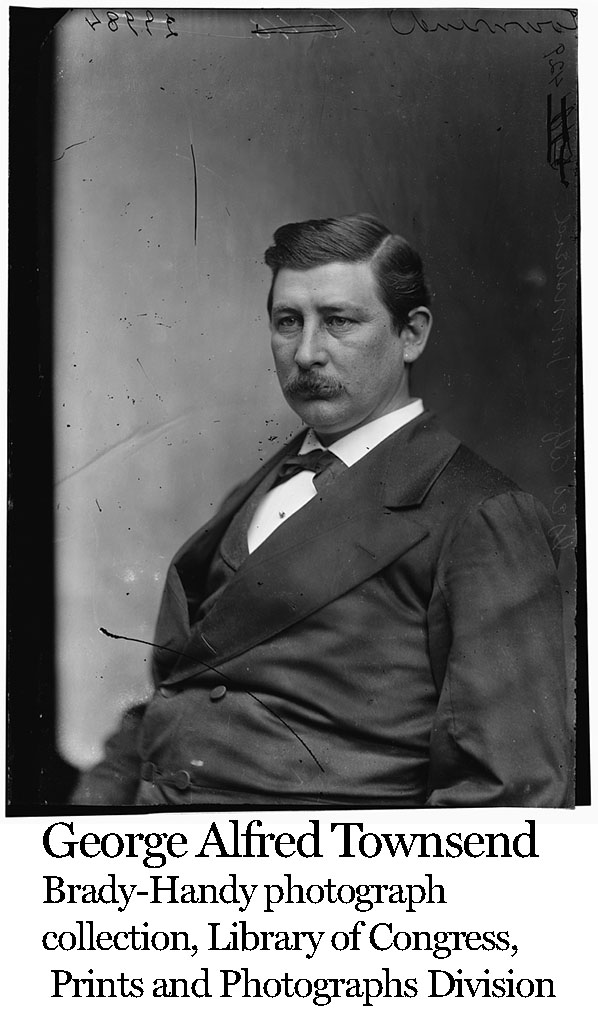 George Alfred Townsend was born in 1841 in Georgetown, Delaware, into a family with
deep roots in the lower Eastern Shore. His father Stephen Townsend, a Methodist circuit
preacher, was descended from some of Virginia’s earliest settlers; his mother, Mary
Milbourne, was from the area of Mattaponi Hundred in Worcester County, which bordered
Virginia and the Pocomoke River.
George Alfred Townsend was born in 1841 in Georgetown, Delaware, into a family with
deep roots in the lower Eastern Shore. His father Stephen Townsend, a Methodist circuit
preacher, was descended from some of Virginia’s earliest settlers; his mother, Mary
Milbourne, was from the area of Mattaponi Hundred in Worcester County, which bordered
Virginia and the Pocomoke River. 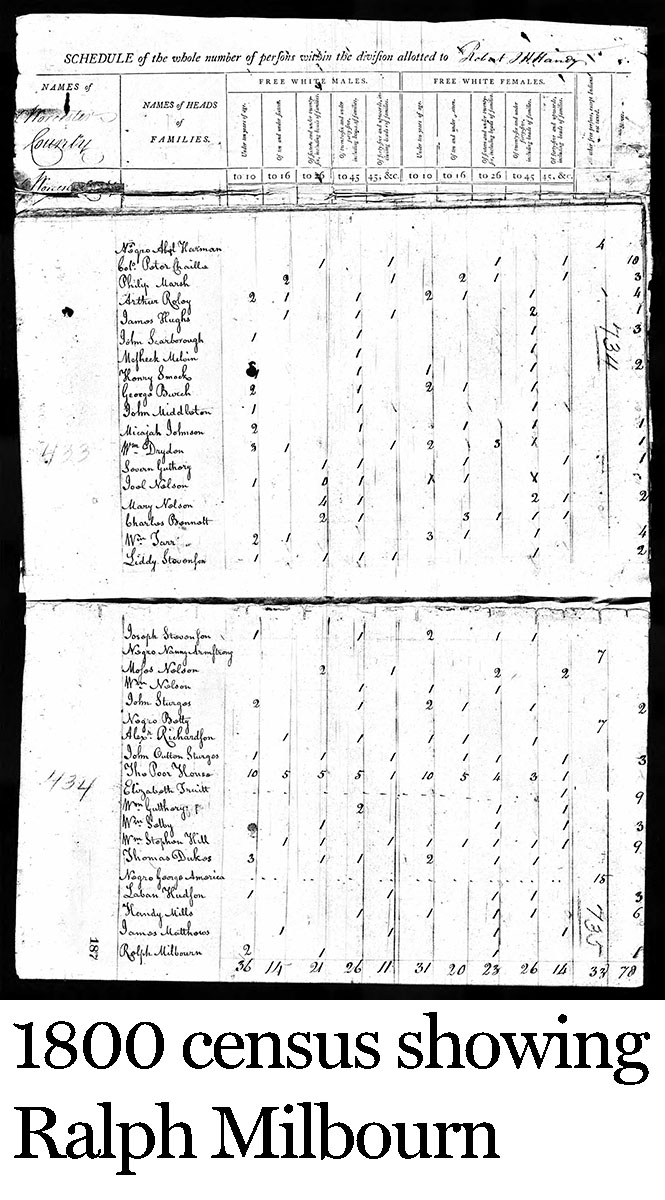 As a circuit preacher, Reverend Townsend ministered to churches all over the Eastern
Shore and Delaware before settling his family more permanently in Philadelphia in
1854. The family lived in Snow Hill, Cambridge, and Princess Anne. They lived in
Chestertown from 1849-1851. When the family lived in Chestertown, young George attended
the Washington College grammar school from the ages of 8-10. He finished his education
further afield, earning a Master of Arts degree from Philadelphia’s Central High School
in 1860, at the age of 19.
As a circuit preacher, Reverend Townsend ministered to churches all over the Eastern
Shore and Delaware before settling his family more permanently in Philadelphia in
1854. The family lived in Snow Hill, Cambridge, and Princess Anne. They lived in
Chestertown from 1849-1851. When the family lived in Chestertown, young George attended
the Washington College grammar school from the ages of 8-10. He finished his education
further afield, earning a Master of Arts degree from Philadelphia’s Central High School
in 1860, at the age of 19.
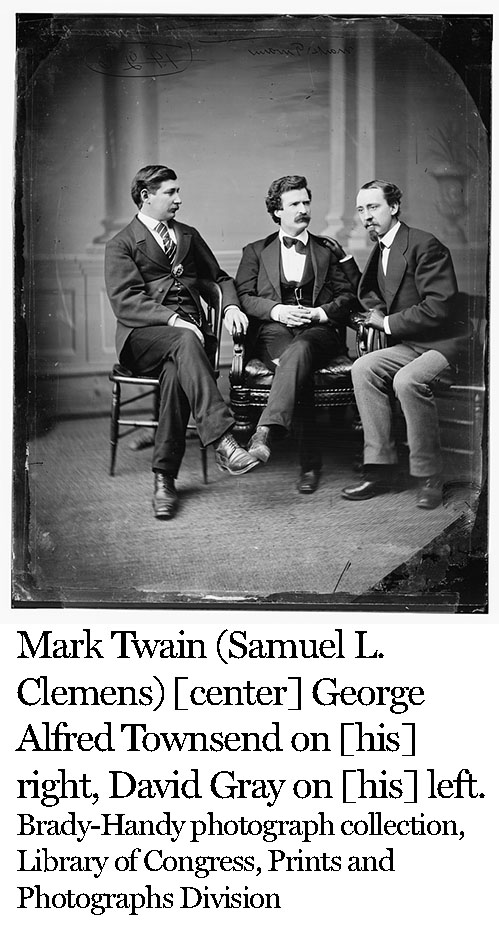 He quickly secured a position with the Philadelphia Enquirer, the first of many publications for which he would write throughout his career. Two
years later, at the age of 21, he was hired by the New York Herald as a war correspondent,
traveling with the Army of the Potomac under General George McClellan. He was with
the Army during the Peninsula Campaign but caught malaria before the Second Battle
of Bull Run; he took some time off to recover, traveling in Europe and giving a successful
series of lectures in England detailing his experiences from the front lines of the
American Civil War.
He quickly secured a position with the Philadelphia Enquirer, the first of many publications for which he would write throughout his career. Two
years later, at the age of 21, he was hired by the New York Herald as a war correspondent,
traveling with the Army of the Potomac under General George McClellan. He was with
the Army during the Peninsula Campaign but caught malaria before the Second Battle
of Bull Run; he took some time off to recover, traveling in Europe and giving a successful
series of lectures in England detailing his experiences from the front lines of the
American Civil War.
In 1865, he resumed his duties as a war correspondent, spending his time based at Union headquarters in City Point, Virginia, and at Petersburg. He also returned just in time to cover the Lincoln assassination and its aftermath for the New York World during April and May of 1865. This work culminated in a book published later that year entitled “The Life, Crime, and Capture of John Wilkes Booth.” The flight and capture of Booth are also imaginatively remembered in his poem, “The Imp in Nanjemoy,” published on November 6, 1873, in The Daily Graphic under “Laertes,” one of Townsend’s many noms de plume. After travels in Europe with his new wife, Elizabeth “Bessie” Rhodes, and the birth of their first child, Genevieve, in Paris, Townsend returned to Washington, D.C. to resume his writing career. During this period, he was a successful and prolific columnist for the Chicago Tribune and the New York Graphic and was considered one of the most quotable. He published letters several times a week, including lively portraits of political figures among his many opinion pieces. He chiefly wrote under the pen name “Gath,” a biblical reference including his own initials.
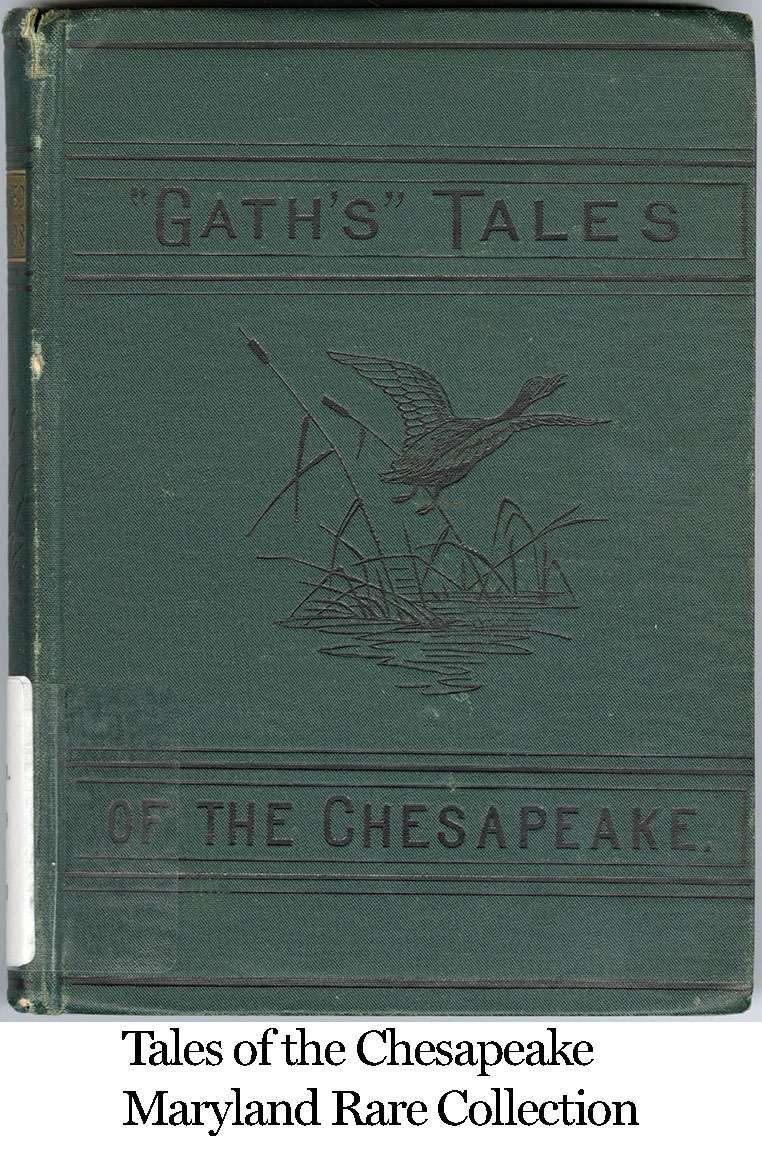
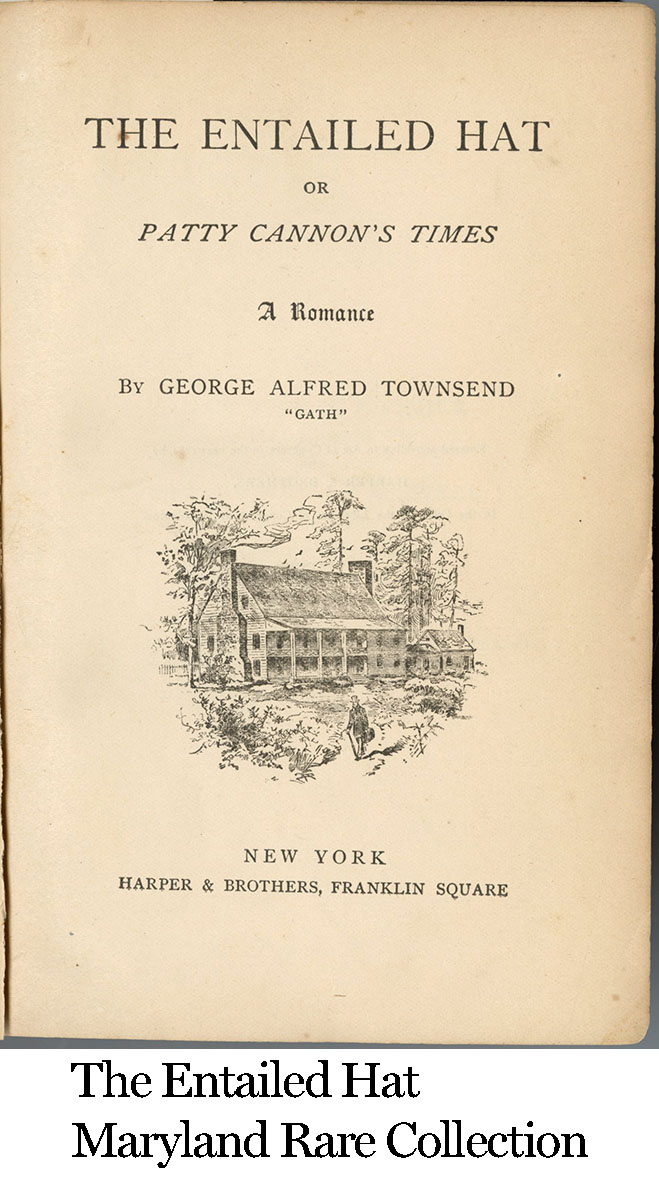
It was under the “Gath” sobriquet that he authored his later works, which focused largely on the state of Maryland and his native Delmarva Peninsula. In 1880, his “Tales of the Chesapeake” was published, including 9 poems and 17 short stories and retellings of regional legends and lore. This was followed in 1884 by perhaps his best-known work, “The Entailed Hat,” a fictionalized story of infamous 19th century human trafficker Patty Cannon.
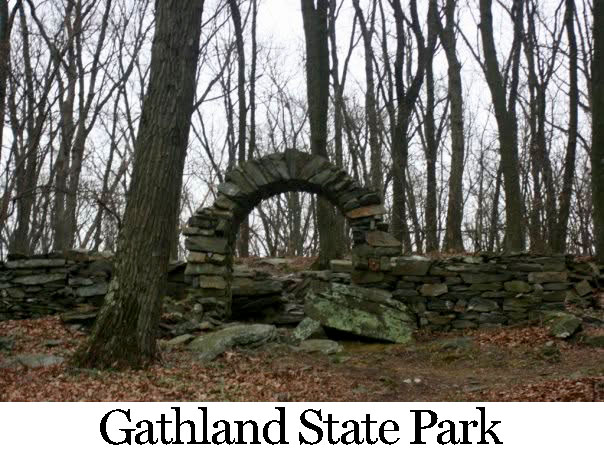 Later in the same year, Townsend traveled to Western Maryland to conduct research
for a novel based on events surrounding the Civil War. He fell in love with the area
and bought 100 acres of land just outside Burkittsville, in Crampton’s Gap, the site
of an important battle leading up to the nearby Battle of Antietam, the bloodiest
single day of the entire Civil War. Here, he built an estate consisting of several
structures: a house, a lodge, a den, and a library building, along with a mausoleum
inscribed with
Later in the same year, Townsend traveled to Western Maryland to conduct research
for a novel based on events surrounding the Civil War. He fell in love with the area
and bought 100 acres of land just outside Burkittsville, in Crampton’s Gap, the site
of an important battle leading up to the nearby Battle of Antietam, the bloodiest
single day of the entire Civil War. Here, he built an estate consisting of several
structures: a house, a lodge, a den, and a library building, along with a mausoleum
inscribed with 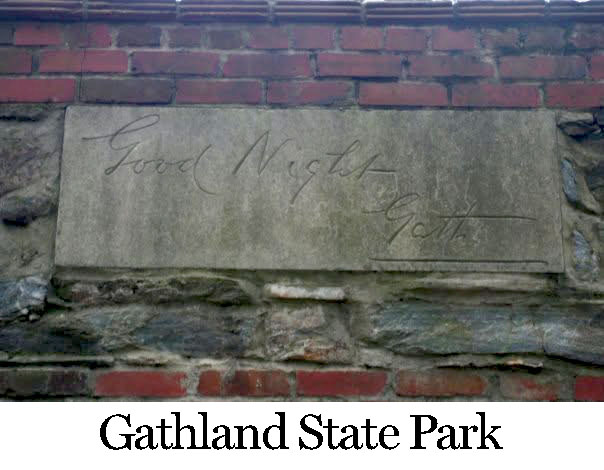 “Good Night------Gath” --carved in a facsimile of his own handwriting. “Katy of Catoctin
or the Chain Breakers: A National Romance” was first published in 1886. This novel
covered the years of the Civil War, from the John Brown raid on nearby Harpers Ferry
in 1859, to the Lincoln assassination in 1865. In 1896, he erected the National War
Correspondents Memorial Arch on the site; this memorial, along with a tree at Arlington,
is the only national memorial dedicated to correspondents killed in combat. It depicts
the names of 157 journalists and artists who saw and described the events of the American
Civil War. It incorporates quotations pertaining to communication, and striking sculptures
of the Greek god Hermes and two horses' heads above tablets reading “Speed” and “Heed.”
Gapland, as the site was called, is now Gathland State Park, and is well worth a visit.
“Good Night------Gath” --carved in a facsimile of his own handwriting. “Katy of Catoctin
or the Chain Breakers: A National Romance” was first published in 1886. This novel
covered the years of the Civil War, from the John Brown raid on nearby Harpers Ferry
in 1859, to the Lincoln assassination in 1865. In 1896, he erected the National War
Correspondents Memorial Arch on the site; this memorial, along with a tree at Arlington,
is the only national memorial dedicated to correspondents killed in combat. It depicts
the names of 157 journalists and artists who saw and described the events of the American
Civil War. It incorporates quotations pertaining to communication, and striking sculptures
of the Greek god Hermes and two horses' heads above tablets reading “Speed” and “Heed.”
Gapland, as the site was called, is now Gathland State Park, and is well worth a visit.
Gath’s mausoleum is not occupied; he became a recluse after the death of his wife in 1903, and his financial situation declined as his distinctive style of writing fell out of favor in the early 20th century. He eventually moved to live with his daughter and son-in-law in Philadelphia, where he died in 1914, and was buried near his wife and his parents from the Eastern Shore.
 Townsend’s later works draw heavily on his life experiences and his family’s heritage,
and many characters and locations are based on real people and places of Delmarva.
Works like “Katy of Catoctin” and “The Imp in Nanjemoy” draw from his front-row experiences
during and immediately following the Civil War. Many of his shorter works feature
country ministers, drawing from Gath’s childhood observations. Meshach Milbourne,
the enigmatic protagonist of “The Entailed Hat,” shares a surname with Townsend’s
mother, and the character Sampson Hat in the same novel is based on Sampson Harmon,
a free Black man and local folk hero associated with the Nassawango Iron Furnace in
Worcester County. Other characters are based on public personages in the lower counties
of the Delmarva Peninsula. His distinctive writing style is very old-fashioned to
the modern ear, but his lush and vivid descriptions of the natural world and the sparse
and haunted landscapes of the southern Eastern Shore are poignantly accurate to those
of us who have spent time in that area.
Townsend’s later works draw heavily on his life experiences and his family’s heritage,
and many characters and locations are based on real people and places of Delmarva.
Works like “Katy of Catoctin” and “The Imp in Nanjemoy” draw from his front-row experiences
during and immediately following the Civil War. Many of his shorter works feature
country ministers, drawing from Gath’s childhood observations. Meshach Milbourne,
the enigmatic protagonist of “The Entailed Hat,” shares a surname with Townsend’s
mother, and the character Sampson Hat in the same novel is based on Sampson Harmon,
a free Black man and local folk hero associated with the Nassawango Iron Furnace in
Worcester County. Other characters are based on public personages in the lower counties
of the Delmarva Peninsula. His distinctive writing style is very old-fashioned to
the modern ear, but his lush and vivid descriptions of the natural world and the sparse
and haunted landscapes of the southern Eastern Shore are poignantly accurate to those
of us who have spent time in that area.
Anon the river spreads to coves,
And in the tides grow giant groves
The water shines like ebony,
And odors resinous ascend
From many an old balsamic tree,
Whose roots the terrapin befriend;
The great ball cypress, fringed with beard,
Presides above the water oak
As doth its shingles, well revered,
O’er many a happy home endeared
To thousands far from Pocomoke.
-from “Mother Nook,” introduction to “Tales of the Chesapeake”
George Alfred Townsend’s published works, including “The Entailed Hat”, “Katy of Catoctin”, and “Tales of the Chesapeake” are available to be checked out from Miller Library’s Maryland Collection on the second floor.
“The Life, Crime, and Capture of John Wilkes Booth” can be read in its entirety on the Internet Archive: https://archive.org/details/lifecrimecapture4567town/mode/2up.