Civil Rights at Washington College
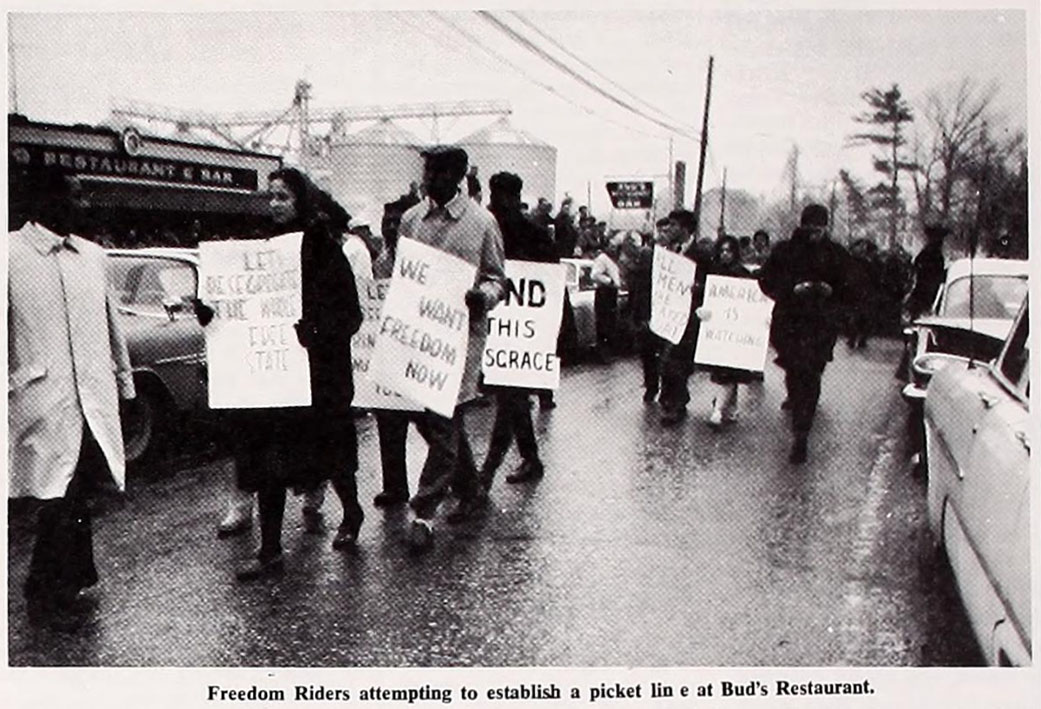
Like most institutions founded in the 18th century and named after enslavers, Washington College has a bit of a checkered past regarding civil rights.
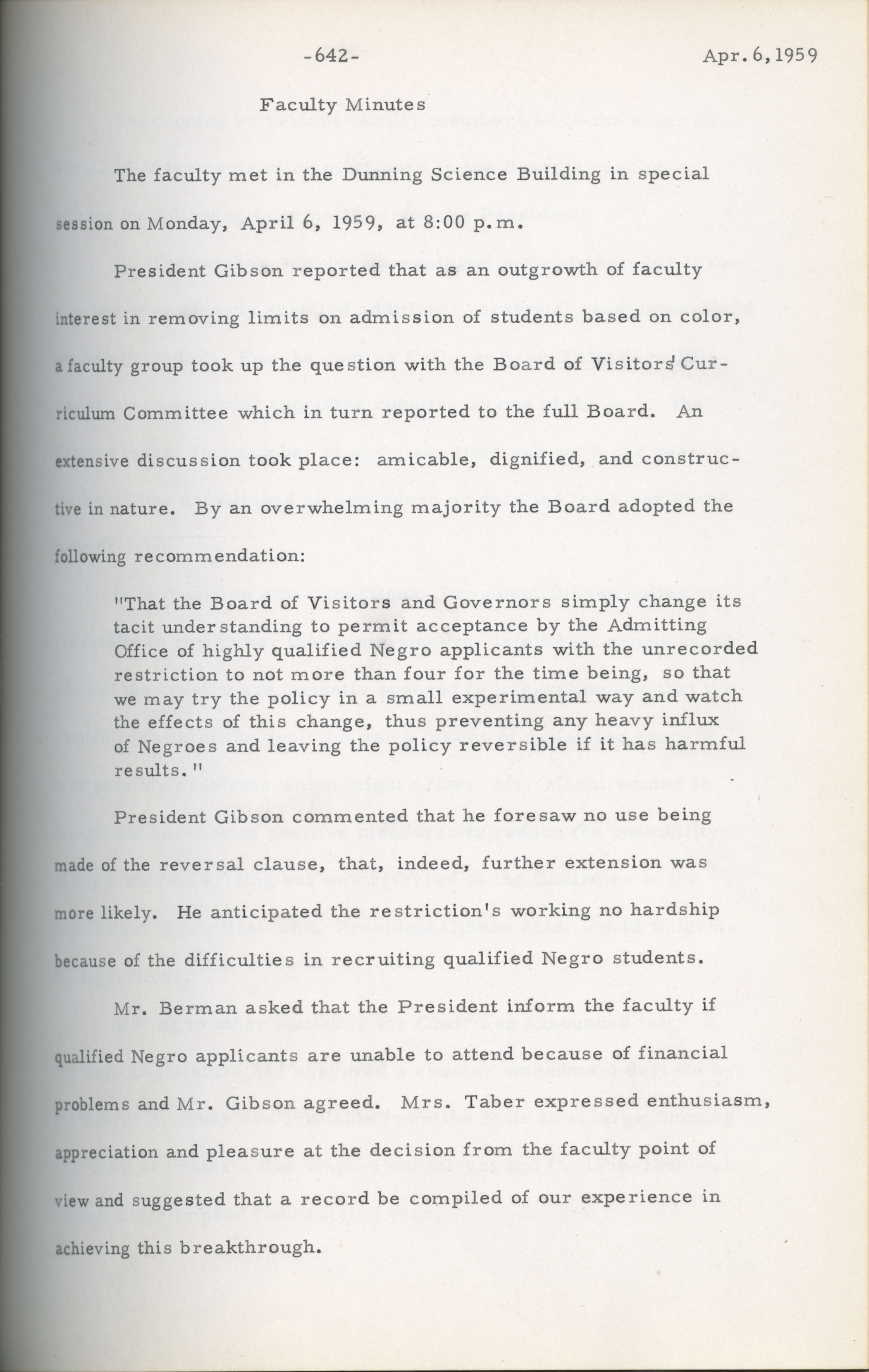
Though the Supreme Court unanimously outlawed school segregation in 1954 with the landmark case Brown v. Board of Education, Washington College did not immediately integrate. The topic of integration had been raised at Faculty Meetings throughout the 1958-1959 academic year, but no decision was made until April 1959. According to the faculty meeting minutes, following strong faculty support for integration, Washington College decided to permit up to four Black students at a time to “thus preventing any heavy influx”.
 The following Fall semester, Thomas E. Morris would become the first African American
student to enroll at Washington College. A native of Virginia, Morris was raised in
Baltimore and made a name for himself on the WC campus as a scholar, athlete, and
member of the Alpha Phi Alpha fraternity. By 1961, two more Black students had joined
the student body- Patricia Godbolt '64, and Shirley Dale Patterson '65, bringing the
total to 3, still less than the Board-mandated maximum of 4. Despite the integration
efforts, campus culture remained openly hostile towards students of color, as evidenced
by the minstrel shows depicting blackface proudly performed by students and memorialized
in the 1961 Pegasus.
The following Fall semester, Thomas E. Morris would become the first African American
student to enroll at Washington College. A native of Virginia, Morris was raised in
Baltimore and made a name for himself on the WC campus as a scholar, athlete, and
member of the Alpha Phi Alpha fraternity. By 1961, two more Black students had joined
the student body- Patricia Godbolt '64, and Shirley Dale Patterson '65, bringing the
total to 3, still less than the Board-mandated maximum of 4. Despite the integration
efforts, campus culture remained openly hostile towards students of color, as evidenced
by the minstrel shows depicting blackface proudly performed by students and memorialized
in the 1961 Pegasus.
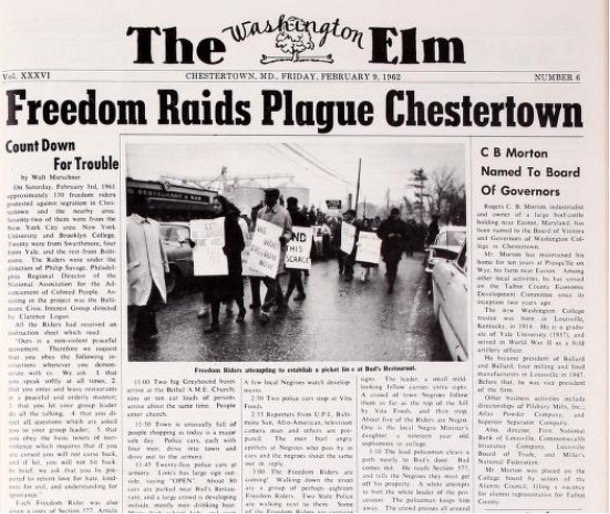
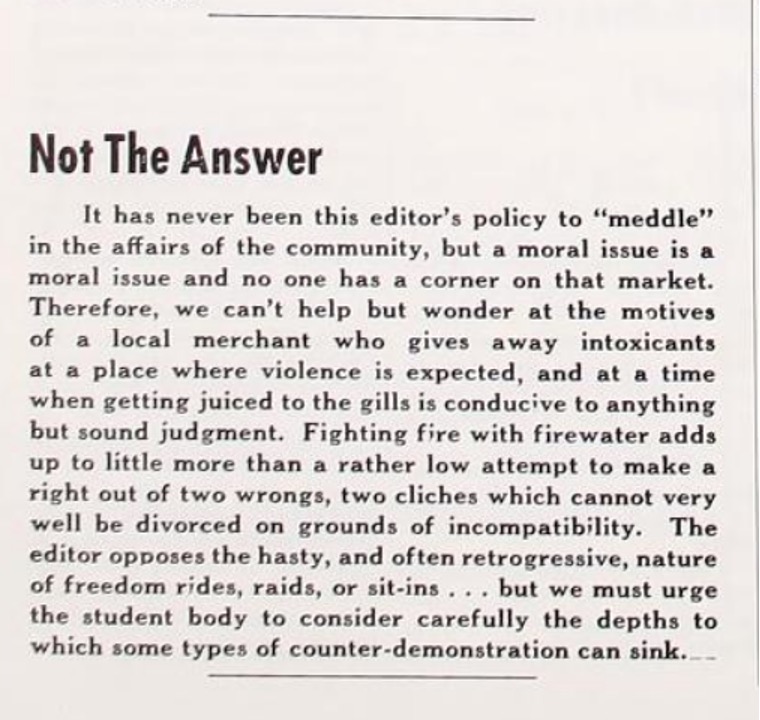 The Civil Rights movement arrived in Chestertown in full force on February 3, 1962,
with the arrival of the Freedom Riders. Their arrival made front page news in the
Elm, and the article detailed the number of riders (150), their instructions (which
included a copy of the Code of Maryland), and a detailed schedule of the day's events.
The Elm reporter also interviewed people connected to the Freedom Riders and Black
members of the Chestertown community. The neutral and professionally written article
is belied by the negative headline, which refers to the protests in cynical terms
such as “raids” and “plague”. The true feelings of the editor are laid even more plain
on page 2 of the same edition, in which he states a categorical opposition of the
“hasty, and often retrogressive, nature of freedom rides, raids, or sit-ins.”
The Civil Rights movement arrived in Chestertown in full force on February 3, 1962,
with the arrival of the Freedom Riders. Their arrival made front page news in the
Elm, and the article detailed the number of riders (150), their instructions (which
included a copy of the Code of Maryland), and a detailed schedule of the day's events.
The Elm reporter also interviewed people connected to the Freedom Riders and Black
members of the Chestertown community. The neutral and professionally written article
is belied by the negative headline, which refers to the protests in cynical terms
such as “raids” and “plague”. The true feelings of the editor are laid even more plain
on page 2 of the same edition, in which he states a categorical opposition of the
“hasty, and often retrogressive, nature of freedom rides, raids, or sit-ins.”
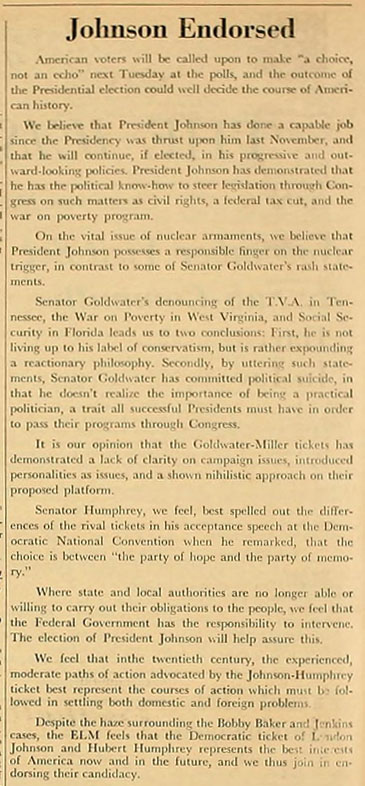 By 1964, attitudes towards integration and civil rights had seemingly changed- or
perhaps, there was simply a new Elm editor. That October, the student newspaper offered
a full-throated endorsement of Democrat Lyndon Johnson, specifically pointing out
his “progressive and outward-looking policies…on such matters as civil rights.” Johnson
would go on to win the presidency, and pass the Civil Rights Act of 1964, Voting Rights
Act of 1965, and the Civil Rights Act of 1968. Though the 1964 Elm endorsement of
Johnson does nothing to alleviate the racism and discrimination that came before,
it does show that even those who do not start out on the right side of history have
the capacity to change their minds.
By 1964, attitudes towards integration and civil rights had seemingly changed- or
perhaps, there was simply a new Elm editor. That October, the student newspaper offered
a full-throated endorsement of Democrat Lyndon Johnson, specifically pointing out
his “progressive and outward-looking policies…on such matters as civil rights.” Johnson
would go on to win the presidency, and pass the Civil Rights Act of 1964, Voting Rights
Act of 1965, and the Civil Rights Act of 1968. Though the 1964 Elm endorsement of
Johnson does nothing to alleviate the racism and discrimination that came before,
it does show that even those who do not start out on the right side of history have
the capacity to change their minds.