The Battle of Brandywine
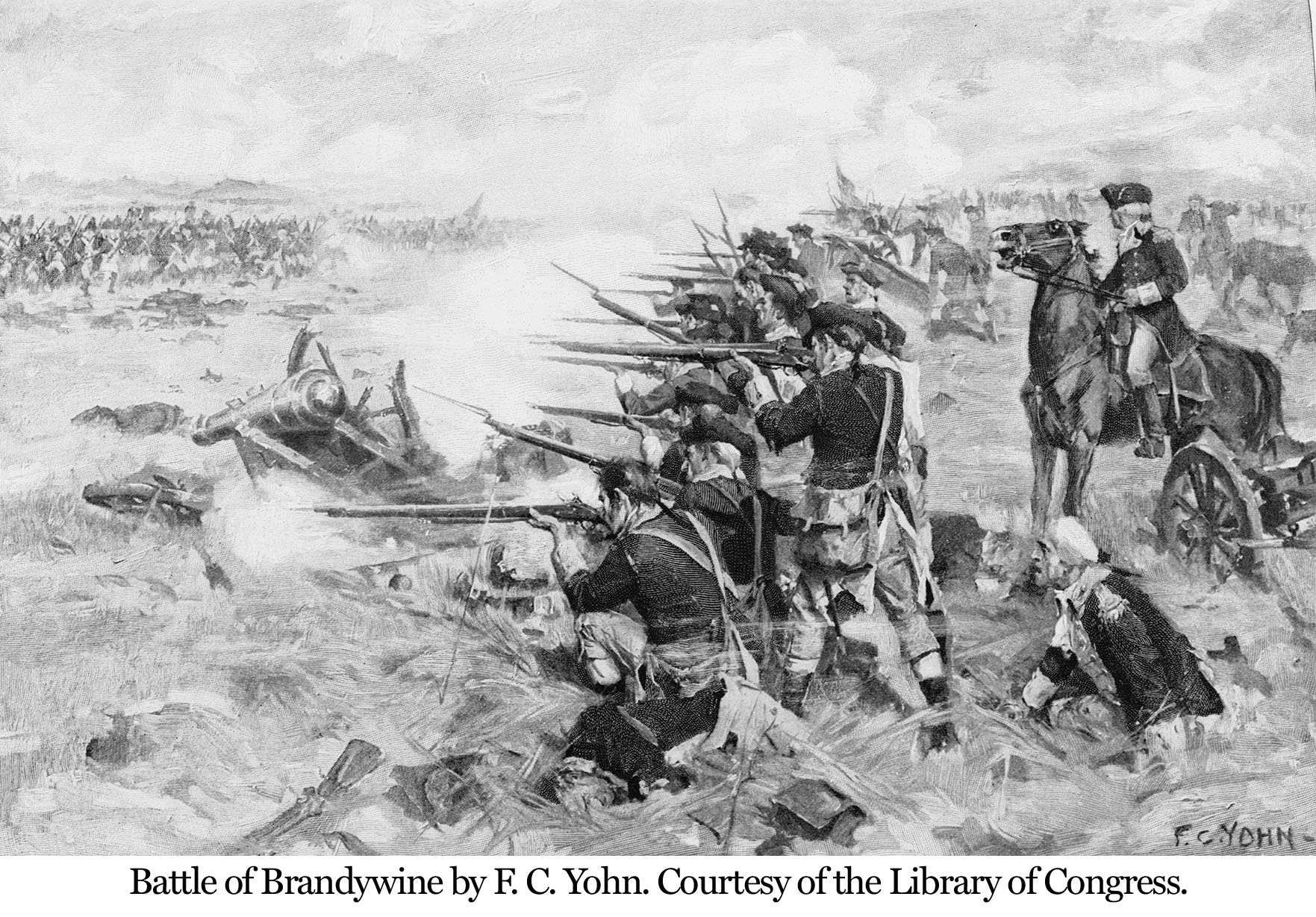
On September 11, 1777, a year after the Battle of Brooklyn and the sacrifice of the Maryland 400, Maryland troops once again fought in the largest single-day engagement of the American Revolution.
 New York and Boston were under British control, and the British were moving to take
Philadelphia, the Capital of the new America. In the summer of 1777, a British flotilla
of twenty-eight ships with 12,000 troops sailed up the Chesapeake Bay. They landed
at Head of Elk, present-day Elkton. Washington’s troops had moved to block their way
to Philadelphia, but due to a delay in landing, Gen. Howe did not make the usual encampment
and instead proceeded directly towards Philadelphia. This meant that Washington was
unable to accurately assess Howe’s forces. There was a brief skirmish at Cooch’s Bridge;
Washington believed that Howe would go through there, then onto Wilmington to reach
Philadelphia. When he found Howe moving through Newark, Delaware, he rushed to a defensive
position along the Brandywine Creek, thinking he had blocked all fords across the
river.
New York and Boston were under British control, and the British were moving to take
Philadelphia, the Capital of the new America. In the summer of 1777, a British flotilla
of twenty-eight ships with 12,000 troops sailed up the Chesapeake Bay. They landed
at Head of Elk, present-day Elkton. Washington’s troops had moved to block their way
to Philadelphia, but due to a delay in landing, Gen. Howe did not make the usual encampment
and instead proceeded directly towards Philadelphia. This meant that Washington was
unable to accurately assess Howe’s forces. There was a brief skirmish at Cooch’s Bridge;
Washington believed that Howe would go through there, then onto Wilmington to reach
Philadelphia. When he found Howe moving through Newark, Delaware, he rushed to a defensive
position along the Brandywine Creek, thinking he had blocked all fords across the
river.
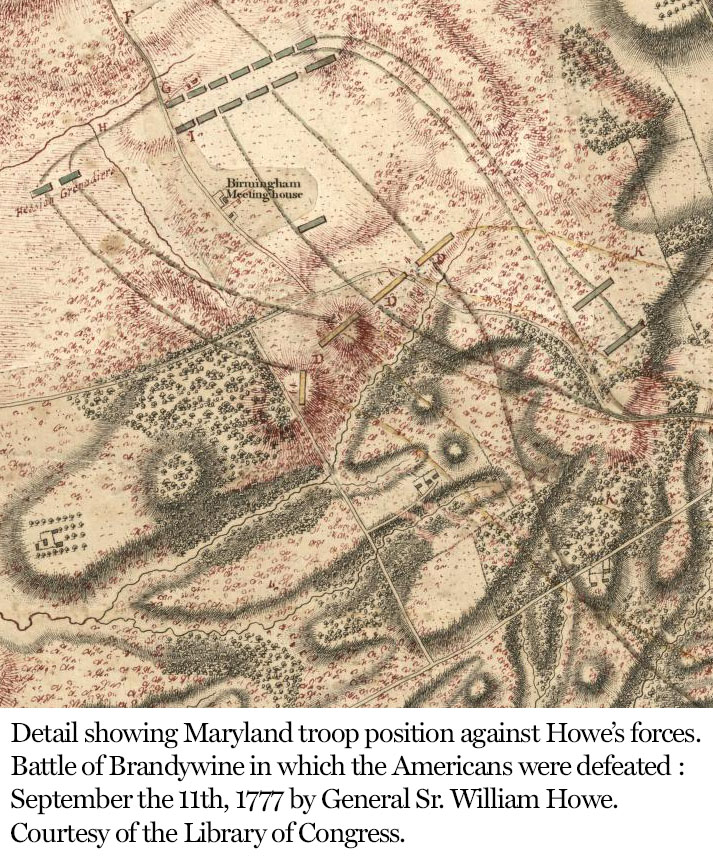
Heavy fog obscured movements, and the Hessians attacked at Chadds Ford while Howe’s troops crossed further upstream and outflanked the colonial troops. The Marylanders, under the command of John Sullivan, went on to fight the Hessian and British forces. Under constant fire and repeated charges with bayonets, the Marylanders were unable to repel the attack and were forced to retreat to the woods. It was only the intense heat combined with heavy wool uniforms that made the exhausted British and Hessian troops unable to follow the retreating colonists.
Reverend Joab Trout, who did not survive the battle, gave a sermon on the eve of September 10th.
“We have met this evening, perhaps for the last time. We have shared the toil of march, the peril of fight, and the dismay of the retreat; alike we have endured the cold and hunger, the contumely of the internal foe and the courage of foreign oppression. We have sat, night after night, beside the camp-fire; we have together heard the roll of the reveille which called us to duty, or the beat of the tattoo which gave the signal for the hardy sleep of the soldier with the earth for his bed and knapsack for his pillow. And now, soldiers and brethren, we have met in the peaceful valley on the eve of battle, while the sunlight is dying away behind yonder heights, the sunlight that, to morrow morn, will glimmer on scenes of blood.”
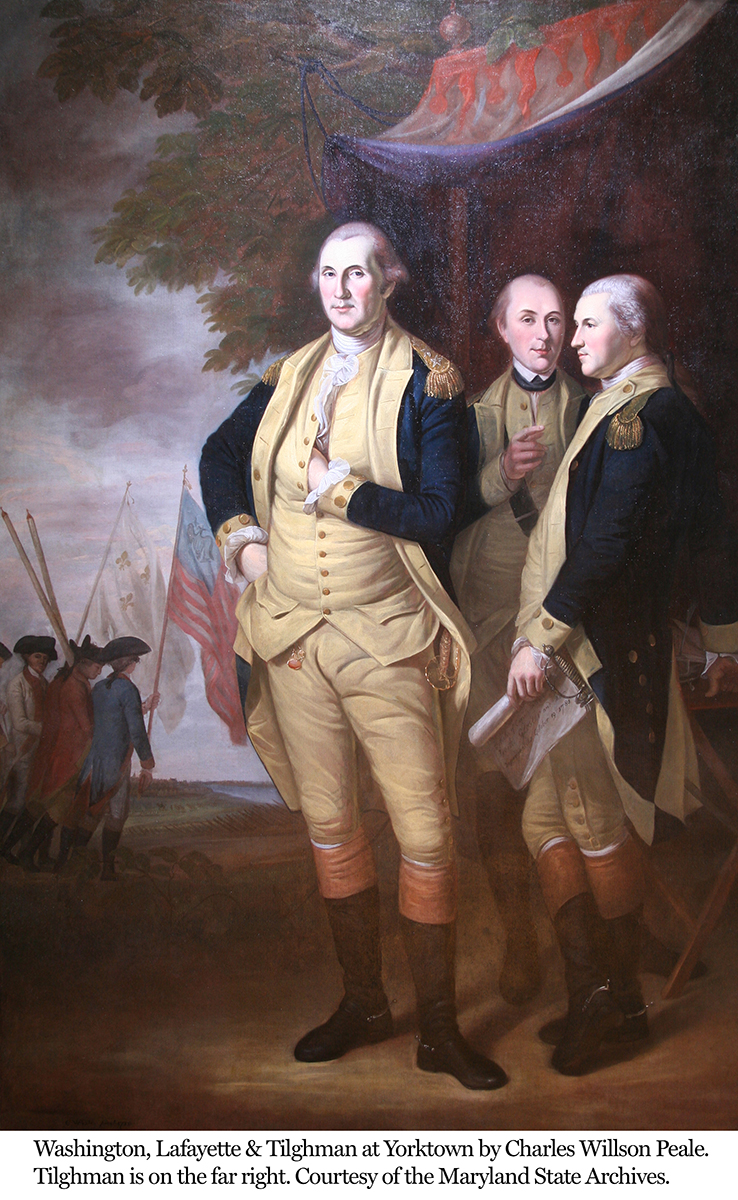 The aftermath of the battle was laid bare and showed Rev. Trout’s prophesied scene
of blood. It was a brutal defeat for the Americans and, in a short time, they lost
Philadelphia. As with most defeats, fingers of blame were pointed, most at John Sullivan.
The retreat or fleeing of the Maryland troops was seen as the reason the battle was
lost. North Carolina member of Congress Thomas Burke claimed Sullivan engaged in “evil
conduct.” This was most likely not true during the Battle of Brandywine but could
be claimed during his 1779 Sullivan Expedition that razed forty Iroquois villages
throughout upstate New York and Northeastern Pennsylvania. While some laid blame,
many praised Sullivan for his calmness and bravery during the battle. After the Battle
of Brooklyn, Maryland’s regiments had aided Washington’s Crossing of the Delaware
in December of 1776, fought in the Battle of Trenton, then the Battle of Princeton,
before settling in for a long winter in Morristown; only to be, once again, outflanked
by an overwhelming British and Hessian onslaught at Brandywine. They would fight several
more battles in the Northern Colonies, including Germantown, Monmouth, and Stony Point,
before moving to the Southern Colonies with Nathanial Greene.
The aftermath of the battle was laid bare and showed Rev. Trout’s prophesied scene
of blood. It was a brutal defeat for the Americans and, in a short time, they lost
Philadelphia. As with most defeats, fingers of blame were pointed, most at John Sullivan.
The retreat or fleeing of the Maryland troops was seen as the reason the battle was
lost. North Carolina member of Congress Thomas Burke claimed Sullivan engaged in “evil
conduct.” This was most likely not true during the Battle of Brandywine but could
be claimed during his 1779 Sullivan Expedition that razed forty Iroquois villages
throughout upstate New York and Northeastern Pennsylvania. While some laid blame,
many praised Sullivan for his calmness and bravery during the battle. After the Battle
of Brooklyn, Maryland’s regiments had aided Washington’s Crossing of the Delaware
in December of 1776, fought in the Battle of Trenton, then the Battle of Princeton,
before settling in for a long winter in Morristown; only to be, once again, outflanked
by an overwhelming British and Hessian onslaught at Brandywine. They would fight several
more battles in the Northern Colonies, including Germantown, Monmouth, and Stony Point,
before moving to the Southern Colonies with Nathanial Greene.
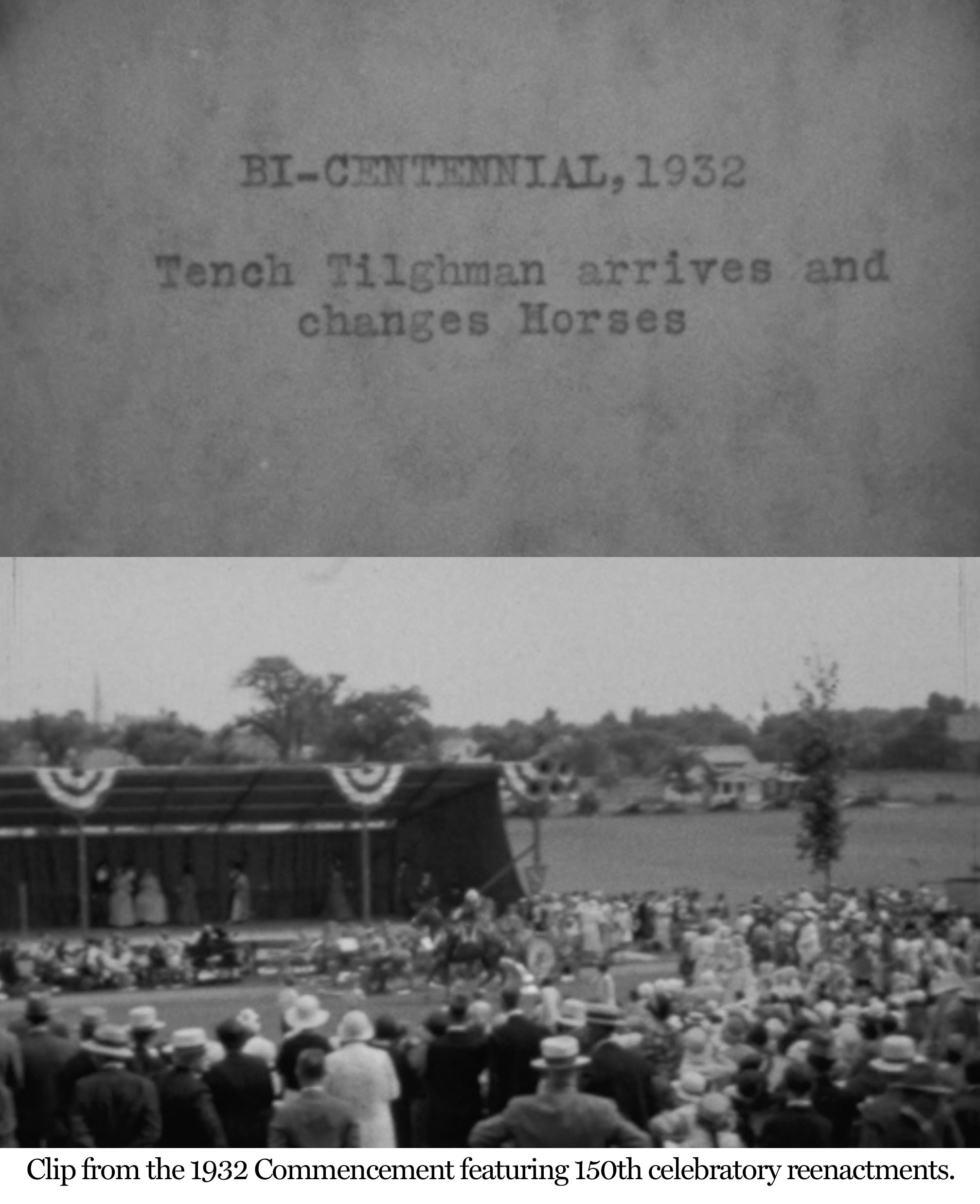
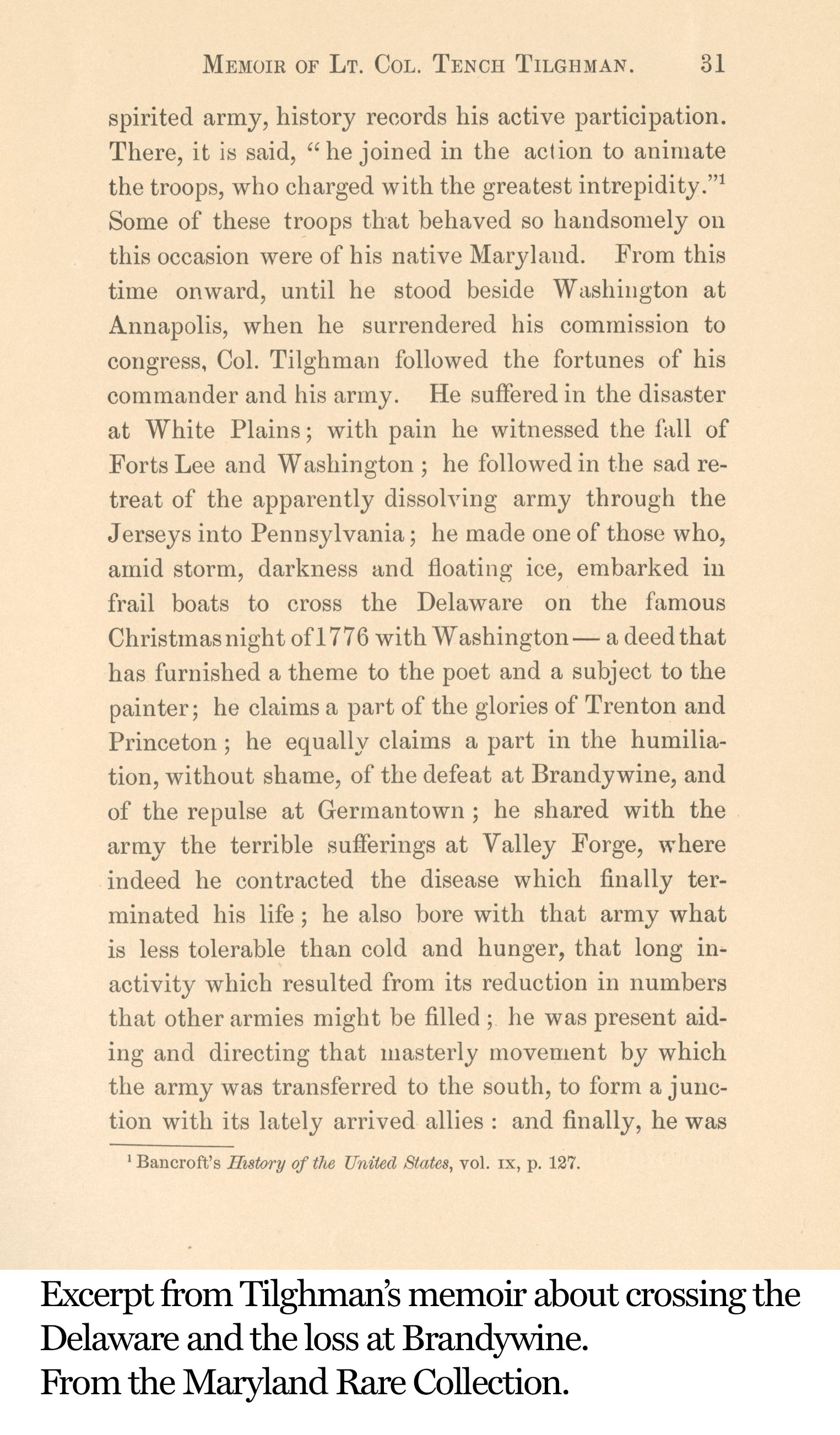 A member of the Eastern Shore, who was close to Washington throughout these campaigns,
was Tench Tilghman. The Talbot County native created a mercantile business with his
uncle in Philadelphia; he left the business and volunteered in the Continental Army
as tensions with Britain grew. He quickly rose through the ranks and was entrusted
with commissioning a treaty with the Six Nations Confederacy for the Continental Congress
in 1775. By 1776, he became Aide-de-camp to George Washington. An aide-de-camp serves
as a confidential personal secretary and military assistant to a high-ranking officer,
basically their sounding board and right-hand person. Tench was at Washington’s side
until the end of the War. Washington even chose
A member of the Eastern Shore, who was close to Washington throughout these campaigns,
was Tench Tilghman. The Talbot County native created a mercantile business with his
uncle in Philadelphia; he left the business and volunteered in the Continental Army
as tensions with Britain grew. He quickly rose through the ranks and was entrusted
with commissioning a treaty with the Six Nations Confederacy for the Continental Congress
in 1775. By 1776, he became Aide-de-camp to George Washington. An aide-de-camp serves
as a confidential personal secretary and military assistant to a high-ranking officer,
basically their sounding board and right-hand person. Tench was at Washington’s side
until the end of the War. Washington even chose 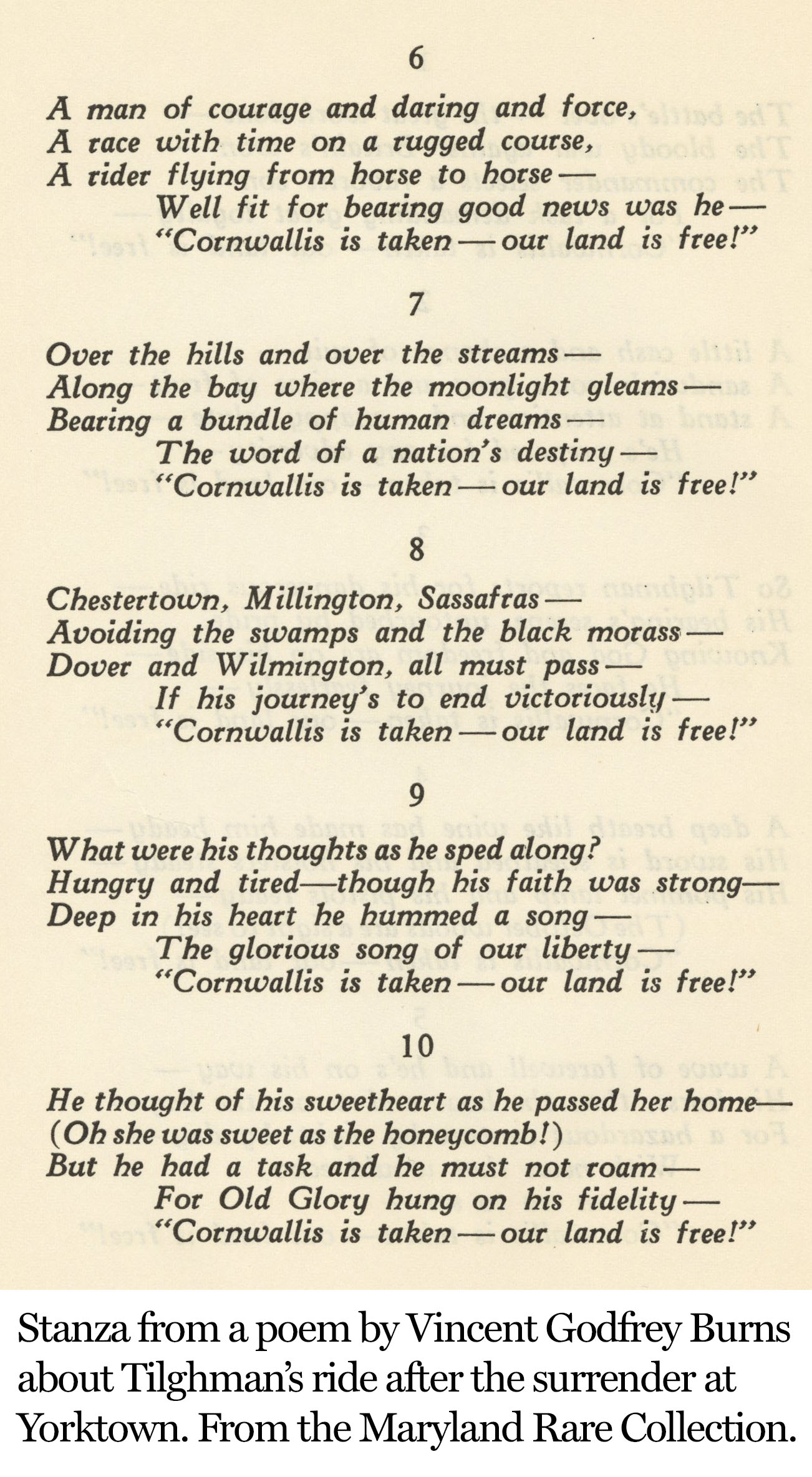 Tilghman to carry the official news of the surrender at Yorktown. This task saw him
ride through the Eastern Shore with the news on the way to Philadelphia. The Tilghman
name is seen throughout Kent County and the rest of the Eastern Shore, with many happy
to share their association with this Revolutionary War hero.
Tilghman to carry the official news of the surrender at Yorktown. This task saw him
ride through the Eastern Shore with the news on the way to Philadelphia. The Tilghman
name is seen throughout Kent County and the rest of the Eastern Shore, with many happy
to share their association with this Revolutionary War hero.