Bay Science & Solutions Expands to Two Summer Conferences for High School Students
Washington College Center for Environment & Society welcomes 32 students for its third year of immersive environmental learning
The Washington College Center for Environment & Society (CES) expanded its Bay Science & Solutions program this year, hosting two immersive summer conferences for high school students interested in environmental science, conservation, and leadership. The expansion comes after the success of the conference the past two summers.
This summer, 32 rising 10th–12th grade students from Washington, D.C., Maryland, Pennsylvania, and Virginia participated in one of two weeklong conferences offered in partnership with the Chesapeake Bay Foundation (CBF). The overnight experience combined tent camping at a Delaware state park with residence hall accommodations at Washington College, giving students an authentic college experience while exploring the Chesapeake Bay through hands-on fieldwork and scientific research.
"The growth of Bay Science & Solutions from one conference to two is a testament to the enthusiasm students have for environmental science and experiential learning," said Beth Choate, senior director of administration and education at CES. "Each year, we're inspired by the curiosity, passion, and collaboration these students bring. By expanding the program, we're able to introduce even more young people to the incredible opportunities that exist in environmental research, stewardship, and leadership."
Throughout the week, students investigated the driving question: How does land use impact the health of our waterways and the communities that rely on them, and what solutions can improve water quality? Through a combination of field investigations, laboratory research, and discussions with environmental professionals, participants explored how science, innovation, and community action work together to protect the Chesapeake Bay.
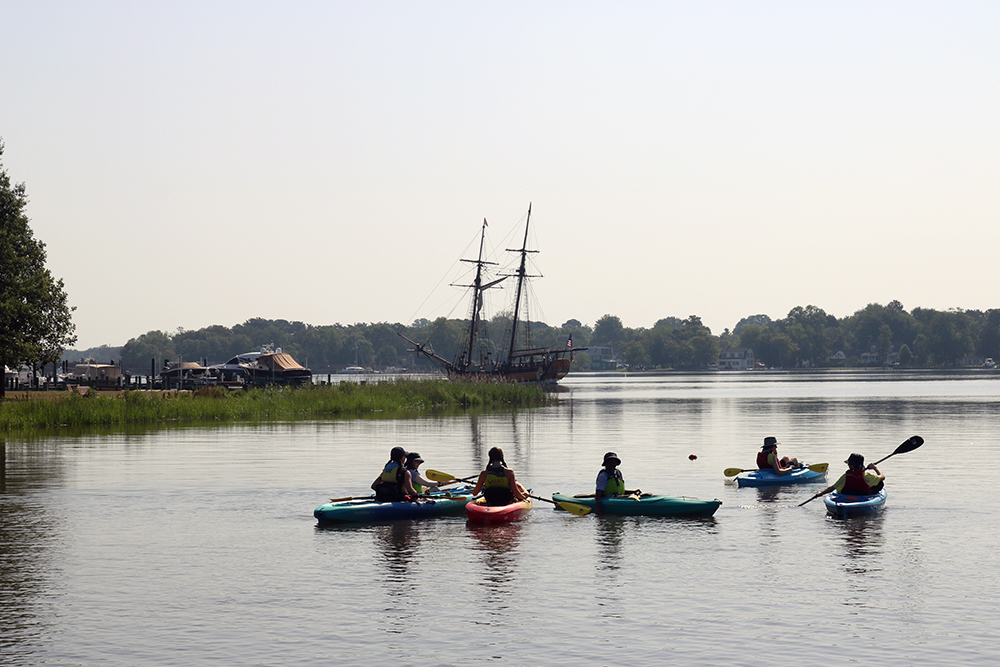
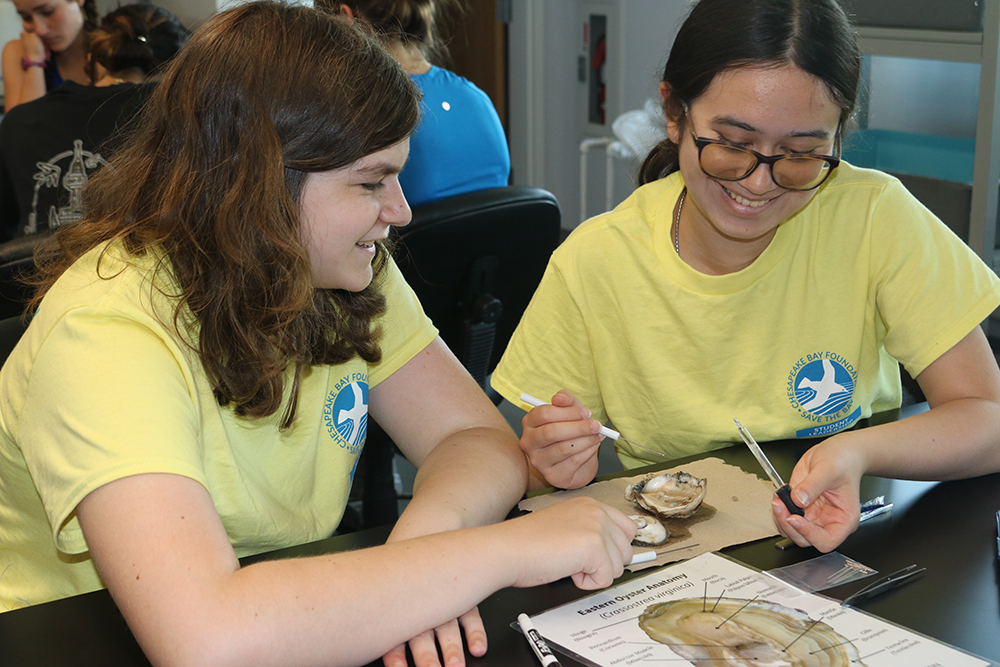
Using Washington College's waterfront campus and the Chester River as their classroom, students participated in a variety of experiential learning activities, including kayaking while collecting water quality data, exploring habitats at the College's River and Field Campus, touring the Semans-Griswold Environmental Hall Living Building, and working in state-of-the-art teaching laboratories.
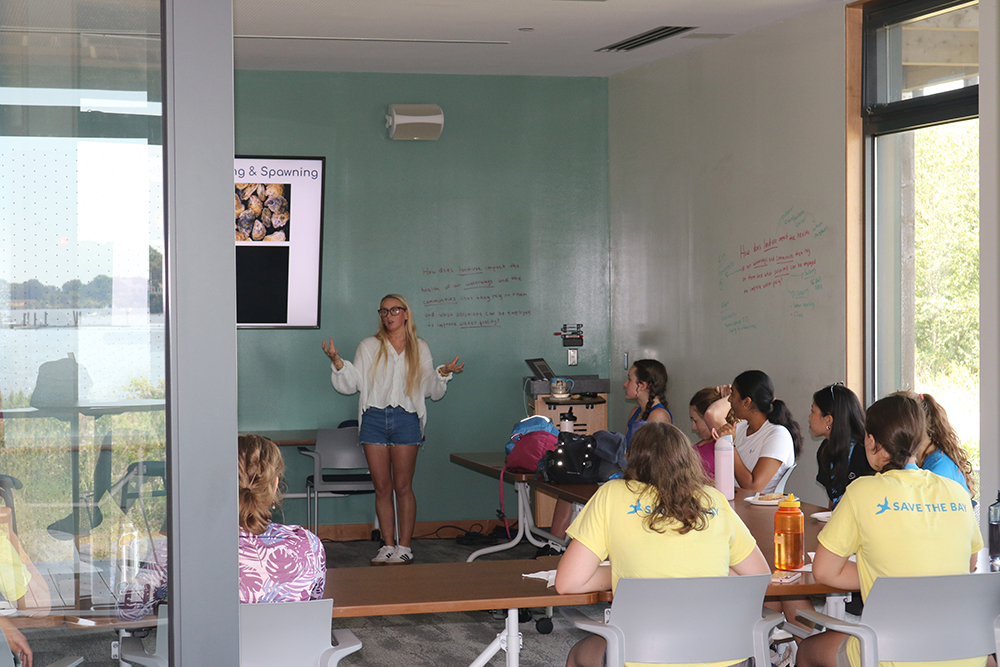 Conference participants also learned from CES faculty, staff, interns, and regional
environmental partners through sessions focused on geographic information systems
(GIS), watershed science, bird banding, sustainable agriculture, oyster restoration,
soil health, habitat conservation, and environmental communication. The program concluded
with student presentations showcasing solutions to real-world environmental challenges.
Conference participants also learned from CES faculty, staff, interns, and regional
environmental partners through sessions focused on geographic information systems
(GIS), watershed science, bird banding, sustainable agriculture, oyster restoration,
soil health, habitat conservation, and environmental communication. The program concluded
with student presentations showcasing solutions to real-world environmental challenges.
"One of the most exciting parts of this conference is watching students gain confidence through hands-on learning,” said Emma Cease ’22, experiential learning program manager of CES. “Whether they're collecting water quality data from a kayak, working in our labs, or collaborating with environmental professionals, they're discovering that science isn't just something you study, but it's something you do. By the end of the week, they're asking thoughtful questions, building connections, and seeing themselves as future environmental leaders."
In addition to gaining scientific knowledge, students experienced life as a Washington College student through campus tours, residence hall living, meals in the dining hall, and opportunities to connect with current CES interns and staff. The conference emphasized teamwork, leadership, and problem-solving while encouraging participants to consider future studies and careers in environmental fields.
Menna Dannettel, a rising high school junior from Bel Air, said her favorite hands-on experience was learning about Submerged Aquatic Vegetation (SAV). "I know I want to work in the environmental field, but I wasn't sure which path to take. After learning more about SAV and becoming a SAV Watcher, I know I want to do something similar in the future."
"I had the best time at the River and Field Campus learning about bird banding with the Foreman's Branch Bird Observatory. I even got to release a Field Sparrow,” said Gabriella Johnson, a rising high school senior from Silver Spring.
Now in its third year, Bay Science & Solutions continues to build on the partnership between Washington College and the Chesapeake Bay Foundation, providing high school students with meaningful opportunities to explore the Chesapeake Bay while developing the skills and confidence to become the next generation of environmental leaders.
For more information about the Bay Science & Solutions program and future opportunities through the Center for Environment & Society, visit the CES website.
— Michaela Bussey