
Eyeing a Seat at the Nation’s Top Table
Three alumni carry the Washington College tradition of leadership to the national stage with bold bids for Congress.

The red-brick paths of Washington College have long served as a corridor to the halls of power in the United States capital. It is a legacy deeply woven into the institution's identity, with seven graduates having served as U.S. Senators and six as members of the U.S. House of Representatives—a group that includes several distinguished leaders who held both offices during their political careers. Today, that tradition is experiencing a vibrant resurgence as three alumni, Melat Kiros '18, Brandon Riker '10, and Sam Polan '12 have launched campaigns for the U.S. Congress, bringing perspectives and drive forged on the Chester River to the national stage.
The momentum behind this new generation of leaders can be found in the much-chronicled surge of Melat Kiros '18, who is running for Congress in Colorado's 1st District. Kiros recently made waves when a delegate vote at a party caucus last week in Denver saw the 15-term Democratic incumbent she's looking to unseat, Rep. Diana DeGette, underperform. According to The Downballot, Kiros won the support of 63% of attendees compared to 35% for DeGette. While outlets like Colorado Public Radio noted technical issues during the caucus, the shift toward Kiros's progressive vision is undeniable. In recent days her profile and the organizing success of her campaign are making headlines in the Denver Post while her comments on the war in Iran have become a focus in Reuters.
 “Denver has changed,” Kiros commented to the Denver Gazette. “Rents have doubled. Healthcare costs are crushing families. And for 30 years, our
congresswoman has cashed checks from corporate PACs while the people she represents
fall further behind. Today, Denver Democrats said: enough.”
“Denver has changed,” Kiros commented to the Denver Gazette. “Rents have doubled. Healthcare costs are crushing families. And for 30 years, our
congresswoman has cashed checks from corporate PACs while the people she represents
fall further behind. Today, Denver Democrats said: enough.”
For Kiros, a double major in political science and economics and former-Student Government Association President while at Washington, the decision to run was born from a realization that "something has to change" and a belief that the Democratic Party was not doing enough to resist corporate influence or address the concerns of young voters.
“I decided to run in November when Trump won,” Kiros told Washington College Magazine Editor Darrach Dolan. “I just knew at the time that the Democrats were not going to do enough to resist the administration, just like they hadn't really done much the first time around. And that's largely because of the influence of the wealthy donors and the corporate influence that we have in our party today, and that there wasn't enough people, at least in the Colorado delegation, that was having this conversation about the influence of money in politics, particularly not my representative who has been there longer than I've been alive."
Her platform is a bold response to what she calls the unaffordable reality of cities like Denver, and she hopes to focus on foundational basic needs—addressing issues around housing, health care, public education, and access to nutritional food—as well as reforming “politics as usual.” She is in favor of imposing term limits for public office (18 years), making home buying more accessible to younger generations, and combating financial barriers to running for office.
“I'm introducing a potentially new solution, which is to tax super PAC contributions and use the funds from those taxes to create a public fund for congressional candidates," suggested Kiros. “We can start leveling the playing field with how much big money is at play here. Small dollar donor empowerment programs are really popular. We have them here in Denver. We saw how powerful they were in New York City for [Zohran] Mamdani when he was battling against those massive moneyed interests with Andrew Cuomo and so on.”
Kiros credits Washington College with providing the intellectual trajectory that led her to this moment. She recalls her time as SGA President as a formative experience where she learned that "leadership is not about what I bring to the table," but rather "what can I bring out in the people that I'm representing." Her economics degree, in particular, taught her a healthy skepticism of traditional metrics. She argues that indicators like the GDP are "misleading," citing the example that a surprise medical bill paid by a credit card technically counts toward the GDP despite representing zero actual economic health for the individual.
When asked for advice for current students, Kiros speaks with the urgency of someone who once felt discouraged herself. "I'd first tell them not to [give up] because I myself had given up at one point," she admitted, recounting how she initially sought a high-paying law firm job out of a sense of helplessness regarding the climate and political system. She reminds students that change takes time. She emphasizes that young people should not be ashamed of feeling discouraged, as the system is often designed to foster disengagement.
“I just realized something has to change,” said Kiros, ahead of her primary election in June. “We need to do something different as a party, and no one else was stepping up to do it. And obviously, this is going to be a really tough race, but there's just too much at stake for us not to be fighting, despite whatever the odds might be.”
On the West Coast, the same spirit of service is driving Brandon Riker '10 in his campaign to represent California's 48th Congressional District. Spanning the Inland Empire and the Coachella Valley, the race is a high-stakes test of a region recently transformed by California's Proposition 50 redistricting maps. What was once a Republican stronghold has shifted into a critical D+3 battleground—a change that Riker sees as a pivotal opening for a new kind of leadership.
“The path to a Democratic majority in Congress runs directly through CA-48,” Riker noted via email. “Under the current map, Democrats would have carried the district
in 2016, 2020, and 2024. Success hinges on energizing key communities like my hometown
of Palm Springs—a base of energy and grassroots engagement that can make the difference
in a close race.”
Riker noted via email. “Under the current map, Democrats would have carried the district
in 2016, 2020, and 2024. Success hinges on energizing key communities like my hometown
of Palm Springs—a base of energy and grassroots engagement that can make the difference
in a close race.”
Riker, a trained economist and small business owner, has distinguished himself through a platform focused on pragmatic financial relief. While the political landscape is often dominated by abstract debates, Riker's focus is granular. As reported by Fox 5 San Diego, he has proposed specific reforms to the FICA tax to provide immediate breathing room for working families.
“There are over 150 lawyers in Congress, but not a single trained economist,” Riker said, pointing out that housing costs in North County San Diego and Riverside County have surged beyond reach, while rising fire insurance premiums are forcing longtime residents to leave. “I would bring a different perspective to Congress. Voters deserve serious solutions that lower costs, raise wages, and support working Californians, not more talking points.”
The momentum behind his campaign is reflected in both his endorsements and his fundraising. As of early 2026, Riker led all Democratic challengers in fundraising, reporting over $1.5 million raised. This financial strength has positioned him as a top-tier contender to flip a seat historically held by figures like Darrell Issa and Duncan D. Hunter.
Riker's path to public service was accelerated during his undergraduate years in Chestertown. Following his sophomore year, he took an 18-month hiatus to work on the 2008 Obama presidential campaign, an experience he describes as a "front-row seat to the impact of organizing." When he returned to Washington to finish his degree, that fire remained lit.
Beyond the classroom, Riker points to being on the crew team as a primary source of his leadership philosophy. “The hours spent on the water ... instilled discipline, resilience, and a deep appreciation for teamwork,” he recalled. “Rowing teaches you that success depends on everyone pulling together toward a common goal—something that directly translates to public service.”
Serving as a member of the Washington College Board of Visitors and Governors since 2017, Riker's connection to the College remains a grounding force. He views his role on the board as a microcosm of the work he hopes to do in D.C.: collaborating with faculty, students, and administration to solve immediate problems, from Pell Grant policies to free speech.
“My time at Washington College had a profound impact on my desire to serve,” noted Riker. “At its core was the value of a broad liberal arts education, learning to see the world through multiple perspectives and to connect the dots between history, policy, and current events. That foundation is essential for understanding the challenges we face today and for thinking clearly about how to move forward in a meaningful way.”
Riker also pointed out that Washington is also unique for whom it is named. “George Washington represents a model of moral courage, the willingness to do what is difficult, even when the odds are against you. That example leaves an impression, and it reinforces the idea that leadership is about responsibility, integrity, and service,” he said.
For students looking toward their own futures in the capital, Riker's advice is rooted in the same tenacity required on the water—namely, not to wait for the perfect moment or a perfectly defined path.
“Public service isn't about hypotheticals; it's about improving people's lives in tangible ways,” counseled Riker. “Ground your thinking in reality, listen closely, and be willing to do the hard work of implementation."
In Illinois, Sam Polan '12 just completed a try for the 9th Congressional District. In the primary election on March 17 he came up short of the votes needed. The Democratic election was crowded, with 15 candidates in the mix. Polan's campaign was deeply rooted in his experience as an Army veteran and a former Pentagon employee. After nine years in the Army and two at the Pentagon, Polan felt compelled to run after witnessing what he described as "disrespect shown to civil and military servants" during his time serving under the current administration.
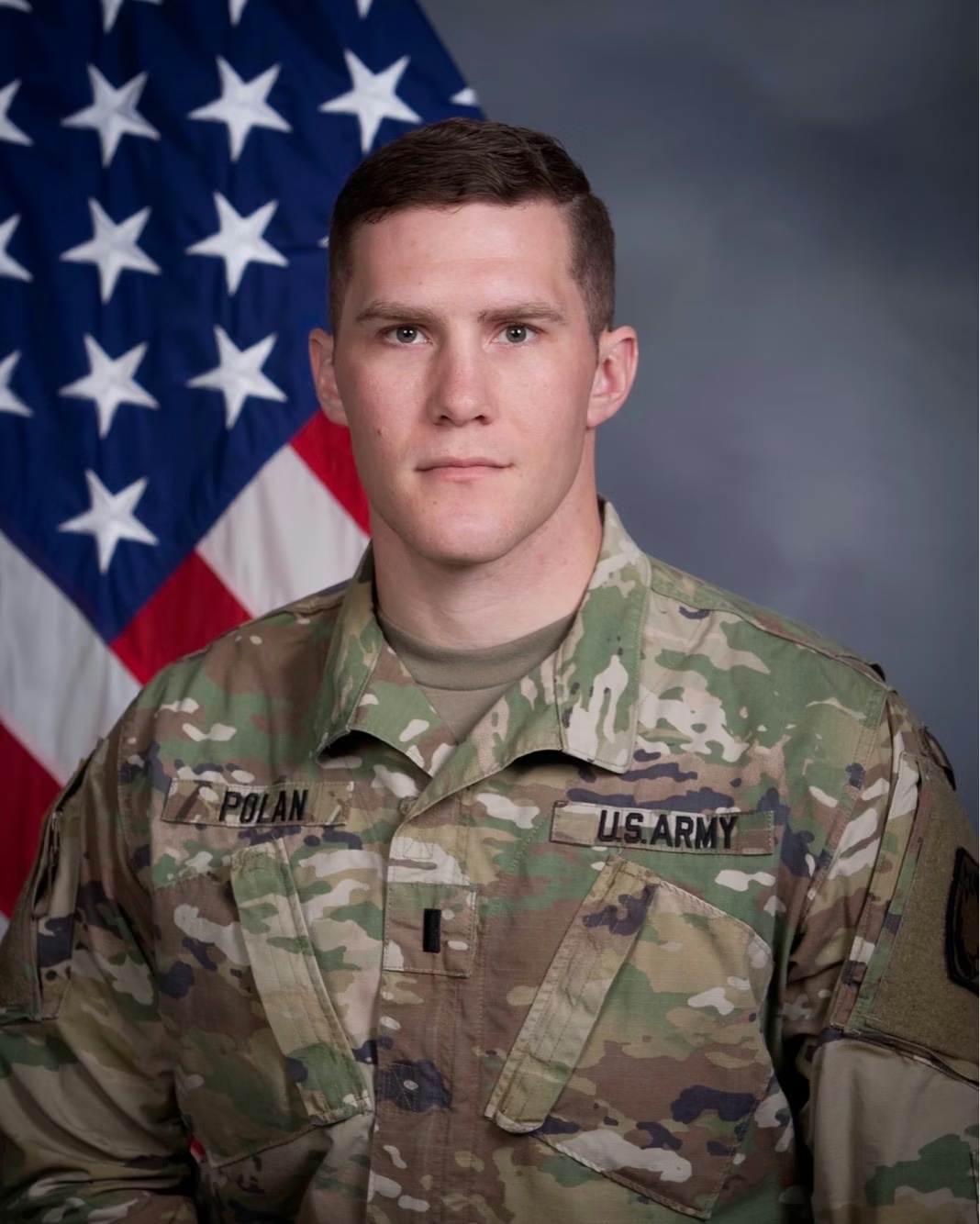 In emailed statements to Washington College's editorial team, he warned that the nation
is "losing generations of institutional knowledge because of perceived grievances
against the federal workforce," calling the current atmosphere both a "security threat"
and a "moral one."
In emailed statements to Washington College's editorial team, he warned that the nation
is "losing generations of institutional knowledge because of perceived grievances
against the federal workforce," calling the current atmosphere both a "security threat"
and a "moral one."
Polan's vision of service—that of putting the needs of others above your own—was significantly shaped by his undergraduate years in Chestertown. He credits Washington College with teaching him to think critically and analyze things from multiple perspectives, a skill he finds lacking in today's partisan landscape. Polan believes the current system is paralyzing our ability to govern effectively by focusing on scoring points on social media rather than active listening.
His advice to current students is to learn everything you can and approach challenges with an open mind. "There are many forms of intelligence in the world," Polan remarked, "and the best leaders learn from all of them."
Though their districts span from the Rockies to the Pacific and the Midwest, Kiros, Riker, and Polan are all building upon the same foundation of critical inquiry and public-mindedness fostered at Washington College. Whether challenging decades-long incumbents or fighting to protect the integrity of the federal workforce, these three alumni carry forward the College's long-standing belief that informed citizens have the power to shape the nation's future.
“We're proud that so many of our alumni have devoted some or all of their life's work to public service, whether that's in their communities, at the national level, or abroad,” said Christine Wade, political science chair and the Louis L. Goldstein Chair in public affairs. “A liberal arts education provides a unique and essential foundation for understanding the complex, multi-faceted challenges and opportunities facing society today. It's exciting to see these three talented, young alumni (whom I'm lucky enough to know) running for office with a desire to better their communities.”
- Dominique Ellis Falcon