
CES at the Waterfront Campus
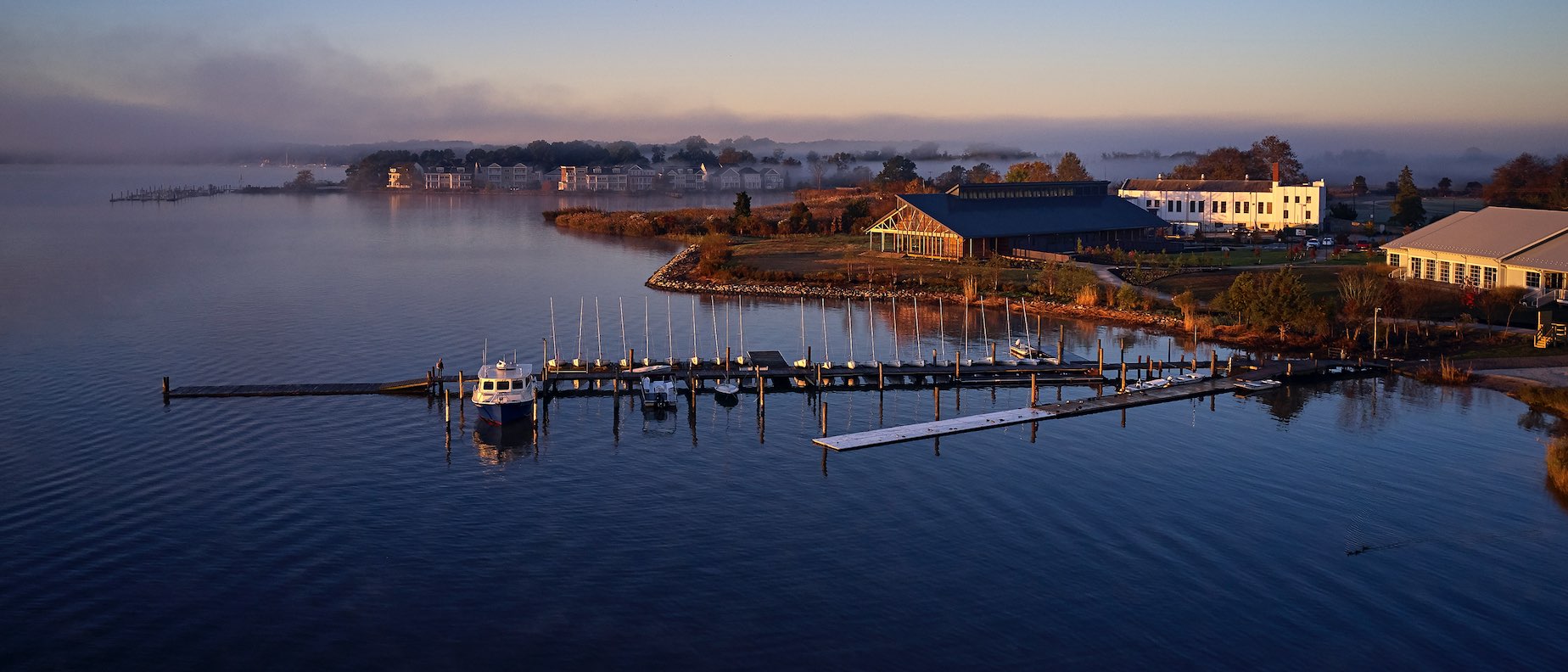
The Waterfront Campus at Washington College was first conceptualized in 2008, and on October 19, 2019, thanks to the generosity of our donors, we finally saw this vision come to life!
Semans-Griswold Environmental Hall (SGEH), a Living Building Challenge structure, provides academic and lab spaces for the College's growing environmental programs. It will also be a regional hub for hands-on research on the Chester River, and a magnet for thought leadership centered on the environment and the challenges facing the region, the country, and the world.
Nearby, at the College's dock, CES operates two research vessels.
Building Features
Living Building Challenge
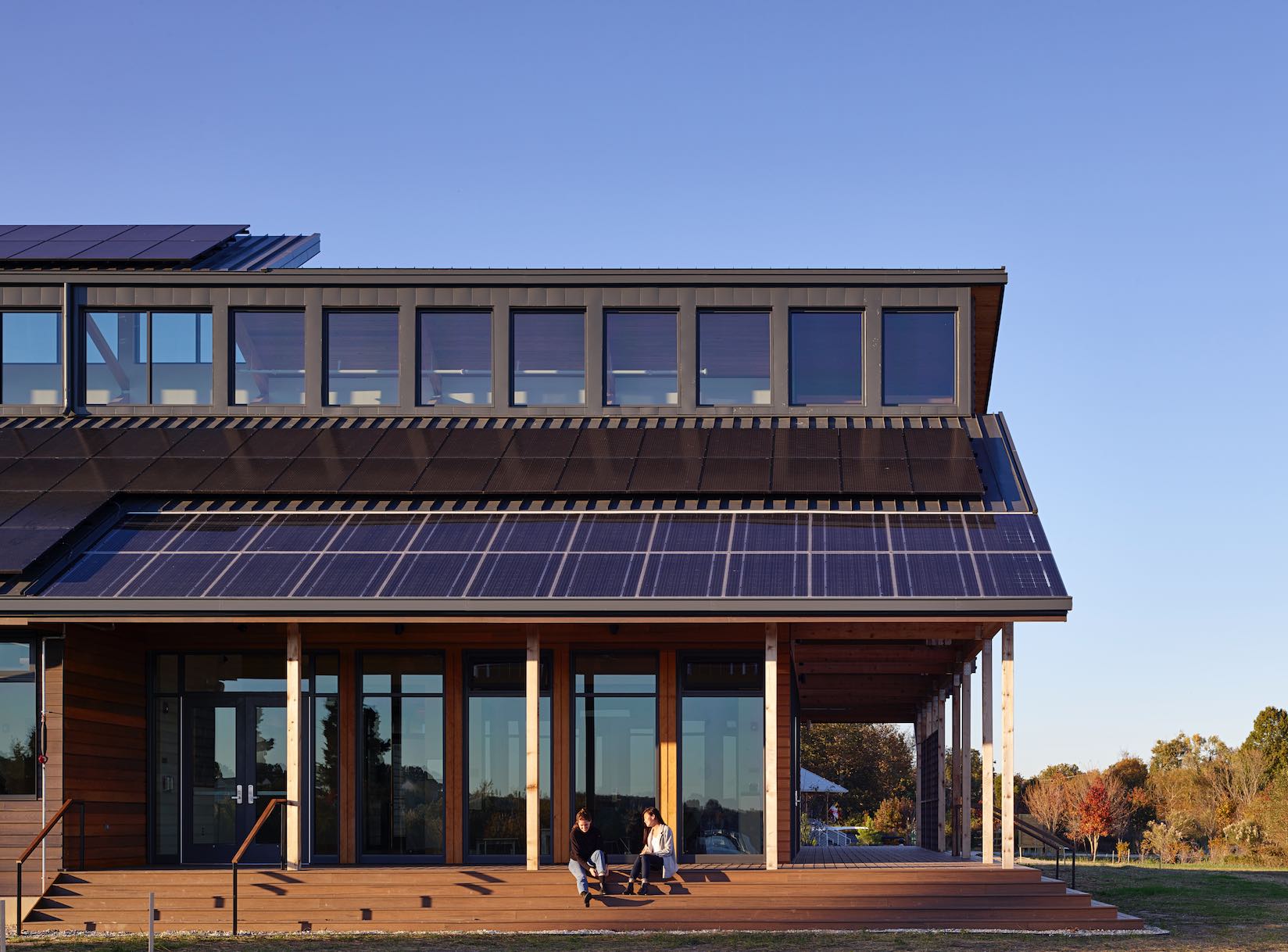
Semans-Griswold Environmental Hall was built to achieve Living Building Challenge
Certification. Living Building Challenge is a sustainable development model that is
a step above LEED certification. Not only does this certification require that we
use sustainable building materials and thoughtful decision making around the natural
environment, but it also requires that the building produces at least 105% of the energy that it will use. This will be achieved through a strand of solar
panels that will be stationed on the roof of the building, along with geothermal wells
that are installed underneath the building. Living Building Challenge also requires
a focus on the health and happiness of the building tenants, along with a focus on
art and accessibility to the community.
Three Innovative Lab Spaces
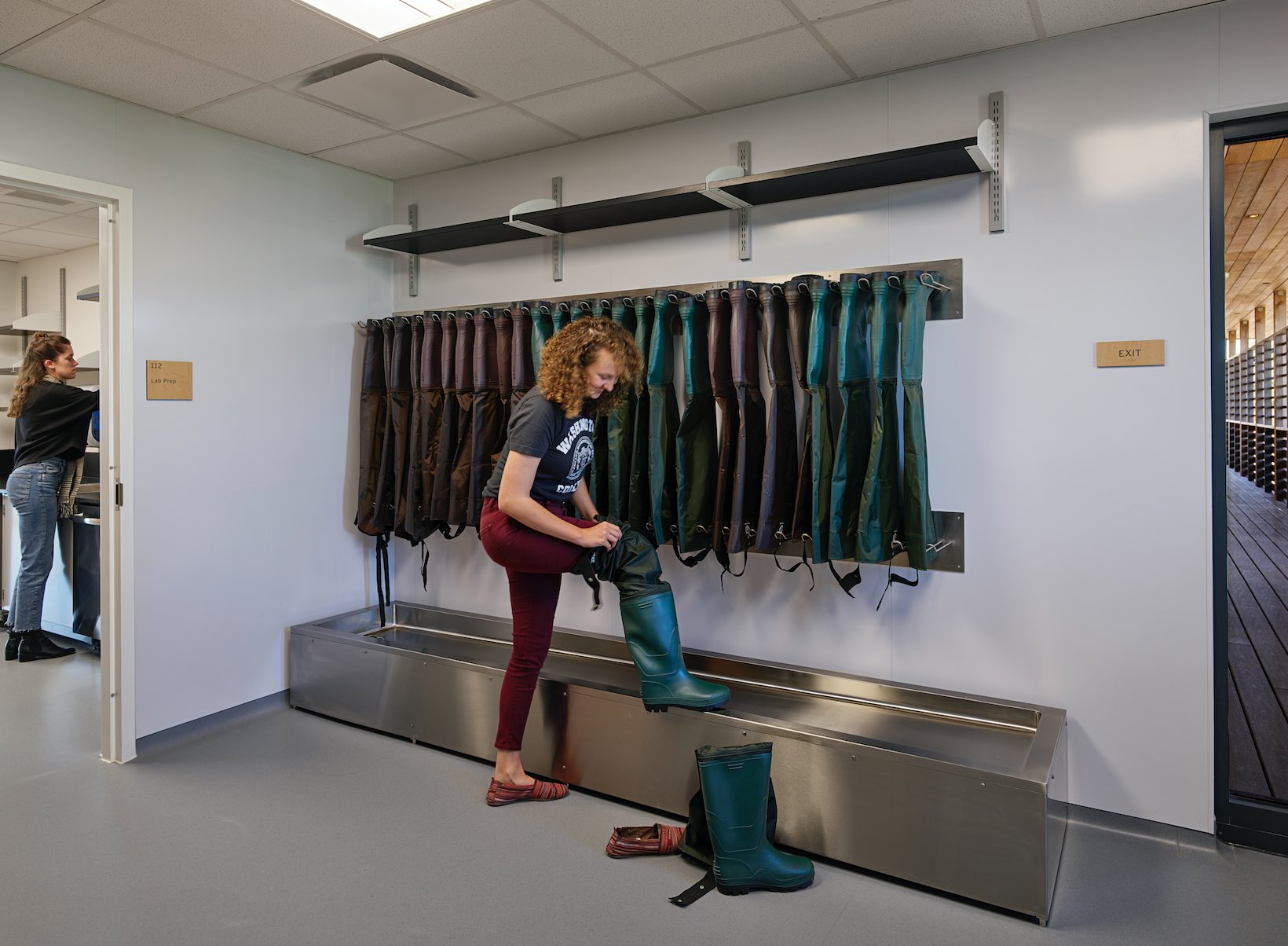
- Wet Lab and River Flow-Through System – The wet lab hosts a river flow-through system,
which pumps water from the Chester River directly into and out of the lab. This allows
our students to study different aspects of the Chester River in a controlled environment
using water directly from the river.
- Watershed Innovation Lab – The Watershed Innovation lab serves as the home to CES's
Chester River Watershed Observatory. Here, students have the opportunity to work on
buoys that monitor the river's water quality, side-scan sonar, build AquaBotz and
more.
- Environmental and Biology Lab – The third lab serves as a laboratory learning space for some Environmental and Biology courses at Washington College.
Waterfront Classroom Space
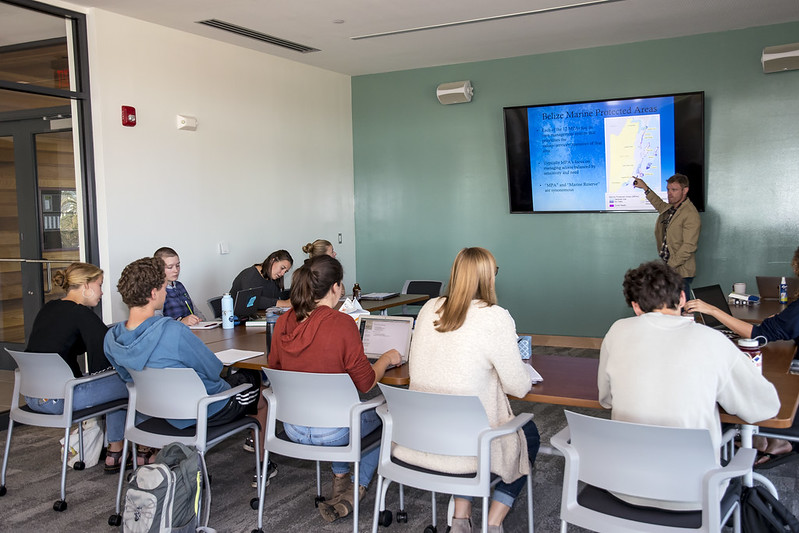
The classroom at SGEH is used for multiple Environmental and Biology courses, along with serving as the on-campus classroom for CES's Chesapeake Semester.
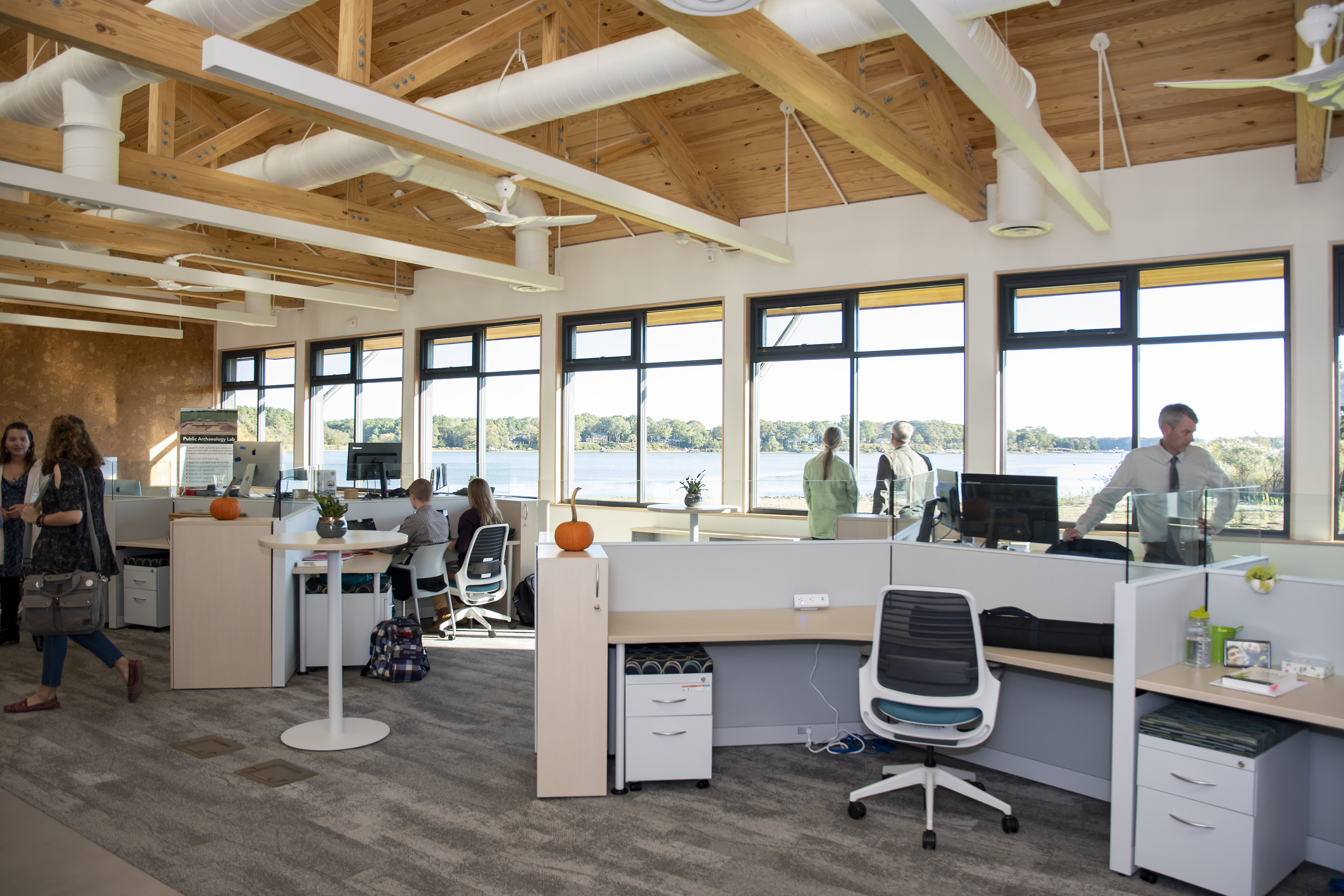
The Center for Environment & Society's Headquarters
SGEH is the new home to the Center for Environment & Society at Washington College, one of three Signature Centers that focus on providing undergraduate students with graduate-level experiences outside of the classroom.
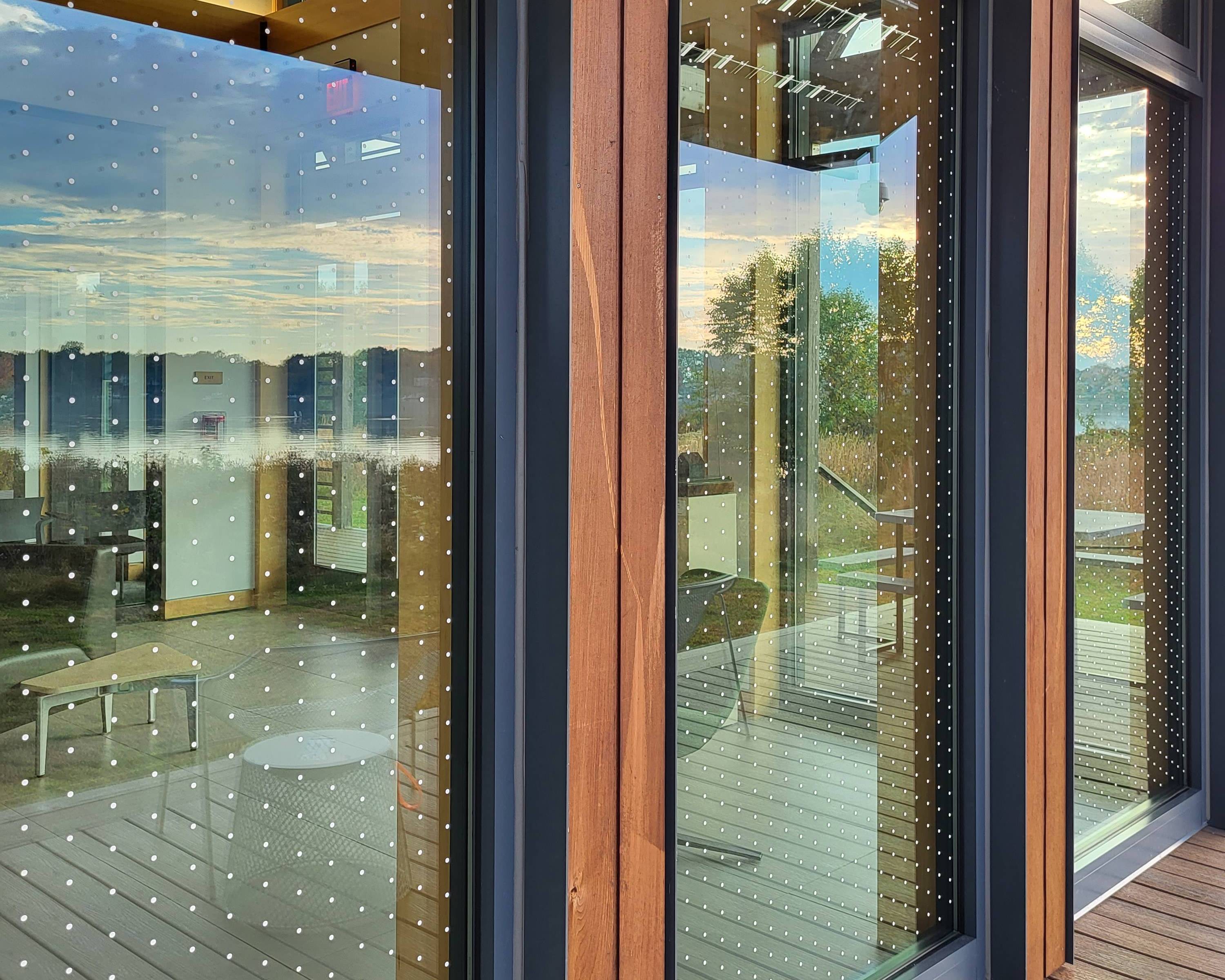
Feather Friendly Windows
Creating habitat includes ensuring that nearby buildings are safe for the birds that
CES hopes to help. At Semans-Griswold Environmental Hall, nearby native meadows and
hedgerows provide excellent habitat for birds and pollinators. We are in the process
of installing Feather Friendly window treatments to help prevent bird strikes to make
this living building a sanctuary for all. Feather Friendly has developed a window
deterrent system that both helps birds to identify the window as an obstacle and preserve
the views.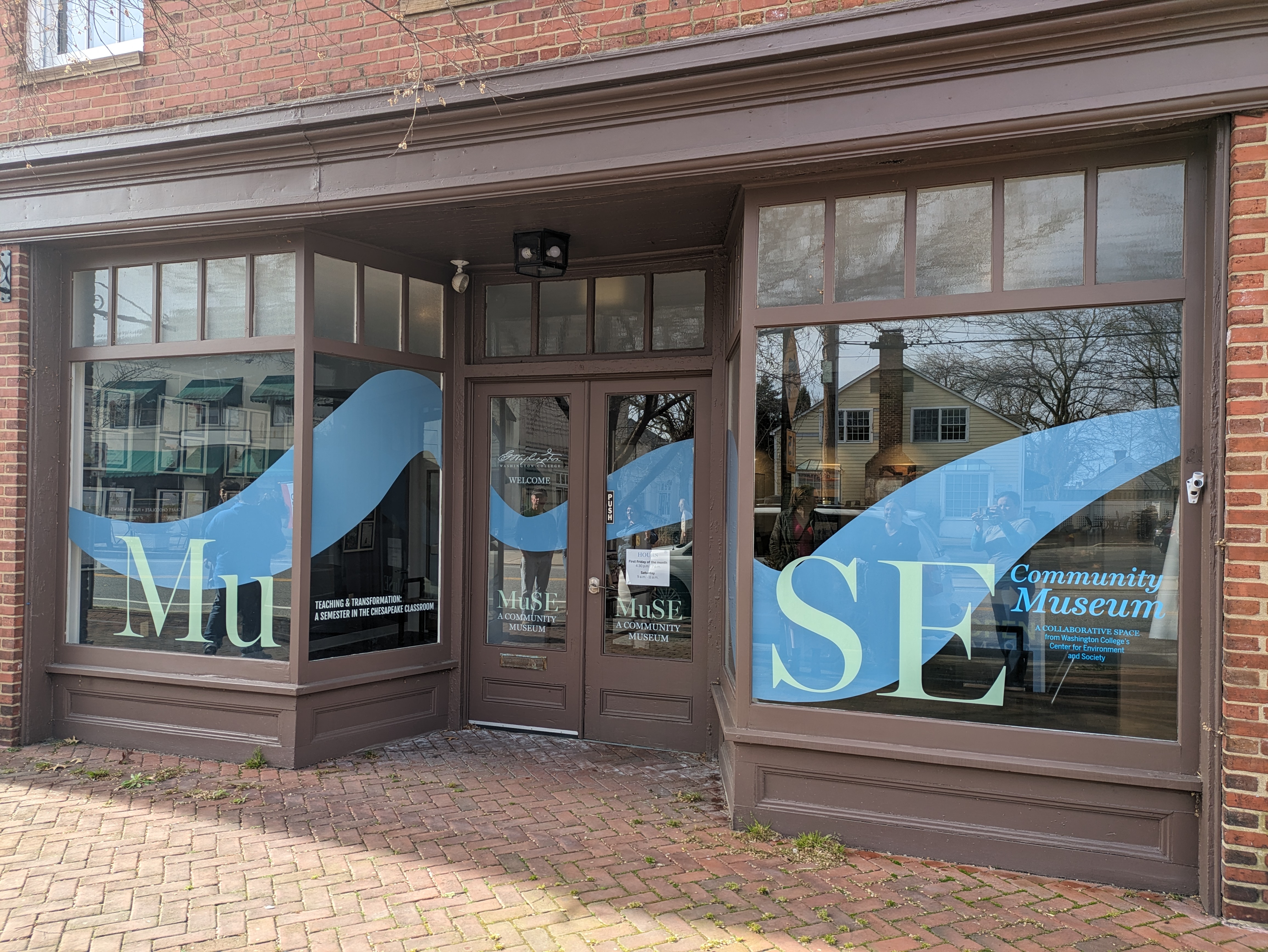
MuSE: A Community Museum
Hosted by the Center for Environment and Society, this public space in downtown Chestertown exhibits collaborations between students, faculty, staff, and the wider community. MuSE hosts rotating exhibits that highlight Washington College teaching, experiential learning, and research. Each exhibit will be informational, interactive, and highly visual, creating a dynamic community space for learning and sharing on the Eastern Shore.
MuSE is currently open on First Fridays from 4:30 pm to 7:30 pm, Saturdays from 9:00
am to 12:00 pm, and by request for groups.
For more information visit this page.
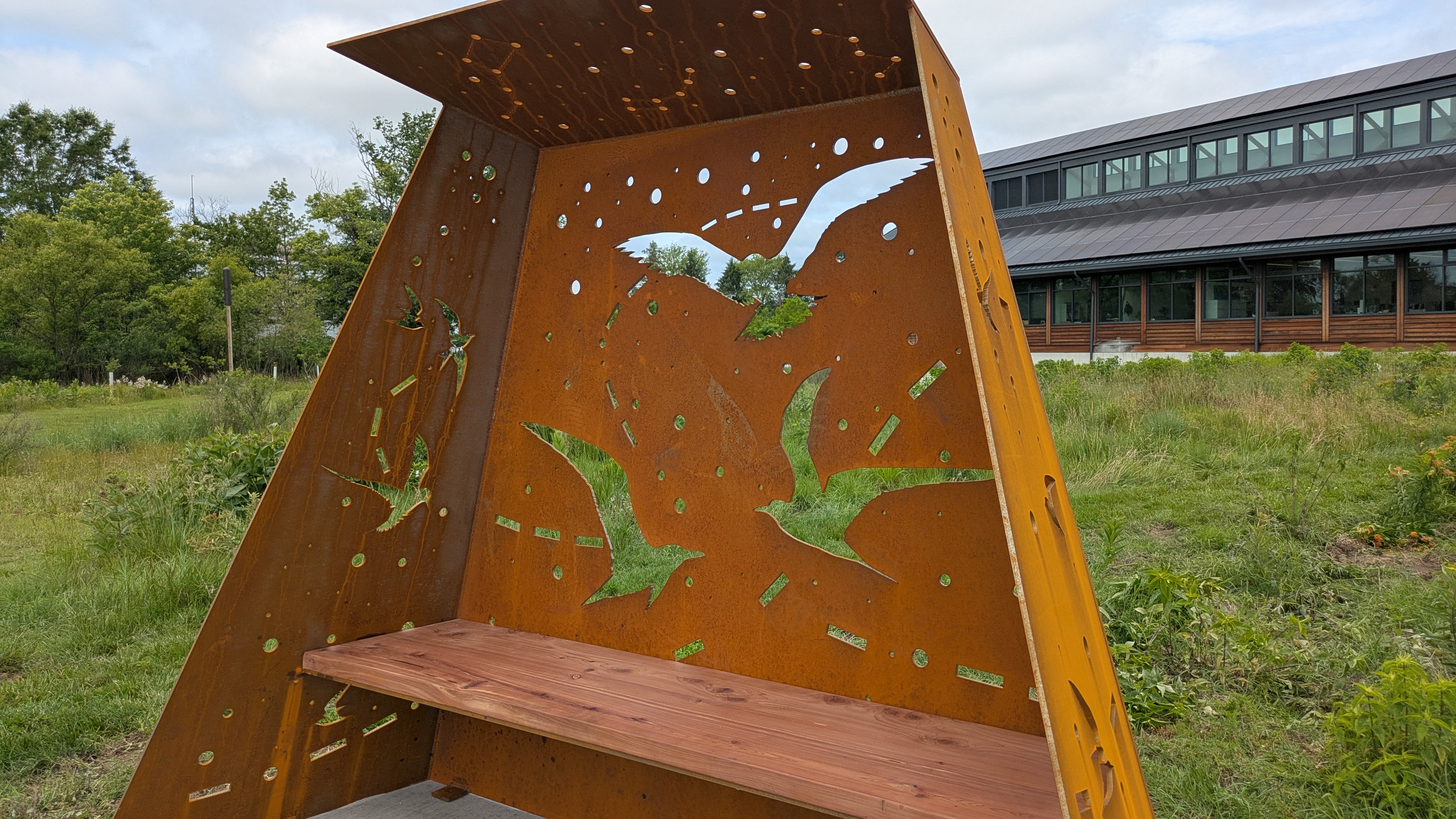
Flyways: A Bench of Inspiration
Flyways is a public art commission by Deirdre Murphy, sponsored by Washington College's Center for Environment & Society in Chestertown, Maryland. This sculptural bench serves as a place of rest and reflection while observing birds in their natural habitat. The Caspian Tern and the Least Tern – two long-distance migrants that follow the Atlantic Flyway – are honored in the sculpture. These graceful shorebirds connect distant coastlines and ecosystems on journeys spanning thousands of miles.
Birds do not recognize borders. They move freely across countries and continents, bound not by human-made lines but by ancient instincts. As a migratory species ourselves, humans are also shaped by movement – yet we often create barriers. Migratory birds remind us to soften those divisions, to connect through openness, and to embrace our shared journey on this planet.
Each bird is precisely laser-cut into steel, accompanied by their migratory paths and constellation maps. Traversing both the Northern and Southern Hemispheres, these birds fly up to 20,000 miles each year to reach their breeding grounds. Like sailors of the past, many migratory species rely on the stars to guide them – an idea reflected in the sculpture's etched constellations of Polaris and Cassiopeia on the shade roof. Constructed from weathering steel, the sculpture forms a stable, rust-like patina over time, allowing it to blend naturally into the Eastern Shore landscape. The bench seating is crafted from locally sourced Eastern Cedar.
Thank you for your interest in reserving space in the Semans-Griswold Environmental
Hall. In order to reserve space in Semans-Griswold Environmental Hall, or with questions
regarding the building, please contact Conference%20Services at 410-778-7253.
Research Vessels
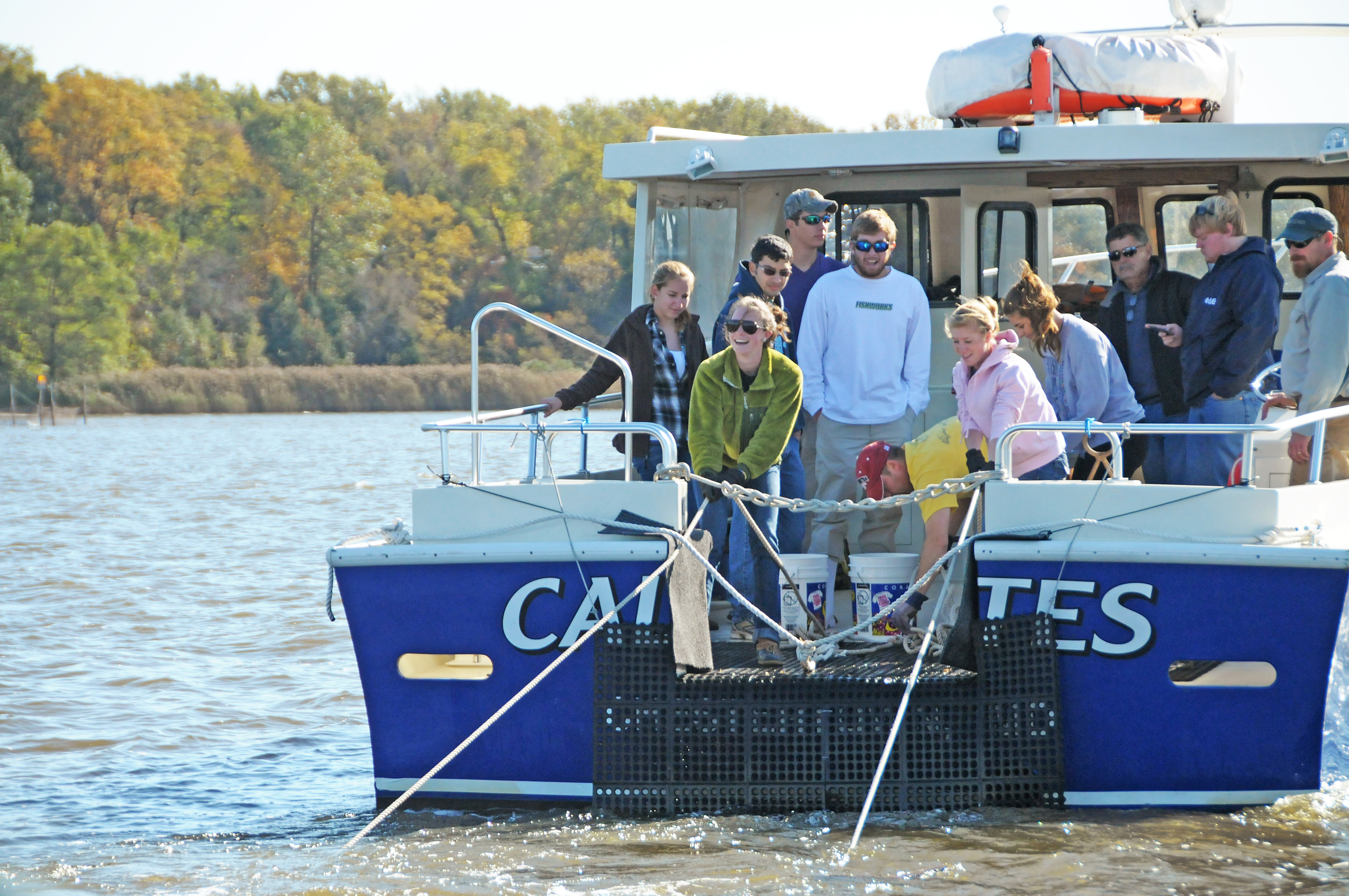
Callinectes
At 46 feet long, Callinectes is fully equipped with an array of the latest electronics and environmental instrumentation
including trawls, sonar, acoustic seabed classification systems, magnetometers and
positioning systems used in mapping and evaluating geological features of the Bay
and its tidewaters. On the Chester River, sampling gear is used to collect water and
sediment samples that are analyzed to measure nutrients, dissolved oxygen, algal abundance,
toxic contaminants and other factors that tell us about the ecological health of the
region.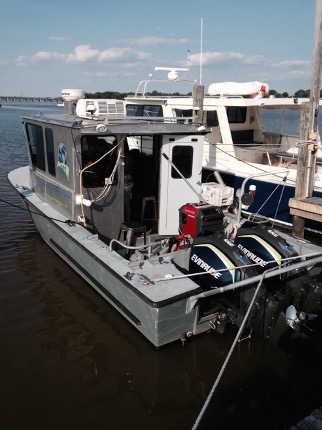
Lookdown
In April 2013 CES acquired Lookdown from NOAA with the intent to provide additional research opportunities for Washington College students. Lookdown, created for the Coast Guard, will be primarily used for mapping the river with sonar, but will also be available for special trips for water sampling and testing.
Lookdown is considerably smaller than Callinectes, which works to her advantage. She will be able to access shallower areas of the Chester and coastal areas that are inaccessible to Callinectes.
The two research vessels, the Callinectes and Lookdown, can be reserved for your classes or department usage.