Washington College

[ login ]
Offices and Resources

Apply | Make a Gift

About Washington College

Sustainability

Did you know?

Green Pledge

Individuals in the Washington College community make a commitment to sustainability.

Eco-Gallery


Campus Sustainability History in The Elm

February 25, 2011
Chin Up, World: Enivronmental Issues Need A New Perspective

February 18, 2011
Home-Grown Goodness: Plans for community garden proposed (link unavailable)

November 13, 2010
Letter to the Editor: "George Never Made it to Green"

November 5, 2010
WC Faces Growing Pains: Campus growth raises questions, concerns

November 5, 2010
George Went Green: What Happened?

November 5, 2010
Editorial: Take a Second Look

September 17, 2010
What A Lovely Brick Garden: 1.25 Gallons Per Minute

September 13, 2010
Working Hard for the Money

April 23, 2010
Kent County Saves Money, Kicks Curbside Recycling

October 10, 2008
Geothermal Fields: An Eye for the Future

September 5, 2008
Hybrid Prius Donated to WC by Anonymous Board Member

March 9, 2007
New Dorms to be Constructed After Commencement

March 2, 2007
SEA Heads Conservation Attempts

October 19, 2007
Newsweek Publication Names WC "Sexiest In Sustainability"

September 7, 2007
WC Adopts Carbon Neutral Commitment

February 23, 2007
Save Energy & Win Breakfast in Bed

December 8, 2006
Board Approves Campus Master Plan

December 1, 2006
Letters to the Editor: Student Environmental Concerns

October 27, 2006
Campus Composting Picks Up Pace

October 6, 2006
Campus Recycling Faces Problems

September 8, 2006
Students Question Missing Handbooks

April 7, 2006
Campus Compost Project Struggles to Raise Awareness

March 3, 2006
Letter to the Editor: Energy Conservation

February 7, 2003
Student Environmental Alliance implements paper recycling on campus

November 8, 2002
WC Students do their part to serve humankind

September 27, 2002
Student groups come together to serve community, world

September 21, 2001
Recycling back again at WC

April 10, 1998
W.C. prepares for Earth Day '98

September 19, 1997
Raudenbush explains W.C.'s recycling situation

September 19, 1997
W.C.'s recycling program continues, undergoes transition

Sustainability integrates the world's social, economic, and environmental well-being with the long-term ecological vitality of the Earth.

Your revolution starts here. At Washington College, students are immersed in a culture of learning that explores the relation of human society with the biosphere. From the classroom to the residence halls, the awareness of our connection to the environment is strengthened by our campus location, nestled amid farmlands in the Chesapeake Bay watershed.

Ecological Programs

Eco-facts

Presented by the Student Government Association and Student Environmental Alliance.

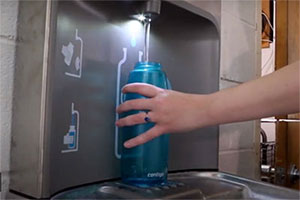
  • Eco-factEach year 38 million plastic water bottles go to the dump—help by recycling your bottles in the blue bins or using a reusable bottle.
  • Eco-factProduce travels an average of 1,500 miles before it gets to your plate—support local foods such as the local lettuce in the dining hall.
  • Eco-factWashington College uses geothermal energy to heat and cool the Chester and Sassafras dorms.
  • Eco-factParts of the Chesapeake Bay can no longer be inhabited by animals because of a lack of oxygen caused by industrial development.
  • Eco-factReuse plates, cups, and utensils in your dorm rather than disposable paper and plastic products.
  • Eco-factUsing compact fluorescent light bulbs in your dorm rather than standard uses 75% less energy and last 13 times longer.
  • Eco-factThrowing out batteries contributes to 88% of the mercury in landfills—recycle them for free at OIT in Smith
  • Eco-factBikes use 2% of the energy per passenger that at car does—bike to class or town instead of driving
  • Eco-factEvery ton of paper recycled saves 17 trees—look for the green bins on campus
  • Eco-factThe average college student produces 640 pounds of solid waste each year, including 500 disposable cups and 320 pounds of paper
  • Eco-factEven when off, appliances use energy from being plugged in—save energy by using a power-strip or unplugging devices when not in use
  • Eco-factIt takes the same energy to replace one aluminum can as it does to power a laptop for 11 hours—recycle cans in the blue bins
  • Eco-factBring your own mug to campus dining places like Java George instead of using a disposable cup
  • Eco-factWashington College has signed the American College & University Presidents Climate Commitment to become carbon neutral
  • Eco-factSustainability Fact: Appreciate nature and explore the Chester—kayaking is free to students at the boat house.
  • Eco-factSustainability Fact: Chestertown is going plastic bag free—do your part by using a reusable bag when going to the store.
  • Eco-factSustainability Fact: Pay your school bills online—give your electronic consent on webadvisor to eliminate paper being wasted as bills.
  • Eco-factSustainability Fact: The library uses almost 5,000 sheets per week—conserve paper by printing double sided.
  • Eco-factSustainability Fact: Washington College recently acquired Chester River Field Research Center.

Initiatives

Dining Services

Dining Services operates with a variety of ecological considerations.

Shoes for Ghana

Since 2008, WC SIFE has been collecting gently used tennis shoes to give to a non-profit organization called PPPF Africa. The shoes are shipped to Ghana and sold to street vendors, thus keeping them out of landfills for awhile longer and stimulating the Ghanaian economy. The money raised by selling the sneakers is used to purchase sustainable farming supplies, animals, plants, irrigation system and training for Ghanaian families, thus improving their quality of life and standard of living while preserving local rain forests. Last year WC SIFE reached its initial target of 600 shoes, which allowed it to adopt one Ghanaian family.

Community Garden Boxes

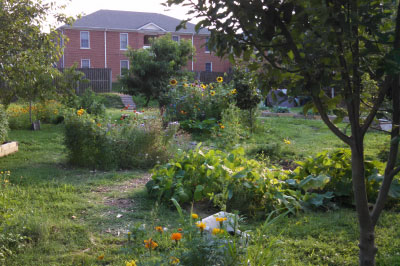
Beginning in summer 2009, WC SIFE placed Earth boxes with local Food Pantry clients to enable them to supplement pantry food with fresh vegetables with a minimal carbon footprint.

Geothermal Heating and Cooling

"Chester" and "Sassafras," the first Washington College buildings to utilize "eco-friendly" geothermal heating and cooling, opened for student occupants in Fall 2008. The three-story buildings each house a hundred students in suites and semi-suites. See how the energy efficiencies work (PDF).

Sustainability in the Curriculum

In 2007, President Emeritus Baird Tipson, signed the American College and University Presidents Climate Commitment. Part of the commitment is for Washington College to take several steps in pursuit of carbon neutrality. In Fall 2007 the President's Climate Action Committee was formed at Washington College. Within two years of signing the pledge Washington College must develop an institutional action plan, which will include "Actions to make climate neutrality and sustainability a part of the curriculum and other educational experience for all students". To address the education goal a subcommittee on sustainability in the curriculum was created.

Mission Statement

Educating for a sustainable future calls for integrating knowledge from many disciplines, so that Washington College students have the tools they need to be decision-makers and stewards of the world. One of the overarching principles of sustainability is the link between ecological and social values. Environment and culture are closely interconnected. Changes to one affect the other. By managing natural and cultural resources over the long term—and understanding how people manage their behavior—we can preserve the Earth for generations to come.

Faculty Experts


Green Your Dorm Room

Each student has a part to play in making our campus more sustainable. Here are some easy ways to green your dorm.

  • Turn off the air conditioner when you are not in the room or use a fan instead.
  • Put a box for recycling in your dorm-room or suit common room so it is more convenient collect recyclables without making a trip down the hall.
  • Unplug appliances like printers, microwaves, chargers, etc when not in use because they take up energy even when they are not turned on.
  • Use energy star appliance such as your refrigerator and microwave.
  • Buy second hand so new materials do not have to be used.
  • Buy local instead of shipping items across the country—also consider getting storage in the summer instead of having items shipped home.
  • Use compact florescent light bulbs instead of conventional—especially avoid halogen torchiere lamps because they use hundreds of watts of electricity.
  • Do not throw old batteries in the trash—recycle them at OIT in the basement of Smith—also use rechargeable batteries.
  • Only do your laundry when you have a full load.
  • Pay bills and check your bank statements online—most college students check their emails more often than their mailbox anyways.
  • Print papers double sided.
  • Read documents online instead of printing them—you can even highlight these using programs like word.
  • Use reusable cups, plates, and utensils in your dorm.
  • Use the back of old papers as scratch paper.
  • Use a water filter such as a Brita instead of drinking from a plastic water bottle.
  • Use reusable bags when going to the store.
  • Use reusable mugs at when getting coffee or other drinks.
  • Put your computer on sleep or hibernate when you are not using it.
  • Take shorter showers—turn the water off when you shaving or scrubbing.
  • Do not leave the water running while brushing your teeth.
  • Use natural light instead of electricity when possible.
  • Look for greener detergents and cleaning products—especially phosphate free ones because phosphates end up in the Chester River and can lead to bad water quality.

Dining Services

Campus Recycling

Recycling is now available in every building on campus. On campus, we recycle plastic and glass bottles, aluminum and tin cans, cardboard, and most types of paper.

Tall Blue Bottle and Can Bins

Do Recycle:
Empty Aluminum/Steel/Tin Cans
Empty Plastic Bottles
Empty Glass Bottles and Jars

Do Not Recycle:
Cups
Trash
Plastic Types 3-7

Green Paper and Cardboard Bins

Do Recycle:
Paper
- Office paper, Newspaper, Magazines, Catalogues, Soft cover books, Junk mail, Envelopes, Posters
Corrugated Cardboard Boxes
- Including pizza boxes
Milk and Juice Cartons

Do Not Recycle:
Trash
Cans and Bottles
Plastic Bags
Napkins, Paper towels, Tissues, Straws

Tall Blue Paper Bins (in offices and academic buildings)
Paper
Posters
Secure documents (including shredded)

Cage Free Shell Eggs

Only Cage Free Shell Eggs are offered in our serveries. Washington College Dining Services is committed to taking a stand on animal welfare by offering only HFAC

Sustainable Seafood

Chartwells has partnered with the Monterey Bay Aquarium's Seafood Watch program to assure that all seafood served in our accounts comply with strict sustainability requirements.

Zero Trans Fat Oils

Only Zero Trans Fat Oils are used on our campuses.

Fair Trade Organic Certified Coffee

We Offer Only Fair Trade Organic Certified Coffee in our residential dining venues.

Compost our Kitchen Scraps

Project Greenthumb focuses on composting.

Chicken Free of Hormones and Antibotics

We offer ONLY Antibiotic Free Poultry on our menus. Our purchasing guidelines are set up so that we only serve chicken and pork that has been produced with restricted use of these drugs, especially as a growth additive in feed.

rBGH-Free Dairy

Our Milk is rBGH FREE! We serve fluid milk from cows that have been certified to be free of the artificial grown hormones rBGH and rBST.

Fresh Produce

We Use Only Fresh Vegetables that are prepared in batches at the last possible minute and served in the smallest possible vessels to ensure that our customers enjoy the freshest tasting foods.

Student Environmental Alliance

The Washington College Student Environmental Alliance (SEA) is a student-run organization on campus. It promotes sustainability on campus and within the community, and works with various outside organizations to help promote sustainable practices. SEA welcomes all majors and disciplines to join at weekly meetings and events. SEA primarily focuses on:

  • Promoting awareness of local, national, and international environmental issues and concerns
  • Environmental education
  • Keeping a record of accomplishments to provide for future SEA generations
  • Providing a group that fosters personal environmental well-being
  • Positively impacting the Washington College, Chestertown, and outside communities through its environmental initiatives